|
Call to investigate impact of planned care covid halt |
Related newsLess than full-time – behind the NHS trend Drug harms on the rise in Scotland Probe into future of NHS Scotland’s doctors underway NHS doctors unemployment crisis despite understaffing Watchdog criticises homelessness health service cuts Pre-eclampsia test approved for NHS Scotland 
|
|
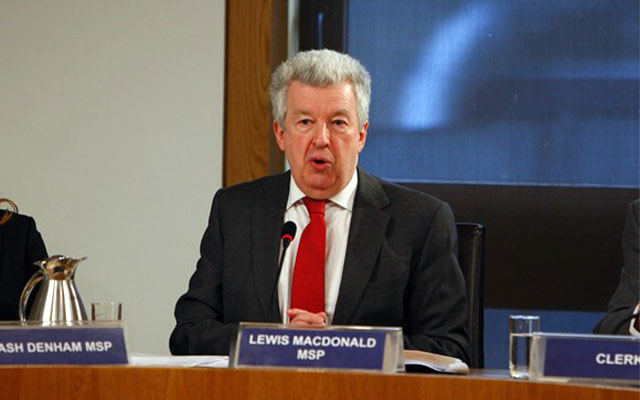
Health and Sport Committee Convener Lewis Macdonald
|
||
|
||
|
The effect of cancelling non-urgent care in the first lockdown on people’s health needs to be urgently investigated, a new report has said, ahead of increasing pressure on hospitals this winter.
Today MSPs on Holyrood’s Health Committee say the consequences of these changes need to be better understood to establish whether halting planned care again “is an appropriate response”.
They are calling for the NHS and the Scottish government to set out a timeline for resolving the backlog of treatments that has built up during covid-19.
Use of the health service fell sharply across a range of areas at the start of lockdown, with fewer hospital admissions, attendances at A&E and screening checks prompting concerns patients could be harmed.
This was alongside an NHS Scotland-wide halt to non-urgent procedures that began in March.
Although patient numbers have started to recover as part of a push to ‘remobilise’ the NHS, progress varies across the country, with some hospitals now treating more virus patients than they were at the start of the year.
In a wide-ranging report, MSPs highlight the wider health impacts of covid-19.
Figures show there have been just over 100,000 fewer operations in the period from March to August 2020 than happened the year before.
However, patients stopped coming to services that were still open, with numbers turning up at A&E with heart problems and contacting out-of-hours mental health services still remaining lower than usual.
The report requests ‘detail of when the backlog in treatments and waiting lists is expected to be resolved.’
‘It would also be helpful to know how any such plans might be affected by any return to emergency measures in the health system as a result of increased covid-19 infections and admissions,’ it adds.
Elsewhere, the Committee reiterates its concerns over the financial stability of Scotland’s NHS boards.
When the current Health Secretary Jeane Freeman took on the role in 2018, she wrote off the bailout loans owed by health boards to the Scottish government in a one-off measure.
Instead of being asked to balance the books each year, boards would now be asked to do so over a three-year period.
However, MSPs are “not convinced” this aim will be achieved and question whether more bailouts will be needed because of covid-19.
Criticism is also directed towards integration authorities, the bodies that bring together councils and the NHS to manage social care and community health services, which are accused of failing to provide ‘basic financial information’ despite spending more than £9bn of public money each year.’
Lewis Macdonald MSP, Convener of the Health and Sport Committee, said: “Covid-19 has caused a huge disruption to many NHS patients and treatments with Public Health Scotland data revealing hospital admissions, attendances at A&E departments, and people attending out of hours services all falling to around half the average levels seen in 2018-19.
“As the pandemic continues to impact every aspect of our health service, the consequences of cancelling all non-urgent care must be measured and the backlog of treatments and waiting lists resolved as quickly and safely as possible.
“The pandemic has created a huge degree of uncertainty over current and future health and social care budgets and we are keen to be given more detail on the long-term implications of this uncertainty.
“We are also surprised at the lack of information available on potential NHS savings caused by the large number of services which ceased operating during lockdown.
“Since the arrival of the pandemic we have seen a remarkable reduction in delayed discharge numbers and there have been welcome innovations across the health service to help respond to this crisis, but the challenge now is to continue these successes and to ensure we do not revert to the old way of working.”
Supporters – If you can help support our reporting for Scotland's health and social care community, please head to our donations page.
Bulletin – Sign up for all the latest news and events. |
