|
GP contract “paying off” despite missed deadline |
Related newsEarly career help for Scottish GPs Doctors say GP funding boost “just the start” Less than full-time – behind the NHS trend Doctors invited to shape medical workforce reforms Scotland to work with UK on Physician Associate reform 
|
|
|
||
|
||
|
The Scottish government has said it is still committed to the 2018 GP contract despite admitting it will be unable to deliver key commitments by the April 2021 deadline.
The Chair of the British Medical Association’s Scottish GP Committee described as “very disappointing” the delay in implementation of the 2018 General Medical Services contract.
Dr Andrew Buist said inadequate funding, staffing and management support were to blame for “patchy progress” to date.
The new agreement aims to reduce the pressure on GPs amid a background of expanding workloads by recasting their role as expert medical generalists supported by a wider team of healthcare professionals.
This includes taking tasks such as routine vaccination away from family doctors and handing them to health boards, and the rollout of multidisciplinary teams that would see mental health workers and pharmacists join general practice teams.
National work on progressing the contract was paused in March due to the pandemic and restarted in August between the first and the second waves of covid.
Speaking at the BMA’s Scottish Local Medical Committee conference last week, Dr Andrew Buist said: “We were already behind schedule pre-covid and now it is clear it will not be delivered in full by April 2021.
“This is clearly very disappointing – before the 2018 contract too many GPs were being asked to cope with workloads that were impossible to sustain and every day that we do not have full implementation is another day that more is being asked of general practice than is reasonable.”
The Blairgowrie GP added: “Regarding phase one, while there are many examples of excellent redesign of services in some areas, progress has been patchy, and overall has not been good enough.
“The reasons behind this are due to a combination of issues; from insufficient workforce to lack of premises, inadequate management support and perhaps inadequate funding.”
He said covid-19 had not made the situation any easier, highlighting delays caused when staff were reallocated to deal with the virus: “In January GPs provided practice data for the income and expenses workforce data collection – data that is so critical to modelling for phase two [of the contract] and yet it remains unanalysed, as the data analysts were redirected to examining data for the pandemic.”
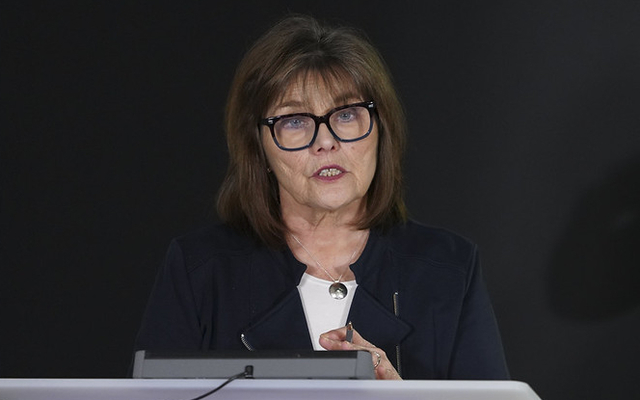
Speaking at the doctors’ conference, Health Secretary Jeane Freeman implored GPs to recognise what progress had been made, highlighting the delivery of a minimum earnings expectation for those entering the profession, as well as £5m a year being allocated to promote cluster working by practices.
“We can’t underestimate the rapid progress we have made so far,” she said before conceding that “inevitably the response to the covid-19 pandemic has stalled that more than any one of us would wish.”
One of the key commitments of the General Medical Services Contract 2018 is the introduction of multi-disciplinary teams in practices which would see pharmacists, mental health workers, physiotherapists and others providing support from general practices.
Ms Freeman said £205m had been invested towards this goal since the contract was agreed and that it was testament to the importance of this work that “even as Scotland remained at the heart of the pandemic, Partnerships and GP subcommittees were still working hard to create these teams”.
“Our joint reforms are paying off,” the Health Secretary said. “There have never been more GPs working in Scotland with an increase of 149 over the last two years, taking us to a total of 5,049.”
But Dr Buist warned government would miss its own target of employing 800 more GPs in the next seven years so long as phase two of the contract remained incomplete.
“Without that,” he said, “we will not create the capacity required to generate sufficient expert medical generalists’ time that NHS Scotland needs to care for our ageing population.”
However, while covid has hindered progress, Dr Buist said: “It has also convinced many that the ambition of the 2018 contract is the correct direction for general practice in Scotland.”
He stated the BMA remained committed to full delivery of the contract but had had to agree to new timescales with government.
Health and Social Care Partnerships will instead take responsibility for services like childhood and travel vaccinations by the end of 2021.
A letter sent to medics by government states transitional GP services will be necessary in the interim, but that they “are not our preferred outcome, nor something we see as a long-term solution.”
“We are keen for NHS Boards, Health & Social Care Partnerships and Board-funded GP sub-committees to do everything they can at local level to accelerate service redesign in the next 18 months”, the letter adds. “Regulation changes strongly signal our intent that GP practices will not be the default provider of these services in future and community multi-disciplinary teams will be a permanent part of the health and social care landscape.”
Dr Buist told the conference he was looking forward to “getting our GMS contract back on track…[to] create a more manageable workload with more time for GPs to spend in their role as expert medical generalists, and in doing so address the GP workforce challenges by ensuring that general practice once again is an attractive career option.”
Sign up to our bulletin for key health & social care updates straight to your inbox. |
