|
Irons: Care review offers fix for funding tensions |
Related newsScotland’s IJBs becoming "financially unsustainable" Overseas carers given route to work in Scotland The in-between: what’s happened to care reform? All public bodies must focus on health, urges charity Frailty services supported with £85m ‘Leaps’ needed to secure change for disabled people Medical trainee abuse reports ‘shut down and silenced’ Politicians must take ‘bold’ action on child poverty NHS Tayside welcomes largest intake of doctors Meet the secret weapons of GPs Law change needed for Scotland’s drug crisis Depression linked to poorer physical health outcomes 
|
|
|
||
|
||
|
Wide-ranging proposals to reform social care in Scotland have been welcomed by a national network of health and care leaders.
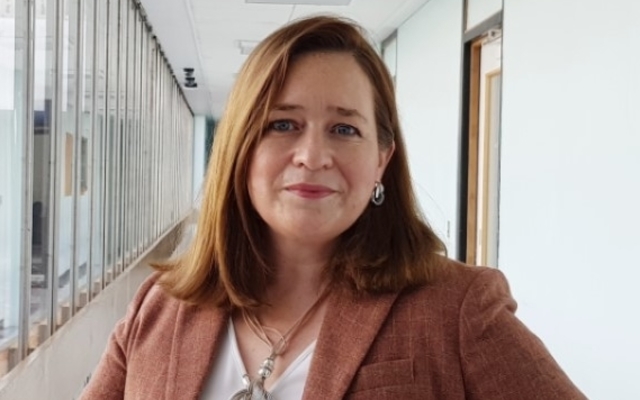
Health and Social Care Scotland chair Vicky Irons admitted the funding system in the current model had led to “tension” and said the review of social care represents a welcome opportunity to better integrate services and achieve a human-rights-based approach to social care.
“The general feeling from chief officers is the report provided some light for us,” Ms Irons told us.
“There is the possibility of improving the role and contribution of the Integration Joint Boards (IJBs), but more importantly there’s the possibility of really developing the health and social care offering across Scotland.”
Ms Irons, who is chief officer of Dundee Health and Social Care Partnership (HSCP), welcomed the introduction of a dedicated social care minister but cautioned this should not lead to health and care being seen as two separate entities.
Review chair Derek Feeley called for the setting up of a National Care Service controlled by the Scottish government in his report published last week.
As part of the changes, IJBs – the bodies that oversee community health and social care services – would become more important and take on a more direct role delivering social care.
Speaking to healthandcare.scot about the review, Ms Irons said the existing approach had brought “huge gains” but tensions around funding and accountability remained.
She said the review provides “a huge opportunity to make sure people’s health and social care needs have parity, and that they are being met from one organisation.”
IJBs were set up in 2016 in a bid to integrate health and social care, and direct HSCPs to spend money on their behalf.
Despite concerns set out in the report about the pace of these changes, Ms Irons said the shift to providing more care in people’s homes during the pandemic would have been “markedly different” without having these foundations in place.
However, she admitted some aspects of the integration legislation have been “challenging”.
Under the 2016 legislation NHS boards and local councils jointly pay into IJBs each year, which has led to delays over budget-setting and, in some instances, disputes between funders.
MSPs have previously warned of a lack of a transparency as a result.
Mr Feeley warned that the funding was still being seen as two separate pots in some cases and recommended that IJBs, which are responsible for around £10bn of public money, are instead funded directly by the Scottish government.
Ms Irons said it was clear “very early on” that the allocation system was “quite clunky and complex”.
But she added that the level of cash provided was also important:
“I think it’s fair to say that a lot of the tension that’s in the system, with all of the negotiations that go around budget settlement on a yearly basis, are as a result of very limited resources.
“Again, I think the report definitely indicates that if we aspire to have the Scottish social care system that is described across the report, that needs resource.”
The Feeley review suggested it would cost an extra £660m to fund the proposals it set out, though Scottish Care has questioned whether this might be too little.
The proposals would also simplify accountability, with Scottish ministers ultimately responsible – through the National Care Service and local IJBs – for social care.
Ms Irons told healthandcare.scot the current model had worked well where there was “total commitment” from all parties involved.
“But there’s a range of other areas where that kind of multiple accountability…and not having a direct line of sight in terms of what’s evolving, what’s emerging from the IJBs has caused tension.
“We would welcome, certainly, those high-level recommendations about having direct responsibility.”
The review also called for the Scottish government to bring in a dedicated minister for social care.
Ms Irons said a “degree of caution” was needed over the move.
“If social care is held in the same regard as the health services we provide in our community settings, that can only be good for all of us,” she said.
“…we just want to make sure [health and care] aren’t then held as two separate entities.”
Ms Irons went on to outline a feeling among chief officers that the report was “quite silent” in terms of the NHS reforms that would be needed to make a national care service work.
This week Health Secretary Jeane Freeman suggested a whole system review of funding across both areas would be needed in the run-up to bringing in a national care service.
Sign up to our bulletin for key health & social care updates straight to your inbox. Tags: Finances; Social Care. |
