|
Analysis: The politics of the pay rise |
Related newsPlea to rescue ambulance service’s stranded asset Nursing pressures creating high risk of harm Early career help for Scottish GPs Collective bargaining promised for social care Health and care in the Scottish budget Meaningful change promised on medical workforce 
|
|
|
||
|
||
|
This article was originally published in the Health Service Journal.
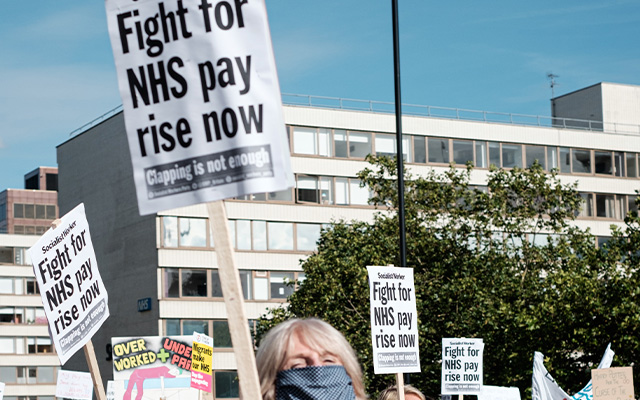
“Making the applause real – a well-deserved substantial pay offer that will keep our NHS staff the best paid in the UK. Doing the right thing,” tweeted Scottish Health Secretary Jeane Freeman as she announced a 4% pay rise for NHS Scotland Agenda for Change staff, hours before purdah rules for the May Scottish Parliament election kicked in.
Amidst the upcoming Holyrood election excitement, it’s easy to forget Ms Freeman had already offered NHS Scotland staff a 1% pay rise just one month earlier. That was framed as an interim ‘payment on account’ ahead of further negotiations in the summer, despite unions having already rejected the move.
At the time of the original offer the Scottish government said pushing back the date of the UK budget had “delayed [its] ability to identify the financial envelope from which [it] can negotiate. Therefore it is clear that pay negotiations for Agenda for Change staff will now be delayed until the summer.”
Fast forward a few weeks and money concerns appear to have dissipated. As Nicola Sturgeon put it in a speech to the party faithful: “When I saw Boris Johnson offering just a one per cent pay rise, I knew we had to do better here in Scotland. So, we have offered the biggest single increase in NHS pay in the history of devolution.”
The 4% announcement, which made headlines across the country, heaped pressure on UK Ministers. Where the money will come from in the longer term is less clear, according to the Institute for Fiscal Studies, which said some of the permanent pay boosts this year could be paid for by temporary covid-19 funding.
NHS Scotland employees and social care staff will have also seen a £500 “thank you” bonus for their efforts over the pandemic land in their bank accounts. Despite a number of eligibility gaps emerging – agency nurses did not qualify for example, nor did learning disability nurses employed in the third sector – and extensive delays getting the payment sorted for many social care workers, it has proved another dividing line for SNP politicians to set themselves apart from the Tories and make the case for being independent, chiefly because powers deciding whether to tax the thank you bonus are held by Westminster.
The £500 payment was announced in November as the big rabbit out of the hat at Nicola Sturgeon’s SNP conference speech. She told delegates: “We don’t have the power to make this payment tax-free. But, Prime Minister, you do. So, I am asking you this. Please allow our health and care heroes to keep every penny of Scotland’s thank you to them. Do not take any of it away in tax.”
Scottish ministers were more optimistic that Boris Johnson would create a special tax break than their counterparts in Cardiff. The Welsh government made a similar thank you payment but pledged to cover the PAYE and National Insurance so staff in Wales would be able to take home the full £500. By contrast, a band five nurse working in Scotland told us she had ended up with £300 after deductions.
Amid all this, one group of workers appears to have been overlooked, despite their efforts during the pandemic for often very low levels of pay. Social care staff north of the border are slightly better paid than those in England, due to a Scottish government commitment to fund the Real Living Wage for care workers. The policy, first introduced in 2016, has been praised for improving retention – albeit turnover still approaches 30% – and reducing spending on agency staff.
But £9.30 an hour is still an awfully low wage for a demanding role – a factor recognised by an independent review of adult social care in Scotland carried out by a former chief executive of NHS Scotland.
Derek Feeley, who left the NHS to work for the Massachusetts-based Institute of Healthcare Improvement, reported that the social care workforce feels “undervalued and under-recognised…there is a deeper underlying sense that social care workers have not had parity of esteem with their NHS counterparts.”
A short time later Scottish ministers had the opportunity to demonstrate that they too felt that health and care pay should be more equal. But they didn’t quite take it. Just hours before healthcare staff were offered a 4% uplift, hourly pay rates for care workers went up to £9.50 an hour - a 2.2% increase.
Read more: ‘Covid showed ministers should be in charge of care’; Irons: Care review offers fix for funding tensions; Review calls for national care service; Health Secretary signals health funding review
Sign up to our bulletin for key health & social care updates straight to your inbox. |
