|
Plea to rescue ambulance service’s stranded asset |
Related newsAmbulance staff facing daily violence and abuse NHS is working to address “unacceptable” abuse “Mayday”: voices from NHS emergency departments Doctors: ‘Shocking’ A&E figures require action Less than full-time – behind the NHS trend Doctors invited to shape medical workforce reforms 
|
|
|
||
|
||
|
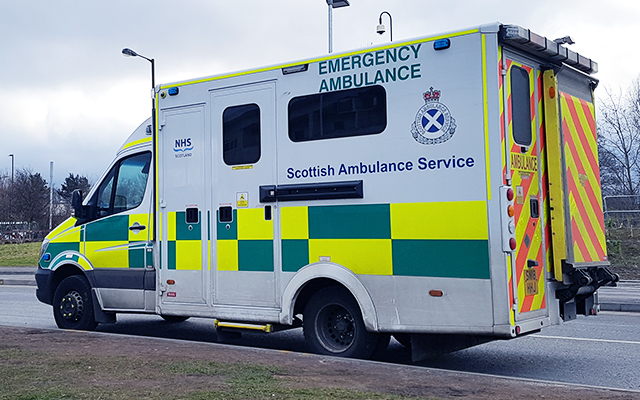
Hundreds of ambulance technicians are appealing to the Scottish government to create a pathway that allows then to qualify as paramedics. A previous route that allowed experienced technicians to become paramedics was closed by the Scottish Ambulance Service when regulators changed the rules, dictating that only people who had completed a degree could qualify for paramedic registration.
Campaigners say hundreds of experienced technicians who would make excellent paramedics have been stranded by the lack of an alternative to going to university. The government says they paid for the ambulance service to investigate alternative routes, but the business case was rejected.
The body that regulates ambulance staff, the Health and Care Professions Council, ruled in 2018 that, after 2022, it would only register people as paramedics who had completed a degree course.
Up until then the Scottish Ambulance Service (SAS) had been training ambulance technicians to fill paramedic roles. In 2020/21, the final year of the previous programmes, 149 technicians competed their training to qualify as paramedics.
Glasgow-based paramedic Rory Maclean, a spokesperson for the campaign to reinstate a ‘earn and learn’ scheme for technicians – which is supported by the three main health unions – says the move has “left behind” at least 700 people working as technicians and who want to progress their careers:
“The change has left people who had joined as technicians locked out of paramedic positions unless they can give up their jobs and go to university – which many with families, mortgages and caring responsibilities simply cannot afford to do.
“These are people with years of frontline experience. We believe there can be a training route that recognises their existing education, skills and clinical experience, while maintaining the same academic, clinical and professional standards required of all paramedics.
“By allowing them to stay within the service and progress, the SAS wouldn’t just realise the full potential of these colleagues, but would also go a long way to addressing some of the recruitment challenges in remote and rural Scottish communities.”
The ‘Tech to Para Campaign’ petition calling for ‘the creation of a fair route for ambulance technicians to become paramedics has so far gained nearly 5,500 signatures.
The importance of finding ways to fill vacancies by allowing healthcare professionals to be supported through degree courses has already been recognised in other areas of the NHS. Under Edinburgh University’s HCP-Med scheme, people already working in health can to train as doctors parttime, only requiring full time study in the final two years. An NHS Lothian ‘earn-and-learn scheme’ has been set up to train nurses to work in mental health. Meanwhile the popular Open University nursing degree allows people to remain in part time employment in healthcare while studying.
Trapped
“Historically, ‘technician’ wasn't simply a job you entered and stayed in indefinitely – it was described by SAS as the first stage towards becoming a registered paramedic. During the interview process I was told that I would be expected to progress from technician to paramedic but the option has been taken away.
“The tech to paramedic pathway would mean that we would get that opportunity without having to spend three years at university. If I went to university, it would have financial implications, plus the difficulties of juggling work and placements. A new pathway would give rural technicians like myself an equal opportunity to progress and service our communities.”
“Because technicians across the country are truly the backbone of SAS,” he says, “and there is no replacement for the experience, knowledge and compassion that technicians gain.
“Having time as a technician prior to completion of your paramedic degree would ensure staff are well prepared for the realities of the ambulance service, and that candidates for the paramedic ticket have proved in practice they are capable of the step up.
“I am currently unable to progress my career, and at times this has made me consider leaving the service. I feel somewhat trapped. Progression is limited, and will always favour those that are paramedics, despite having much less experience and regardless of their skills or knowledge. This campaign would give me a pathway to success and give technicians across the country a new sense of purpose, a chance to prove their worth, which is slowly fading from SAS.”
Business case rejected
Establishing a pathway to registration for technicians was a key deliverable set out for the SAS by the Scottish government in its 2023. annual delivery plan.
Although the SAS developed an outline business case to proceed with the development of an ‘earn and learn’ pathway for technicians, Scotland’s Health Secretary Angela Constance told healthandcare.scot the service ultimately shelved the idea:
“I recognise the vital contribution that ambulance technicians make to patient care within the Scottish Ambulance Service and I’m encouraged that so many are interested in progressing their careers to become paramedics.
“The Scottish government provided £40,000 of funding to SAS to explore a new pathway route for full-time technicians seeking to progress their careers further by becoming paramedics. I understand an initial business case was developed which was used to inform the strategic decision of SAS not to proceed at this time.”
A spokesperson for the SAS told us:
“The Scottish Ambulance Service recognise the vital contribution that ambulance technicians make to patient care and the service.
“For those who want to develop their clinical practice by qualifying as a paramedic, we continue to engage with staff to provide information and guidance on the full‑time Bachelor of Science paramedic programmes offered by universities in Scotland. We remain committed to supporting technician staff to attend university through flexible working or annualised hours options.
“We continue to work in partnership with the Scottish government with a particular focus on addressing workforce challenges in island and rural communities.”
The Tech to Para campaign leaders say they believe that it will ultimately be up to the Scottish government to make the decision on a new pathway for technicians to qualify as paramedics, and they are looking forward to presenting their case to the health secretary in the coming weeks.
Read more: Island paramedics get new point of care diagnostics; Ambulance staff facing daily violence and abuse "Earn as you learn" to be a nurse; Early career help for Scottish GPs;
Sign up to receive our bulletin for key health & social care updates straight to your inbox. |

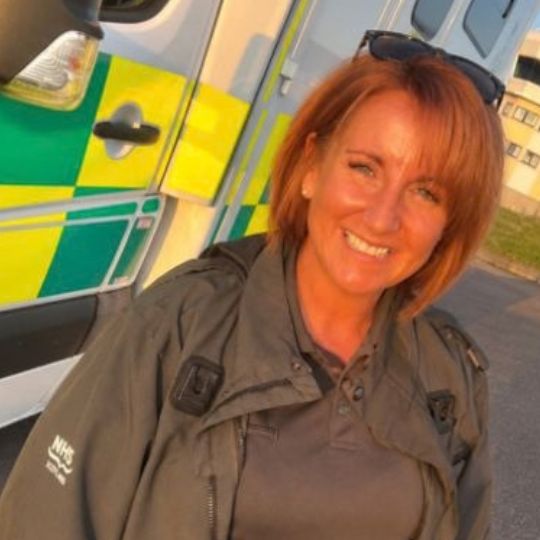 Frances Malley, an ambulance technician from Ellon in Aberdeenshire joined the service in 2022:
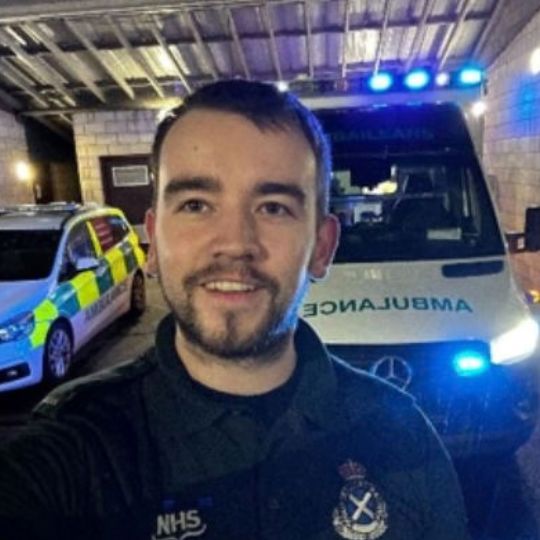 Paisley-based technician Adam Clearly worked as an ambulance dispatcher before moving across to train as a technician: