|
“Mayday”: voices from NHS emergency departments |
Related newsHealth and charity leaders join forces for NHS reform Doctors: ‘Shocking’ A&E figures require action Less than full-time – behind the NHS trend Chief Medical Officer: ‘Critical connections’ priority “Relentless focus” on health inequalities NHS is working to address “unacceptable” abuse Government to merge two national NHS boards New partnership looks to build digital-savvy workforce Scotland top of the charts for medical training 
|
|
Image Credit: © sudok_
|
||
|
||
|
The body representing Scotland’s emergency medicine workforce says politicians must listen to staff on the frontline and act to address the crises that NHS consultants and their teams are facing day in day out.
Launching their election manifesto this week, the Royal College of Emergency Medicine (RCEM) says work pressures across NHS Scotland are taking an immense toll and simply filling current senior staff vacancies could make a huge difference.
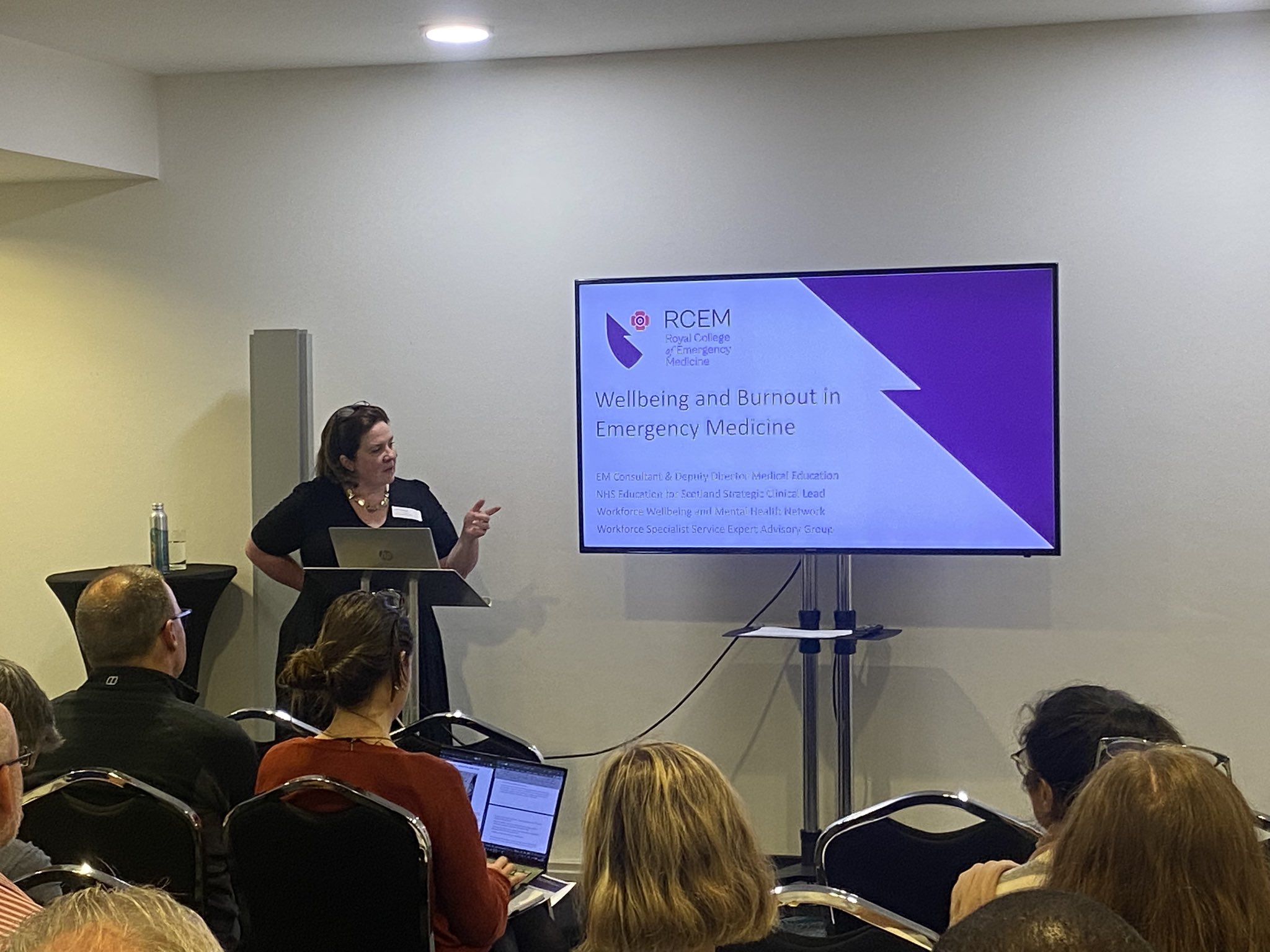
After revealing more than 800 deaths linked with long A&E waits occurred in the last year, RCEM brought NHS staff together with politicians and policymakers in Edinburgh to hear solutions.
RCEM Scotland Vice President Dr Fiona Hunter told the conference the shortfall in NHS staff is most acutely felt by both those working and the patients waiting to be seen in A&Es across the country.
Dr Hunter said, with the average occupancy of an emergency department in Scotland sitting at 182.5%, patients are left waiting or even being assessed in spaces not designed for care.
Meanwhile, with doctors doing their best to keep emergency departments afloat while their peers face an unemployment crisis despite NHS understaffing, Scotland needs its political leaders to commit to change:
“Going into work, caring for patient after patient, on a trolley in a corridor takes an immense toll. It’s no wonder they are burnout and stressed as they struggle to do the one thing they came into medicine to do: provide care,” Dr Hunter said.
She explained that gaps exist across senior emergency medicine rotas – in consultant and speciality doctor numbers as well as trainees.
She said ignoring the shortfall of consultants needed to steer the ship is not only risking further staff burnout but is placing more patients in harm’s way:
“No amount of yoga or well-meaning wellbeing initiatives will make staff feel better when working in a system that is relentlessly over occupancy.
“Our staff morale is understandably at an all-time low, we have unhappy patients, frustrated relatives.
“To account for consultant shortages and meet safe staffing recommendations, there needs to be an increase in funded consultant posts by around 14 a year for the next six years.”
Constant demand
With other professions also raising the alarm about corridor care becoming the norm, Dr Hunter said it’s clear from the unchanging high levels of emergency care demand, that the problem lies in staffing and patient flow through hospitals.
Dr Laura McGregor, a consultant in NHS Lanarkshire and NHS Education Scotland’s Deputy Director for Workforce Wellbeing told the meeting that she regularly experiences a feeling of constantly escalating concerns trying to get the help needed to provide a safe patient care:
“We can’t bring in the next people if we can’t get people onto our wards and if we can’t get those ready to leave discharged safely. So we’ve got an overwhelmed waiting room.
“I’m trying to lead a team and maintain a safe standard of care but at the same time I’m like: ‘Mayday, mayday, this ship is sinking. This is not okay, help!’
“And what happens is the system replies and says: ‘We all know you’re busy, seen it in the news and also, there’s other boats – you’re not the only boat’.
“I know this, I’ve seen the statistics and studies and I know people die because of this and I’m just asking for one person [to help us].”
RCEM Scotland’s latest census heard from 28 major emergency departments and three remote and rural hospitals, all with rota gaps.
While the College says the census shows slight headway has been made in reducing the resident doctor gap since 2021, there are currenltly 16 consultant gaps across the country – the same as four years ago.
Meanwhile, a “worrying decline” in the consultant presence across a day from the recommended minimum of 16 hours to just 14 hours in 2025 was also reported.
The ‘Consultant Supply Line’
RCEM reports that 1 in 5 consultants are 50 years or older and as a result many are reducing the proportion of their time spent ‘on the shop floor’, directly providing clinical care to patients.
Dr Hunter said, combined with NHS Scotland’s chronic understaffing, this means that time spent seeing patients is “becoming more intense”, and increasing the number of consultant posts must be a priority.
RCEM Scotland heard that 38 of Scotland’s 329 emergency medicine consultants are planning to retire by 2030.
Combined with an NHS trend in moving to less-than-full-time, the College is urging the next Scottish government to increase both new training posts and 50-107 full-time consultant jobs, saying that current plans will only deliver a quarter of the increase needed.
This is an increase of two to four full-time equivalent consultants each of Scotland’s major emergency departments which RCEM Scotland says is both reasonable and achievable.
Meanwhile, emergency medicine trainees are increasingly moving to work less than full-time and an earlier stage in their training, with only 62% of current emergency medicine trainees saying they want to continue working for time.
RCEM Scotland says the government has made some progress in increasing the number of emergency medicine trainees from last year which will help with delivering the consultants of the future.
However, a shortfall of emergency medicine training posts remains despite the demand from trainees and this year alone seeing four doctors ready to take up consultant posts that aren’t there.
Looking to the future, NHS Education Scotland Specialty Training Board Chair for emergency medicine and NHS Tayside consultant Dr Russell Duncan added:
“We’ve got trainees – people out there who would fill the posts of consultant and trainees.
“What we need now is investment to create the posts for them to fill.”
Read more: NHS Chair: “I'm sorry”; Organisational change needed for women in healthcare; Government to act on A&E failures; Racism in NHS Scotland still rampant, doctors reveal; Scottish doctors happier but still at risk of burnout; NHS Scotland: waiting lists and beyond; Diversity in health and care – what can we do?; Care management ‘on its knees’
|