|
CMO: Improve health by fixing welfare and education |
Related newsChief Medical Officer: ‘Critical connections’ priority New social care minister appointed Scotland needs more Carer Positive employers Who is Scotland’s new health and care secretary? Psychiatrists in ‘disbelief’ over cut funding 
|
|
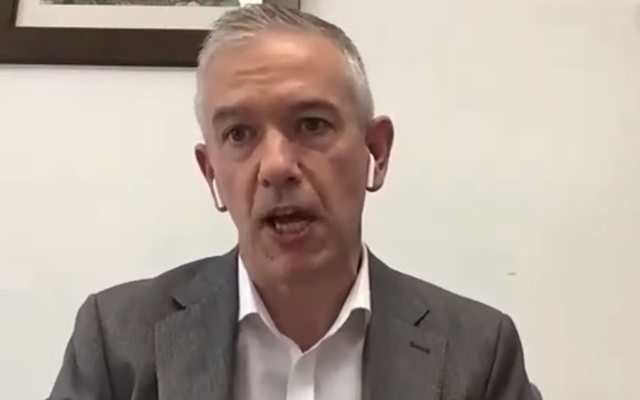
Image: ALLIANCE
Dr Gregor Smith
|
||
|
||
|
Scotland’s Chief Medical Officer has said his own parents died at “far too young an age” due to the country’s “chequered history with health inequalities” – but that there is now a “real opportunity” to tackle stubborn health disparities.
Dr Gregor Smith said that neither his mum or dad, or stepdad, had lived to 70.
“In a modern society that seems ridiculous but that is the experience of so many families across Scotland,” he said.
“And I think renewing a real strength of commitment and resolve to make sure that future generations don't experience that same sense of loss at such an early stage is something that we actually owe it to society to make sure we pull out all the stops to tackle.”
Scotland has the lowest life expectancy at birth of all UK countries, with a gap of more than ten years in life expectancy between the wealthiest and poorest areas.
The stalling of historic improvements to life expectancy since 2012 onwards has been attributed by some to the impact of welfare cuts as part of a programme of austerity by the UK government.
Dr Gregor Smith, who became CMO after the resignation of Catherine Calderwood, was speaking at the ALLIANCE’s Equally Connected: Equally Valued Conference.
He said the NHS had to do more to engage with the communities it served as part of wider efforts to tackle inequalities.
“But I'm very clear in my mind that this is not something that health and social care can do alone.
“This has to be about society coming together, all parts of government working together to make sure that we create the right conditions for everybody in Scotland to have realised opportunities that their potential create for them.
“I don't think that's always, unfortunately, been the case for people in society, and whether it be about strengthening the approach to education, whether it be about supporting those who have been disadvantaged or who have become ill, through having a fairer welfare system.”
Gregor Smith also talked of the importance of health and care services – which, given the sheer size of the NHS as a so-called ‘anchor institution’, can dominate – engaging properly with the communities they serve when making decisions about the future shape of health and care:
“I think over this coming period, as we tackle health inequalities in particular, unless we engage fully and properly with these communities from these anchor institutions, knowing exactly the prominence and support that they can create within communities as well, then we're not going to make as much progress as we would hope that we would make.”
Also covered during the interview with Tommy Whitelaw, the ALLIANCE’s National Lead for Caring and Outreach, was the topic of climate change.
Dr Smith, who devoted a chapter of his most recent annual report to the topic, said there was a “very real danger” that action on climate change could slip down the agenda because of covid-19.
“Climate action has been something which has been personally, very important to me for a long time.
“If you group together health care on a global basis, the contribution to CO2 emissions would actually be making the fifth largest country and it's an incredible statistic. So there's a duty on all of us to look to see what we can contribute to trying to tackle that.”
He said that there are readily identifiable ways that people working together than reduce the impact of health on the environment, citing the thousands of journeys saved by bringing in the Near Me video consultation platform, and the work of a group of Scottish anaesthetists, the Scottish Environmental Anaesthesia Group, who are changing the way they use ‘greenhouse gas’ anaesthetic products.
Asked what message he wanted to leave with colleagues and families across Scotland, Gregor Smith said he simply wanted to acknowledge and thank people:
“My key message, particularly to colleagues but really I think this applies to everyone across Scotland if I’m being honest, is first of all we recognise, I recognise, just how hard an experience the last 15 months has been for everyone.
“This has been the toughest year of my life but not just from a work point of view because I've had to deal with living with the same restrictions and life, the same inability to be able to meet up with people that I love and want to see, as everyone else has. And that's really tough over a long period such as we've experienced.
“But there's a special thanks I really need to say to all my colleagues across the country for the way once again, they have stepped up.
“Every time they’re called upon, they’re never posted missing at all. They’re always there.
“There's a real danger that we begin to take universal healthcare for granted. It's a huge privilege for us in Scotland to have the NHS and social care services in the way that we enjoy them. And I guess my parting words would just be a very big thank you and appreciation to everyone for everything that they've done over the last year.”
healthandcare.scot is pleased to be the media partner for the ALLIANCE’s Equally Connected: Equally Valued Conference.
Sign up to our bulletin for key health & social care updates straight to your inbox.
|
