|
Excess deaths warning as long waits in A&E surge |
Related newsDoctors: ‘Shocking’ A&E figures require action Less than full-time – behind the NHS trend Longest NHS waits a funding priority, says government NHS doctors unemployment crisis despite understaffing Watchdog criticises homelessness health service cuts Scotland’s frailty services to help address NHS waits 
|
|
|
||
|
||
|
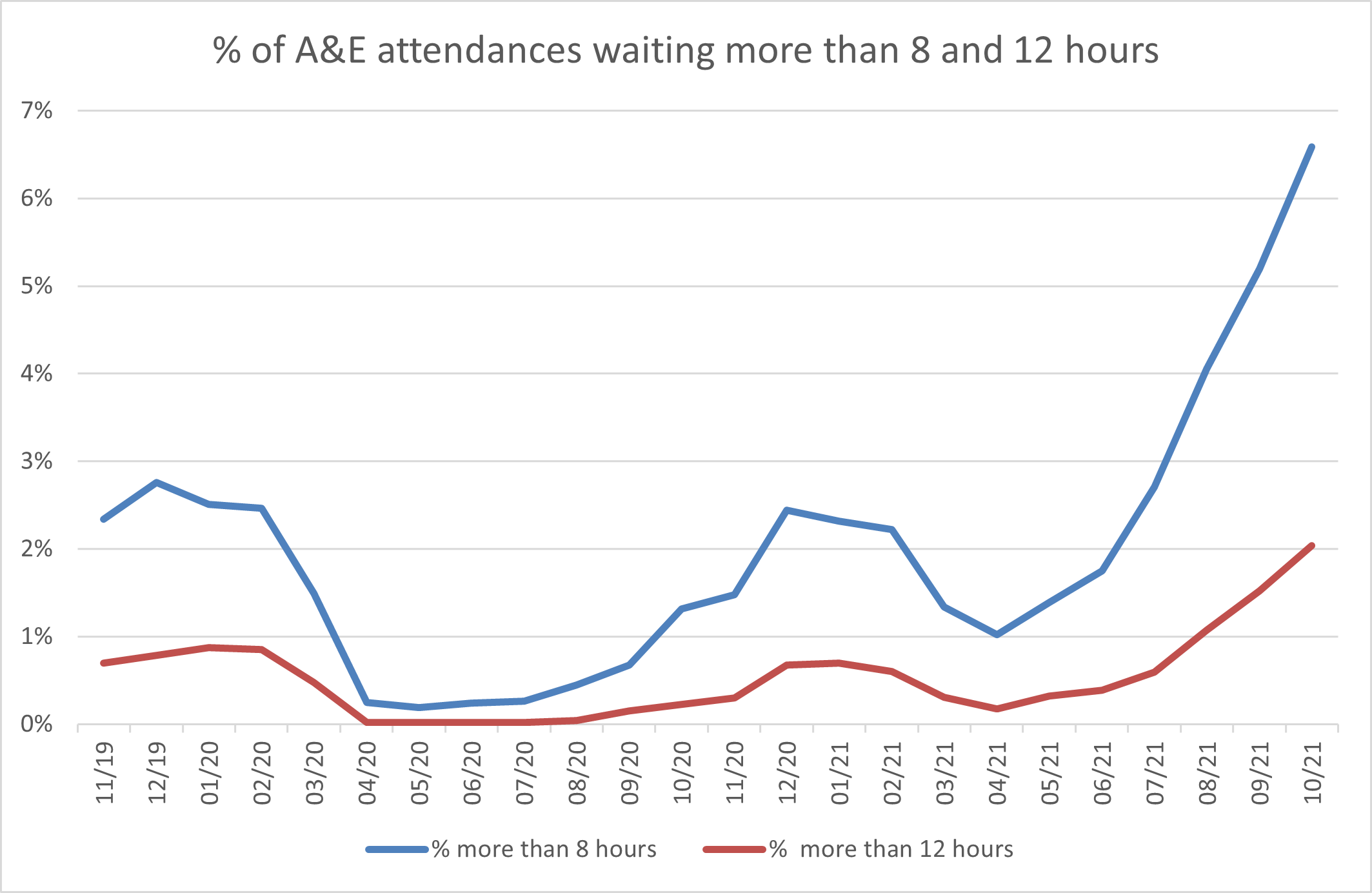
The number of patients facing the longest delays in Scotland’s emergency departments is surging as the last month of figures saw new records set for eight and 12-hour waits.
Analysis suggests one in 15 people going to A&E now wait more than eight hours. In October 2019, before the pandemic, that figure was closer to one in 60.
A total of 8,181 patients spent eight hours or more in an A&E in October, according to Public Health Scotland figures, 6.6% of total attendances.
The figures also show 2,533 people faced waits of more than 12 hours, 2% of all patients.
The target is for 95% of patients to be seen, and then admitted, transferred or discharged within four hours.
Dr John Thomson, of the Royal College of Emergency Medicine Scotland, said nearly 400 excess deaths could be ‘directly’ attributed to dangerously busy A&Es.
Attendances at major A&E departments fell by 5% in October, to 124,211.
Despite this, performance against the A&E standard hit a new record low, with 71% of patients being seen, and then transferred, admitted or discharged within the four-hour target.
Recent months have seen a record proportion of patients facing long waits in emergency departments.
Long delays in emergency departments are linked to worse outcomes for patients and analysis by the Royal College of Emergency Medicine Scotland shows excess deaths are continuing to grow.
Dr Thomson, an Emergency Medicine consultant, said: “This trend is extremely worrying and, most of all, dangerous for patients. Each month, the number of patients that have come to avoidable harm grows. So far in 2021, 387 excess deaths have occurred as a direct result of crowding.
“This number will continue to increase unless patient flow is prioritised this winter; this means freeing up beds where possible by ensuring that patients have timely access to social care, utilising the Discharge to Assess model, and avoiding admission when appropriate by maximising the use of Same Day Emergency Care.”
This week Public Health Scotland revealed that some 1,500 people remain in hospital and cannot be discharged despite there being no medical reason for them to remain there.
NHS Lothian recorded the highest number of eight-hour emergency department stays, on 2076, followed by Greater Glasgow & Clyde on 1977.
Nearly 900 12-hour waits were recorded in Lothian, almost double the number in Glasgow.
Last month the Scottish government issued new guidance to health boards advising them to redirect more patients who were not emergency cases away from A&E.
Read more: Hospital sets record low for four-hour A&E target; A&E call-ahead reforms having “no impact”; 111 delays risk A&E call-ahead plan
Sign up to our bulletin for key health & social care updates straight to your inbox. |