|
£20m urgent care reforms need "rapid refinement" |
Related newsEdinburgh GP to chair BMA in Scotland Less than full-time – behind the NHS trend Drug harms on the rise in Scotland Doctors invited to shape medical workforce reforms Health and charity leaders join forces for NHS reform Probe into future of NHS Scotland’s doctors underway NHS governance must be strengthened, says watchdog Long 111 waits still issue for A&E call ahead reforms Phage therapy approved for resistant infections 580% rise in mental health calls RCN calls for urgent investment in nursing Renewed campaign to divert people from going to A&E 
|
|
|
||
|
||
|
A set of reforms to reduce pressure on hospital emergency departments has diverted a ‘relatively small’ number of patients away from A&Es, a review has found.
A report published last week found the £20m redesign of urgent care (RUC) programme had reduced attendances by around 200 patients a day, or 5,600 a month.
Around 125,000 people in total went to Scottish emergency departments in October, the latest figures show.
Report authors Professor Derek Bell and Sir Lewis Ritchie said the programme needs ‘review and rapid refinement to deliver benefits for patients and the system’ amid concerns over low usage and patients facing delays when calling 111.
Concerns about the programme have been raised with the health secretary by BMA Scotland and the Royal College of GPs.
Dr Patricia Moultrie, deputy chair of BMA Scotland, said: “The programme seems to keep being pushed forward, to some considerable cost, and as far as we are aware, without a great deal of evidence of any positive impact as yet.”
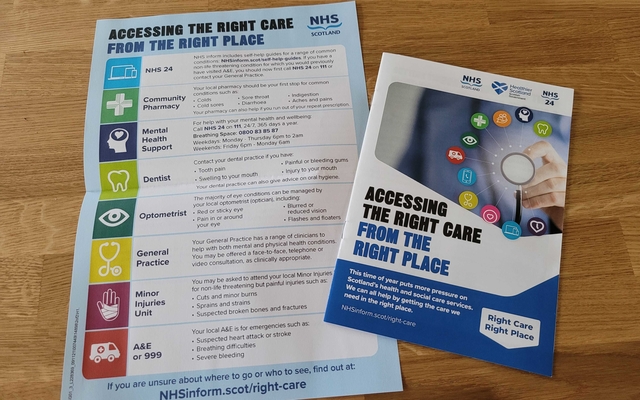
Under the changes introduced last winter, the public are asked to call 111 instead of taking themselves to A&E, when they have a problem that is not life-threatening. A national marketing campaign has been promoting the initiative and £23m was allocated to it in the NHS recovery plan.
Health boards receive referrals from NHS 24, which runs the 111 service, through flow navigation centres that can then offer a telephone or video assessment with a senior clinician.
Patients will then be directed to the most appropriate care setting, which could be A&E or alternatives such as an out-of-hour GP service, community pharmacy or self-care.
The Scottish government said its goal for the reforms is to reduce A&E attendances by 15% to 20% by 2026.
But an evaluation looking at the period from April to September suggests the so-called Flow Navigation Centre (FNC) pathway in its current format will reduce demand by just 5%.
Around 400 patients are seen each day through the RUC pathway and the analysis states roughly half go onto be seen in A&E, with the others offered alternative care.
Staff feedback in the report suggested asking patients to call 111 first may actually ‘add to the complexity and length of the care journey for some patients.’
Those given a scheduled A&E time slot were often forced to ‘join the queue’ on arrival to emergency services, which led to more delays to their receipt of care, the report authors found.
Dr Moultrie from BMA Scotland said:
"Concerned patients need to be able to access the support and help they need without delay, or any doubt about where they need to go.
"On that basis the redesign of urgent care is something that needs to be extremely carefully considered and we retain significant concerns about this programme.”
One of their central recommendations was for a review of NHS 24 staffing and call processes and for the service build sufficient workforce capacity and capability ‘with urgency’ to meet 24/7 demand.
Despite an earlier report flagging call handling delays as a ‘key risk’, wait times for those calling NHS24 continue to be a problem with people stuck on the phone for up to 25 minutes and up to 30% hanging up before speaking to an advisor on weekends.
NHS 24’s director Service Delivery, Steph Phillips, said a “significant recruitment programme has been underway” with hundreds of additional staff being trained.
She explained some callers with non-urgent conditions may choose to abandon their call early as they are advised on options for “alternative care to better suit their needs” at peak times.
“NHS 24 continuously undertakes detailed planning and forecasting to predict call demand on the service and to ensure that staffing levels are appropriate,” Ms Phillips added.
A lack of ‘unified vision’ of the whole urgent care pathway, in what staff described to the report’s authors as a ‘nationally-mandated approach, driven at pace’ is holding back the implementation of the reforms across the health service.
The Scottish government says it continues to support the “principles” of the RUC pathway and will continue to “evaluate, monitor and refine” it.
A spokesperson said: “During the pandemic many new and different ways of working were developed to support the continued delivery of critical services, including the redesign of urgent care, and we are keen to build on this to support person centred care and delivery of high-quality care and treatment.”
Read more: Excess deaths warning as long waits in A&E surge; A&E call-ahead reforms having “no impact”; 111 delays risk A&E call-ahead plan
Sign up to our bulletin for key health & social care updates straight to your inbox. |
