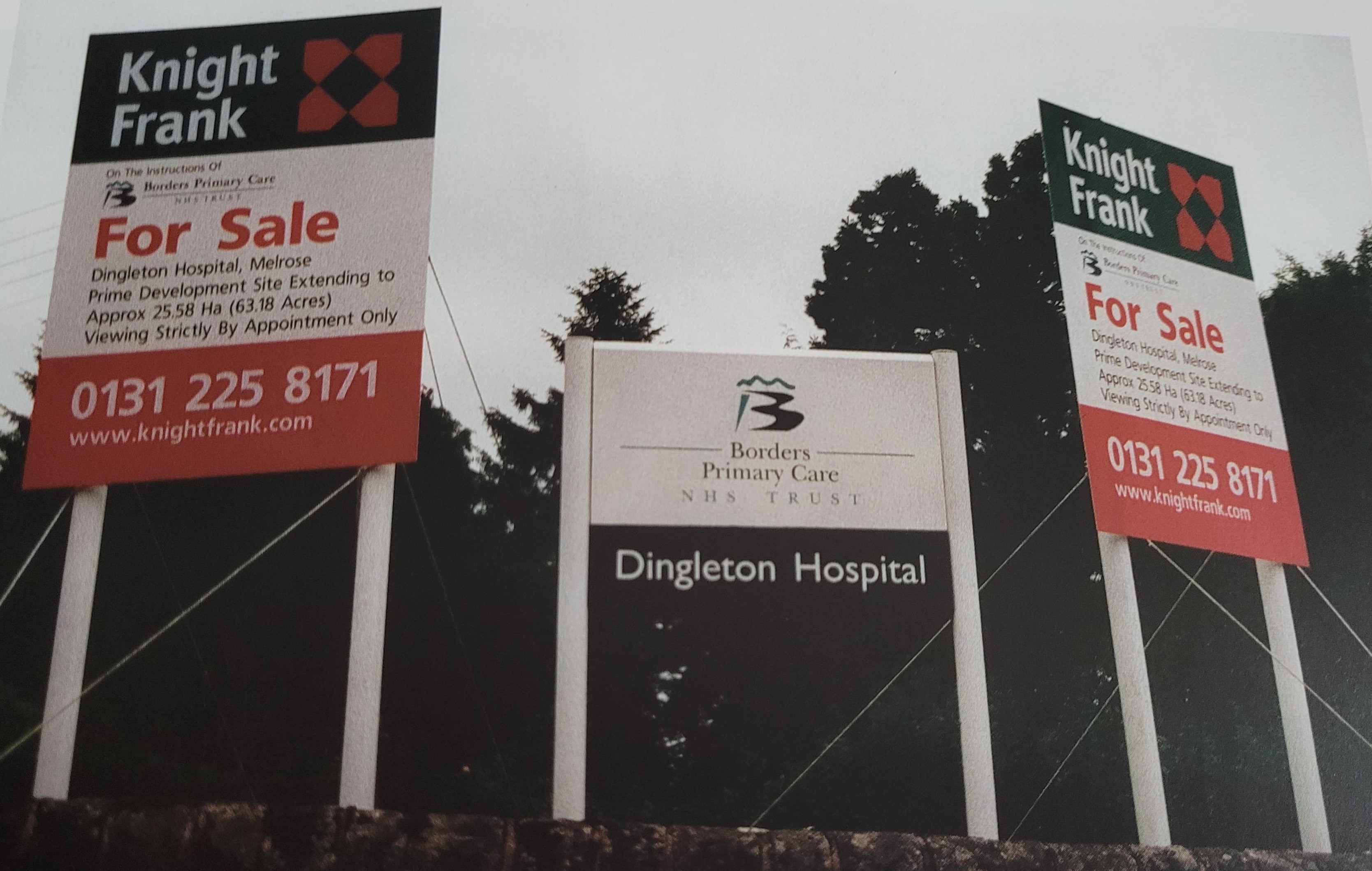
|
A psychiatric hospital "ahead of its time" |
Related newsInnovative farm transforms lives on Lewis Glasgow project makes research accessible to all Call for changes to long distance care placements TV advert promotes human right to benefits ‘We’re told we are lucky to be alive’ Borders welcomes community dementia nurse Call to expand Huntington’s specialist care Borderers saddle up for health NHS Borders decides it’s time for change Honest conversation needed as NHS Borders struggles on 
|
|
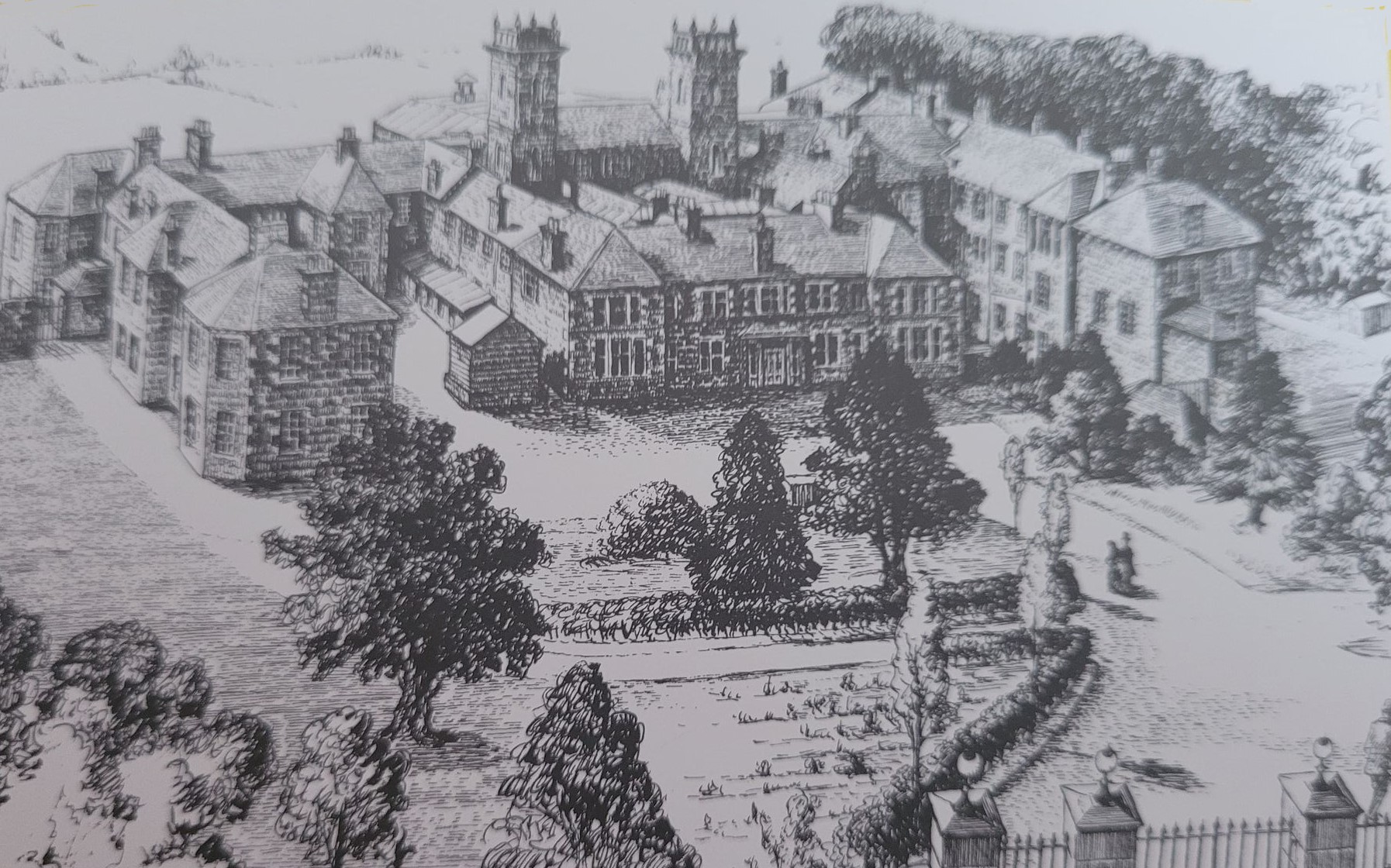
Dingleton Hospital, Melrose
|
||
|
||
|
A small unassuming asylum turned therapeutic community nestled in the Tweed valley has been described as a pioneer of an approach to mental health care which centred on openness, democracy and inclusion well before its time.
At a time where institutions are largely considered a disavowed relic of the past, former staff and patients of a Scottish Borders’ psychiatric hospital tell a different tale; of a hospital best placed to help those in need and of mental health services that have gone downhill since its closure.
This is the story of Dingleton Hospital, as told through the memories of staff members, patients, and members of the local community from the end of the 1960s to its eventual closure at the turn of the century.
Mental health services have undergone a radical transformation across the UK over the last three decades, with care having shifted almost entirely out of hospitals and into the community. Precipitated by a wake of shameful public inquiries into psychiatric hospitals during the 1970s and 80s that revealed widescale abuse, exploitation and bullying, the process of deinstitutionalisation was undertaken at speed, underpinned by the Community Care Act which was passed by Thatcher’s government in 1990.
For some who had been consigned to cruel institutions, this ushered in the beginning of a new era of patient-centred care and consideration of their human rights for the very first time.
However the closure of institutions marked something different for a former patient of Dingleton Hospital on the banks of the Eildon Hills on the edge of Melrose.
First admitted as a teenager following an overdose in the early 1990s, they told healthandcare.scot that the hospital’s closure in 2001 ushered in the end of internationally acclaimed, high-standards of care within the region, which the hospital was central in defining:
“For me, Dingleton was an asylum in the true sense of the word – not, as in, a lunatic asylum but the true sense of the word. That for me is what has gone in acute mental health care in the Borders.
“What’s left of the service is nothing compared to what it was with Dingleton, and that means inpatient care and care in the community. It was better before the Community Care Act.”
They are far from alone in this assessment: Dingleton’s legacy as an innovator in a more collaborative, democratic approach to psychiatric care, a place ahead of its time, looms large in those healthandcare.scot spoke to.
Whether the liberal rhetoric of Dingleton Hospital’s advocates comes from rose-tinted nostalgia in the context of the 21st century’s financially stretched mental health services, or whether the hospital really was a leader in progressive psychiatric care can be explored through the memories of those closest to it.
The golden era
Even from the post-war period, Dingleton was a trailblazer of one of the most radical institutional changes to take place thus far – unlocking ward doors and removing barred windows, allowing patients free movement through “open door” policies from as early as 1949, four years before the next early adopter followed its lead.
However it was under the superintendency of social psychiatrist Dr Maxwell Jones, against the backdrop of the social and cultural upheaval of the 1960s, that Dingleton earned its international status as a pioneer in mental health care.
Key to this was the establishment of the hospital as a therapeutic community – again, the first of its kind in the UK - which boasted freedom of movement, a flat hierarchy, new therapies and concepts of responsibility, feedback and constructive criticism.
Seemingly in contradiction of mainstream thinking of the time, the goal of Dingleton’s staff was to avoid institutionalisation – treating patients as citizens like any other, empowering them to take control over their treatment and recovery and return to life in the community.
The lifeblood of the early days of the therapeutic community was the Community Council, a daily hospital-wide meeting that involved staff from all grades and departments, with a special once a week meeting involving patients. Meeting attendance was strongly encouraged, to enable staff and patients to connect and engage in the daily running of the hospital.
Keith Millar, who has strong early links to Dingleton through his father who played a guiding hand in the running of the hospital as elected Secretary from 1959, was a charge nurse at the hospital from the 1970s. He says the therapeutic community flourished in the early days thanks to the combined efforts of staff and patients:
“The therapeutic community had its flaws, but in terms of involvement of patients, achieving results, involving staff at all grades…it was a good place to work.
“It was more on your shoulders as it was more responsibility – the regular opportunity to open up discussion can be painful sometimes. Some days, not handling a situation well with a patient, you would get confronted by your peer group and that was sometimes tough but, my God, it worked.”
The ethos of the hospital was catching; staff found themselves permanently altered by the philosophy in which they worked at Dingleton.
Mr Millar said it took a special kind of person to work at the hospital, and not everyone was willing to engage with the kind of collaborative mindset that was required:
“A lot of GPs and medical staff didn’t like to go along with the ethos as it took a lot of the power away from them.
“Some didn’t agree with the open principles or shared diagnoses or stuff like that.”
The therapeutic community represented a challenge to the unquestioned authority of clinicians – flattening the hierarchy and giving a voice to traditionally silenced patients, given autonomy to engage with decisions made about their care. An inherent resistance to authority, in the face of opposition from across NHS management and, later, the local health board, defined Dingleton and its services.
While this approach may have stifled the wider spread of the therapeutic community in the UK, its unique ethos allowed the hospital to attract skilled consultants looking for a challenge and did much to garner the hospital’s reputation internationally. Staff came to the hospital from all over the world to study the philosophy – even more than two decades after its closure, Dingleton’s international acclaim remains, with a written history of the hospital making up part of the syllabus for social workers at a Japanese university.
One nurse compared his time at Dingleton in the 60s as like a “tattoo secreted somewhere in my soul”, his experiences leaving him “quite unsuitable” for a career in typical institutional psychiatry of the day.
“You didn’t come to Dingleton if you didn’t relish challenge and an atmosphere of intense emotional interaction”, commented a former senior housing officer who worked in one of the hospital's community teams during the early 70s.
Community care and beyond
Amidst a steady process of deinstitutionalisation, wherein psychiatric hospitals lost favour and care in the community became the in-model, Dingleton’s future grew increasingly uncertain.
However, the hospital was an early adopter of the community approach and by the end of the 1960s already had well-developed multidisciplinary community teams that resulted in a continuous reduction of inpatients throughout the years until its closure. Following the philosophy of the therapeutic community, new patients were assessed and usually treated in their homes - a policy that, Mr Millar says, would be “laughed out the door” if it were to be discussed today. Assessments were always joint, conducted by two staff members from different professional backgrounds.
Dingleton’s decades-long lone furrow in community care was not enough, however, to protect it from the tidal wave of administrative and political upheaval in the health service that would see its eventual demise.
Growing demand for mental health care, rising expectations of standards and a government drive for health boards to “sweat their assets” had resulted in critically low staffing levels at the hospital by the mid-1980s.
Mr Millar, who chaired the Dingleton Hospital Archive Group that published a full history of the hospital in the year 2000, says the rush towards community psychiatry was largely motivated by cost reduction, rather than a genuine consideration of people’s needs.
“The Borders health board was formed and that’s when things got a bit tighter - it was the constraints placed on them, financially.
“The therapeutic community we had at Dingleton was totally demolished in front of my eyes with the politics of the day.
“We already had day groups, day hospitals – both slashed and cut without any thought gone into it.”
Moving services to the community was part of a nationwide drive to improve care standards and listen to the needs of the person.
However, healthandcare.scot heard from former Dingleton patients who received support after the hospital’s closure who believed care was much more person-centred when the hospital was open, whether they were onsite or in the community.
The Mental Health Renewal Programme was launched in 1994 and marked the first formal consideration of plans to close the hospital, and to disperse any remaining inpatient services into a network of new services throughout the community. Between transferrals to the new Borders General Hospital and amalgamation of services, bed numbers were cut from 258 to zero in the six years before the site’s closure in 2001.
Provision of day services is especially challenging in rural areas like the Borders, where large, single units are not suited to its scattered small populations.
For Mr Millar, a move from a sense of local ownership and self-determination to one of external ownership and imposed governance – a phenomenon that will perhaps not feel unfamiliar to those who have worked in the health service more recently – threatened the previously high-standards of mental health care in the region and displaced many patients.
“When Dingleton was closed – which we all knew was coming – I was worried that the philosophy, and the checks and balances that that philosophy had, would not carry out well into the community.
“A lot of outpatients worked there but had to leave when it closed. It felt like a disaster. At least in Dingleton they had a place for themselves.”
And it appears his fears were justified:
“There were more services in the community when Dingleton was open. The drastically reduced day services, which are very inadequate I’d say, seem to be against what was the plan in the first place,” a previous patient told healthandcare.scot.
The former patient, who was part of the steering group for the future of mental health services in the region, says all hope of recovery has gone.
“They don’t offer longer term psychology anymore. How is that person-centred at all? My psychiatrist acknowledges that what I needed used to be available in the Borders, but it isn’t now. Even if a talking therapy is what they know you need and would prescribe, they can’t give it to you because of all those criteria. How do people get better? There’s no hope of recovery left.”
Barbara Wright, Chairman of, as it was then known, the Border Primary Care NHS Trust from 1998 to 2002, wrote in 2000 that she was “sure that the high reputation of the Borders mental health services will continue, despite the closure of Dingleton”.
“The closure of the building may be an ending for Dingleton but it is a new beginning for mental health services to Border residents.”
Two decades on, it is hard to find such enthusiastic proponents of mental health care in the Borders, which suffers from the same problems - long waiting lists, underfunded and understaffed services, and inaccessibility – as the rest of Scotland.
The gap left by Dingleton is felt by all those who would perhaps benefit from a culture of open communication, autonomy, and compassion that defined this legendary, complicated, much-loved place.
Much of the content of this article was found in ‘The Story of a Community: Dingleton Hospital Melrose’. This labour of love, a near-comprehensive history of the hospital, put together by former members of staff can be purchased here, in exchange for a donation to organisations benefitting mental health patients across the Scottish Borders.
Read more: Insight: Why I chose psychiatry; Long read: Now wash your hands; Long read: The CMO who spoke the unspeakable
Sign up to our bulletin for key health & social care updates straight to your inbox. Tags: Learning Disabilities; Mental Health. |