|
Health poverty hits halfway through pregnancy |
Related newsHow data insights will help deliver NHS reform Charter update for health data researchers New service to bolster Scotland’s health research Delivery of dementia vision moves forward Broken hearts can be as deadly as heart attacks Big data: closing the endometriosis knowledge gap Aberdeen team to repurpose COVID test technology NHS board savings push could see AI replace staff Aberdeen honours UK’s first occupational therapist Rollout of at-home kidney treatment Board chief warns extra funds won’t balance budget Cancer workforce “not on right trajectory” 
|
|
|
||
|
||
|
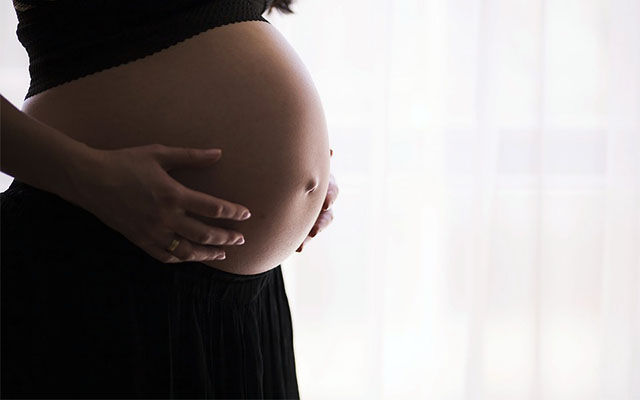
University of Aberdeen researchers have shown health inequalities are impacting children earlier than previously detected, linking lower household income to smaller than average foetuses as early as 20 weeks into pregnancy.
Smaller than expected size at different stages, known as ‘small gestational size’, is associated with a host of health problems, ranging from asthma and type II diabetes to heart attacks and early death.
Professor Steve Turner, who led the research, says this study linking increased risk of these health issues to poorer parents, found health inequality exists before birth and the poverty gap widens between 20 weeks and birth.
He added: “I suspect the associations that we see here will reflect the deprivation gradient across the UK. If you’ve got an area of great deprivation, you’re likely to see a greater reduction in foetal size.”
In the 2019 Child Poverty Report, 24% of children in Scotland were living in poverty, which was then estimated to increase to over a third of children Scotland by 2020/21. Since these estimates were pre-pandemic, this may be even higher now.
Public Health Scotland (PHS) are investigating the impact of the pandemic on children and young people in the Scotland in their Covid-19 Early Years Resilience and Impact Survey (CEYRIS), finding “stark inequalities” for low-income households.
While maternal smoking does affect foetal size, the study’s authors state “the associations described are likely independent of maternal smoking,” but that they cannot wholly eliminate what’s known as collider bias due to the interlinked nature of poor health, rates of smoking and poverty.
Part of an international collaboration, this trend was observed globally as similar results were seen in data from Scotland, England, France, Netherlands, Norway, Spain, Saudi Arabia, and the USA.
Professor Turner said a whole system change is needed to improve these issues in Scotland and globally, highlighting enhanced engagement with antenatal services as key to addressing the health inequality identified in their research.
Claire Sweeney, Director for Place and Wellbeing at PHS, agrees that a wider system change is needed, telling healthandcare.scot:
“There’s no doubt about it, there’s lots that the NHS has got to do around this, but if we just exclusively look at what the health system can do – we’re missing a big part of the story.
“Things like people not being able to afford bus fares to travel to their appointments, that health boards might not have traditionally thought about, are very important.”
Earlier this month, we reported that maternity care for those from lower socioeconomic backgrounds worsened over the pandemic. Following a PHS report on perinatal experiences, those with lower incomes were found likely to experience poorer quality care when technology replaces in-person care. Recommendations included a greater focus on education and support for mothers, partners and solidifying the relationship with midwives in Scotland.
“This study shows we really need to be doing a lot more across Scotland, thinking about the whole system, to provide targeted support to people most in need.
“We know that a lot of this starts way before the child is born and we need to look at everything that can be done, particularly when pregnant and struggling with low income,” said Claire Sweeney.
Reflecting on the conclusions in their study and the implications for Scotland, Professor Turner suggested the focus must be on providing more support earlier:
“We already have Getting It Right For Every Child, a really good premise for a child health programme and initiatives like the Family Nurse Partnership, where young first-time mums are given extra support. So, there are some really good things happening in Scotland."
“What I hope these results do is encourage more emphasis and investment in the first thousand days[…] as there are things that we can do during pregnancy – particularly the second half of pregnancy – to improve those outcomes.”
On March 24th, the government published its Tackling Child Poverty Delivery Plan 2022-2026 which Claire Sweeney says PHS are very supportive of:
“It includes a commitment to increase the Scottish Child Payment by the end of 2022, a really welcome addition, particularly for these families with low income. That’s an important part of the jigsaw.”
Still, she added that the evidence indicates that the Scottish government must work on providing more financial support and providing it earlier. For instance, the government’s maternal Best Start Grant is not provided until 24 weeks of pregnancy. With this research identifying health inequalities as early as 20 weeks, providing support from that early stage is likely to lead to improved outcomes.
Read more: Virtual care worsens outcome for disadvantaged mothers; Maternity services face “chronic” staffing gaps
Sign up to our bulletin for key health & social care updates straight to your inbox. |
