|
Aberdeen honours UK’s first occupational therapist |
Related newsScots honoured in health, care and sciences Scots honoured in health, care and sciences Call to prioritise psychological therapies Plea to rescue ambulance service’s stranded asset Call to rethink rollout of walk-in GP services Concern at cap on psychology service NHS board savings push could see AI replace staff Rollout of at-home kidney treatment Board chief warns extra funds won’t balance budget Four centuries of bringing life to Aberdeen Rapid 4D heart scanner opens in north east Nurse director appointed as new NHS Grampian leader 
|
|
© NHS Grampian
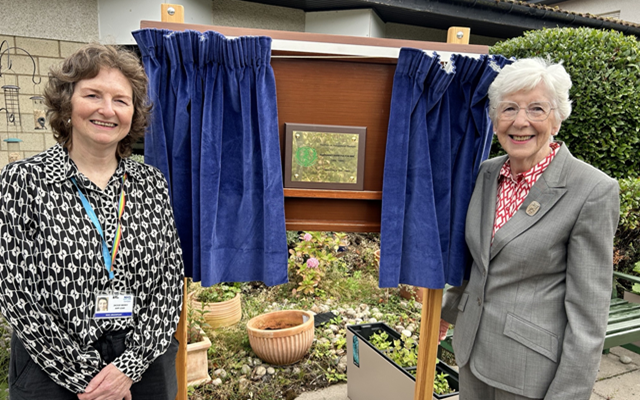
Jackie Berry from NHS Grampian (left) and Dr Catherine Paterson MBE (right) unveiling the new plaque at Royal Cornhill Hospital
|
||
|
||
|
A psychiatric hospital in north-east Scotland has unveiled a plaque to mark 100 years since the UK’s first qualified occupational therapist started working in the region.
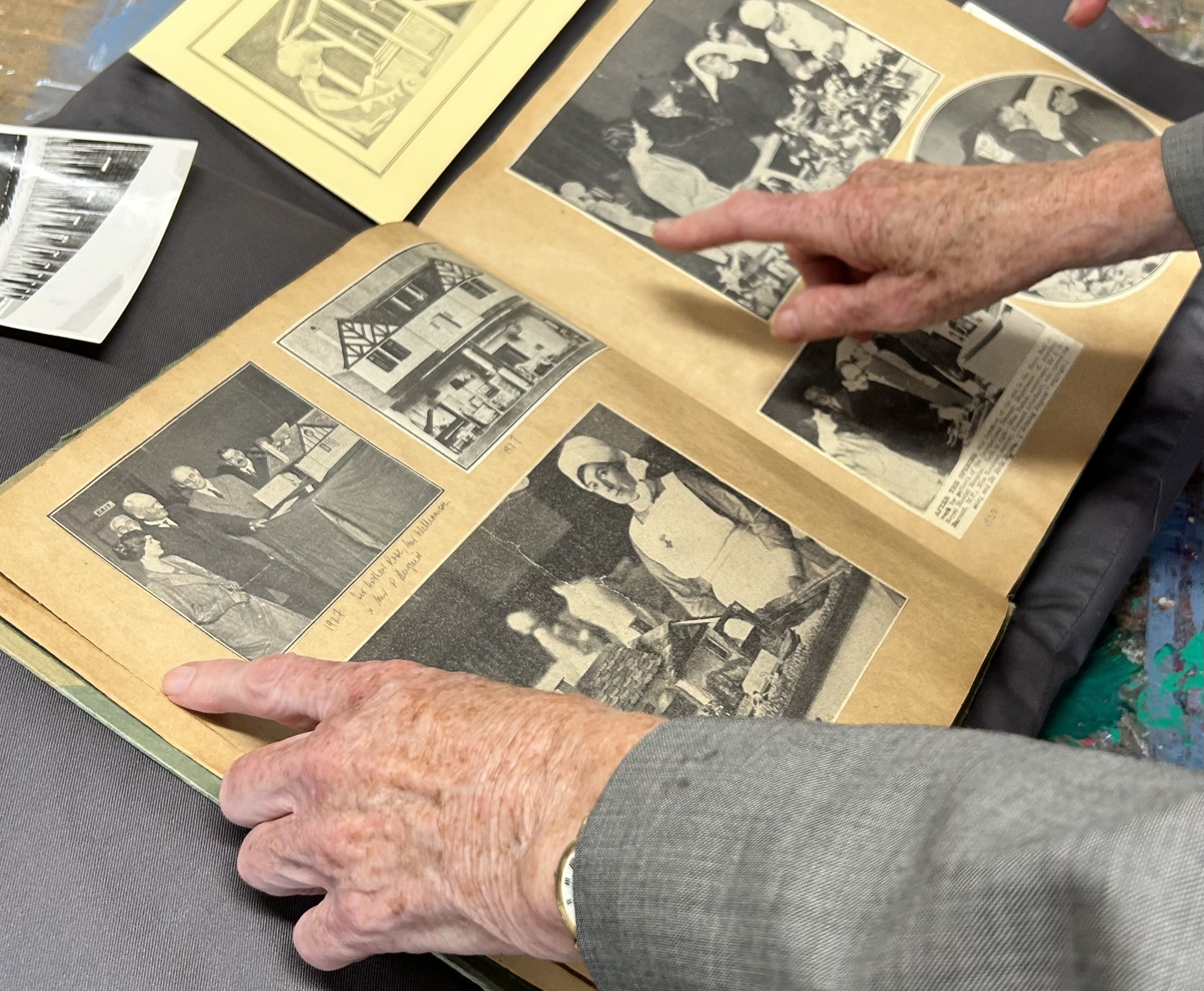
Margaret ‘Pegg’ Barr Fulton MBE took on the role in 1925, going onto gain international recognition for her work in occupational therapy until her retirement in 1963.
Staff at Aberdeen’s Royal Cornhill Hospital came together earlier this month with friends and former colleagues of Ms Fulton to celebrate the pioneering occupational therapist’s contribution to services in Aberdeen and around the world.
While the benefits of ‘occupations’, like gardening or working outdoors, were already considered therapeutic by the 1920s, the 25-year-old Ms Fulton had the opportunity to shape occupational therapy into the profession it is today.
From a newly erected army hut in the hospital grounds, Ms Fulton led the development of therapeutic classes, supporting more than 115 patients by 1926.
A talented crafter, and recognised for her dynamism, creativity, sense of humour and resourcefulness, Ms Fulton made it her mission to engage her patients in whichever activities sparked their attention.
As she reflected later in her career: “The success we had with these cases was due to the sudden impact of a new idea and the whole changing attitude to the mental patient”.
Within two years, Ms Fulton was leading exhibitions to give doctors insight into occupational therapy and to educate the public about mental health problems.
Later, she played a key role in setting up the Scottish Association of Occupational Therapists – which now exists as part of the Royal College of Occupational Therapists – where she served as secretary and treasurer before becoming chair in 1946.
Her friend and colleague Dr Catherine Paterson, who first met ‘Peg’ when she herself took on the chair role in 1968, went onto study and write about Ms Fulton’s pioneering successes.
Dr Paterson recounted:
“With no effective medications available to support mental health until the 1950s, it is difficult to imagine the challenge and skill required to engage patients in activities while deep in depression or suffering with psychosis. But Peg achieved that.
“She became fully aware of the value of humour. She hoped that modern day OTs could still incorporate a sense of fun into their treatment. She knew just what to say and when to say it to help people to cope.
“She was so perceptive, kind and thoughtful, always seeing the best in people and never passing an opportunity to help develop people’s talents.”
Born in Manchester to Scottish parents in 1900, Margaret Fulton travelled to the US in 1919 where she began study at the newly founded Philadelphia School of Occupational Therapy.
She returned to the UK in 1924 where, after the best part of a year of searching for employment, she took up her post in the Granite City.
Within seven years, 11 more women were working in similar roles across Scotland.
Looking beyond the country’s borders, Ms Fulton founded the World Federation of Occupational Therapists, becoming its inaugural president in 1952. She was awarded an MBE two years later,
following the success of the First International Congress which brought together almost 400 delegates from 21 countries.
Shortly after Ms Fulton’s death in 1988, a memorial garden and clinic were opened at the Royal Cornhill Hospital by the Princess Royal, the then-patron of the Royal College of Occupational Therapists.
This new plaque is a further tribute during this centenary year and serves as an ongoing reminder of Ms Fulton’s impressive global contribution to occupational therapy.
Jackie Berry, Occupational Therapy Lead for Mental Health & Learning Disability Services in NHS Grampian today, commented:
“Margaret was undoubtedly a trailblazer in our profession, when it was a very new role in health care.
“She proved the worth of occupational therapists in those early days and helped build the foundations of what we have now. Margaret recognised the relationship between therapist and patient is central to the therapeutic process.
“Back then, a century ago, the Royal Aberdeen Asylum would have been a very different place to work and be a patient. There is no doubt that Margaret supporting patients as she did would have been of great benefit to everyone around her, at a time when mental illness was much less understood than it is now.”
Read more: Occupational therapy and housing partners for health; A psychiatric hospital "ahead of its time"; Insight: Why I chose psychiatry;
Sign up to our bulletin for key health & social care updates straight to your inbox.
|


_(002).png)