|
The Glasgow mother of the C-section |
Related newsScotland’s Clinical Entrepreneur initiative returns Robotic surgery shows pioneering path to the future Mum scrubs-in to help deliver her baby by c-section Innovation and Scotland’s first digital hospital Greener NHS research funding boost AI for lung cancer care to help tackle “hidden killer” Medical trainee abuse reports ‘shut down and silenced’ Politicians must take ‘bold’ action on child poverty Glasgow district nurses ready to strike NHS and Glasgow rethink routes into healthcare ‘Major’ update to One Health AMR register Glasgow LEZ success sparks call for expansion 
|
|
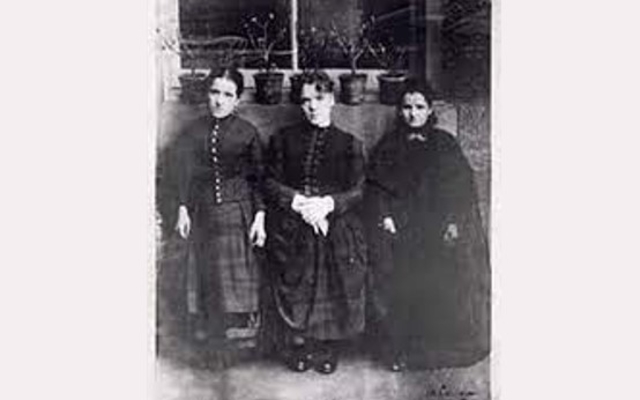
Image: Heatherbank Museum of Social Work
|
||
|
||
|
When a doctor at Glasgow’s Rottenrow Maternity Hospital, helped by the discoveries of two other 19th Century Scottish medical pioneers, undertook surgery to successfully deliver the baby of a young sewing machinist, they changed the course of obstetrics. Chris Holme tells their story.
Every woman who now undergoes an elective Caesarean section owes a debt to Catherine Colquhoun.
She was the first in a series of mothers who established that the operation could be carried out safely with both mother and baby surviving.
In medical textbooks they are described as “ricketic dwarfs” who underwent the procedure at Rottenrow – Glasgow’s Maternity Hospital.
Rickets, a disease caused by vitamin D deficiency through lack of exposure to sunlight or inadequate diet, was rife in Glasgow in the 1880s. It left women with a deformed pelvis, incapable of delivering a baby and more than likely dying along with their child if they tried.
Catherine was already in labour when she was admitted on April 10, 1888.
Dr Murdoch Cameron saw her and, after consulting colleagues, decided a Caesarean was her only hope even though he had not carried out one before.
It was a last resort, along with even more horrific alternatives.
Surgery at this time was often little more than gruesome butchery. Survival rates were as low as one in twenty.
It is unlikely that the operation takes its name from Julius Caesar. In classical times it was only conducted after the mother’s death to save the unborn child, but Caesar’s mother Aurelia lived for many years after.
As surgical expertise developed, St Bartholomew’s Hospital in London reported a successful operation in 1847 and there had been others in Europe by Max Sänger in Leipzig and Eduardo Porro in Italy.
Major breakthroughs came with James Simpson’s first use of chloroform as an anaesthetic and Joseph Lister’s application of antiseptics in surgery.
Cameron had worked under Joseph Lister in Glasgow and had closely observed his methods.
We know some details about Catherine. She was 27, a sewing machinist and 49 inches tall. Her legs had been deformed by rickets and it had taken several years before she was able to walk.
The operation did not get off to a good start, delayed by a fire caused by a bottle of ether exploding - although this may have helped sterilise the room.
It was a success.
Catherine was so delighted that she named her son Caesar Cameron. He weighed 6lb 10oz and had put on two pounds by the time they were discharged five weeks later. They were well nursed.
Reporting in the British Medical Journal, Cameron remarked:
‘Much of the success of this operation was due to the Matron, Miss Gordon, and to the nurses for their untiring attention to every detail in the after-treatment of this case.’
A close bond developed between Cameron and his ricketic patients. Catherine and Caesar Cameron were presented to a meeting of the British Medical Association a few months later.
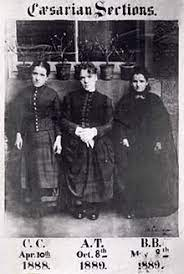
A second woman, aged 18, was the next to undergo a successful Caeserian and her baby survived. They became a band of mothers – the first two acted as bridesmaids to the third woman who was married at the hospital. Cameron took their photograph set against a window at Rottenrow - it was 3ft 3in high.
Cameron’s compassion was matched by a real desire to help them as best he could.
Others had a different view about the voices of women. Simpson was roundly attacked for providing pain relief in labour because their screams of agony were deemed an essential part of God’s will for womanhood.
The success of the operations was covered widely in the medical press. Cameron’s fame grew in Scotland and internationally.
In all, he did not do that many – between 10 and 14. What he established in Glasgow was the value of elective Caesareans – patients were admitted much earlier with the prospect of a planned operation, not a final desperate attempt to save a woman already exhausted from other attempts to deliver.
Catherine’s joy and fulfilment from motherhood was brutally cut short. Caesar Cameron died aged just eight months from bronchitis. The death certificate also records him as illegitimate and Catherine as illiterate.
Conventional historical narratives are nearly always woven around the experiences of men in battles or politics. The American nursing pioneer Mary Breckinridge noted in the 1920s that more women in the USA had died in childbirth than men in wars.
You can see the memorials in every cemetery – women who died young, and lists of their infants from everyday infections that are now rare because of vaccination and antibiotics.
They emerge more starkly in death certificates revealing the reality of poverty, stigma, and wretched circumstances of our own distant family members.
It was this which reduced stone-faced journalist Jeremy Paxman to tears on Who do You Think You Are? over the shocking treatment his great granny received because she had an illegitimate child.
My own paternal granny died a few months after giving birth to my dad. She was 45 and had given birth to ten children. The cause of death was pulmonary tuberculosis… and exhaustion.
Improvements in midwifery, particularly with the expansion of highly trained Queen’s nurses, helped reduce maternal mortality. But in 1929 even in Edinburgh, well served by staff and facilities, one woman was still dying every week in childbirth.
That year also saw the foundation of the Royal College of Obstetricians and Gynaecologists.
One of its founding members was John Munro Kerr, who had witnessed Cameron’s operations as a medical student and later succeeded him as professor of midwifery in Glasgow.
Kerr developed the C-section as we know it today with a horizontal scar lower in the uterus rather than a vertical one originally used by Cameron and others.
Major improvements came from 1935 onwards with the introduction of sulphonamide drugs to treat sepsis, blood transfusions and more systematic provision of ante-natal care.
More than one in three births in Scotland are now by C-section.
In affluent countries, maternal deaths are extremely rare but higher among the poor and ethnic minorities.
I don’t know what Catherine Colquhoun would make of her legacy. I suspect her sympathies would be with the 800 women around the world who continue to die every day during pregnancy and childbirth – mostly on their own without the care of a midwife or obstetrician.
Chris Holme is the founder of The History Company.
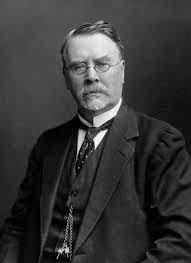
Image of Murdoch Cameron courtesy of the University of Glasgow.
Read More by Chris: TB and the Edinburgh physician; Scottish midwives on the frontier; Long read: The CMO who spoke the unspeakable
Sign up to our bulletin for key health & social care updates straight to your inbox. |