|
Social care: Parity not pound signs |
Related newsDonald Macaskill: Where is Scotland going? One precedent, inconsistently applied Care at home: A guide for new health ministers Moves to extend FOI to care homes Beyond the edge: why care homes are in crisis The in-between: what’s happened to care reform? 
|
|

© dglimages ____
|
||
|
||
|
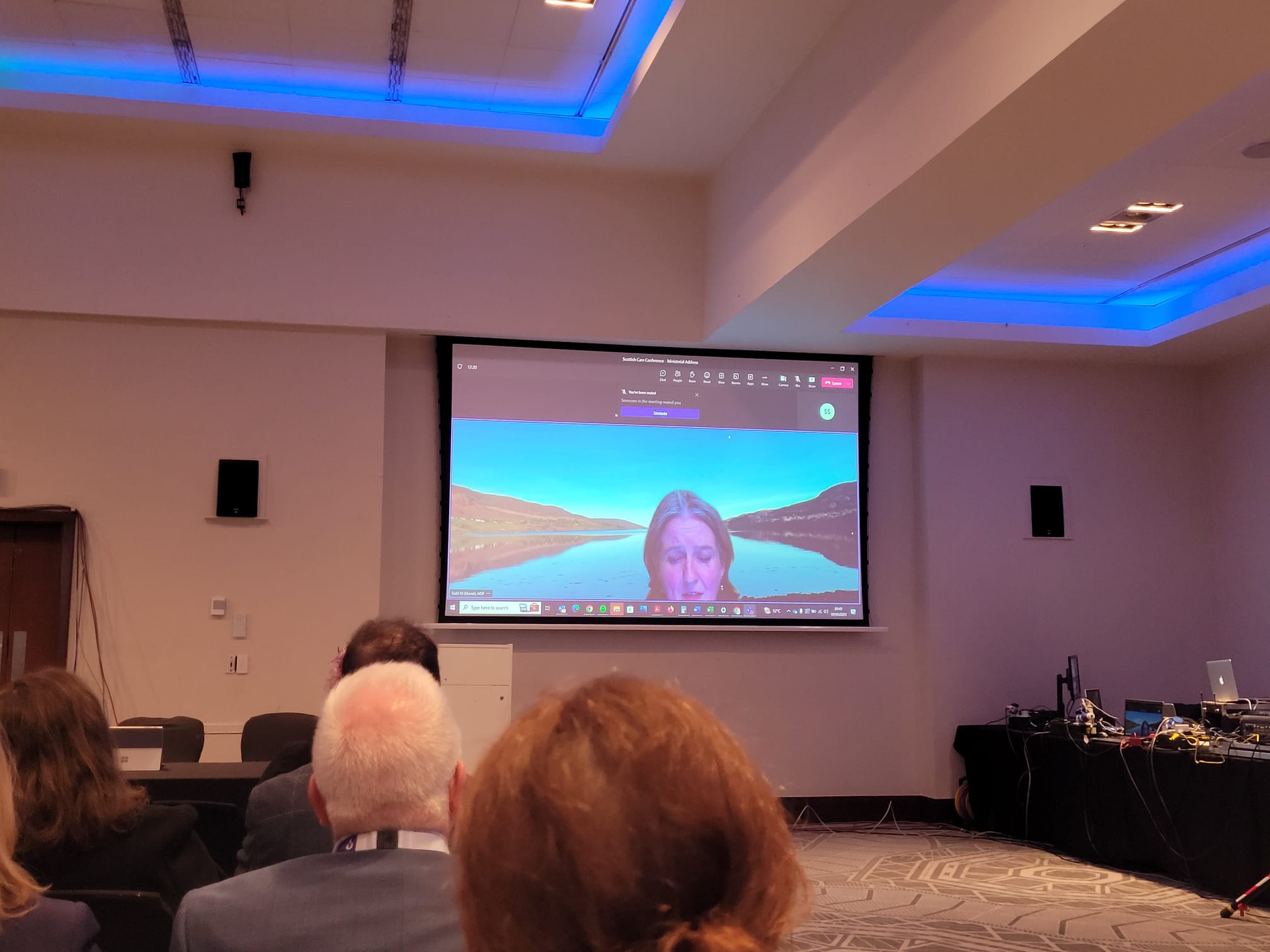
The Minister for Social Care has told Scottish Care conference attendees that “intense discussions” on how to fund the pay commitment are ongoing, and that preventative care is the way out of current crisis.
Maree Todd told last week’s conference that there is now a “clear pathway” to build parity of esteem between social care and the NHS.
In response to calls for a focus beyond pay, the minister acknowledged the need to “think bigger” in the future, but said government is squarely focused now on “improving pay and conditions as quickly as possible”.
Social care workers are currently paid a minimum of £10.90 an hour, but First Minister Humza Yousaf has committed to increase this to £12 an hour.
Ms Todd confirmed at Friday’s conference that currently there is no timescale for this increase, but said she is committed to finding a way forward as soon as she can.
Scottish Care says NHS staff are paid almost 20% more than their social care counterparts, which has made recruitment to the sector even more challenging.
Meanwhile, marketing campaigns to boost the social care workforce have been largely unsuccessful in convincing the public a job in care is rewarding or for caring people.
A total of 71% of housing support and care at home services were struggling with unfilled vacancies at the end of 2021.
Maree Todd told the conference that around 360 new entrants have joined the sector as a result of a collaboration between the Scottish government and the Department of Work and Pensions (DWP).
Ms Todd added that she will not wait for the National Care Service to begin action to achieve fair work within the sector:
“I’m very mindful of the need to build a system where there is parity of esteem [between social care and healthcare]. I think actually there’s quite a lot of work being done already: our social care workforce is professionalised, it’s already a registered workforce, and there’s opportunities for progression.
“I think where we are now there does need to be a focus on the rate [of pay]. I agree in the long term that we need to think bigger than that. But I am very focused on, right now in the midst of a cost-of-living crisis, improving pay as quickly as I possibly can and the conditions for social care staff.”
As of March 2023, 1,688 people medically fit for discharge were delayed in hospital due to a lack of appropriate care package in place.
However, Maree Todd said there is a “moral, ethical and economic imperative” to shift focus from acute to preventative care – and keep people from going into hospital in the first place.
“One of the reasons why there's so much focus on delayed discharge is that we are less good at measuring the front door of the hospitals - so that unmet need in our communities, which we can all acknowledge is there.
“If we want to reduce the pressure in the entirety of the health and social care system, we need to work on the front door as we need community health and social care services to be working cohesively to support people to live independently. We are going to have to work differently.”
Closing Friday’s conference, Scottish Care Chief Executive Dr Donald Macaskill urged the Scottish government to follow the lead of other nations in prioritising preventative care:
“In 2007 67% of homecare was in the space of preventative care. It was relationship based, it was time flexible, it was enabled by the dynamic relationship and access between the supported person and the person who was caring.
“We stripped all that out so that by 2021, only 3% of all care in this country was delivered in what we call implemented in space.
“We will never deal with the problem of delayed discharge and avoidable hospital admission unless we go upstream to stop people from being admitted in the first place. That can only be achieved with investment.
“If the government is serious, and if Scotland is serious, we need to follow the Australian and the Canadian and much of Central Europe's model, which is to massively invest in social care, especially home care.”
Read more: Recognising home care workers; Don't let social care slink back to shadows
Sign up to our bulletin for key health & social care updates straight to your inbox and you can follow healthandcare.scot on Google News. Tags: Home Care; Scottish Government; Social Care. |