|
From the frontline: The GP Nomad |
Related newsEdinburgh GP to chair BMA in Scotland Less than full-time – behind the NHS trend Doctors invited to shape medical workforce reforms Health and charity leaders join forces for NHS reform Probe into future of NHS Scotland’s doctors underway NHS doctors unemployment crisis despite understaffing 
|
|
|
||
|
||
|
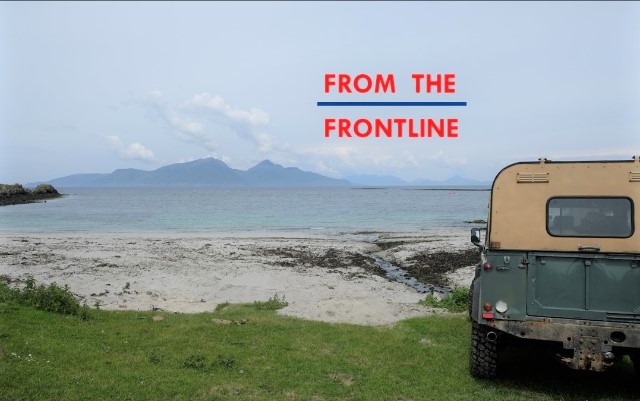
Having spent the first year after qualifying as a GP building his experience working in 20 practices across Edinburgh, the GP Nomad decided he wanted to get to know the furthest edges of Scotland.
Now, after four years as a full time locum working in remote, rural and particularly island communities, the GP Nomad has served in some 40 island practices and has just five to go until he has worked in all of them.
He has been telling healthandcare.scot of the pleasures and problems he has encountered working on the island healthcare frontline since deciding to pack up his car and say yes to whatever job offers came into his inbox.
“There’s a bit of a cliché that rural GPs, because they serve smaller communities, have much more time. Often at the end of the day, I wonder where my time has gone, even though I may have only seen 14 patients. But it’s different. You are involved in every aspect of their care, you’ve taken the bloods, done the ECGs, driven 40 minutes to home visits, dealt with the emergency presentations, as well as all the mail and results.
“When you are covering 24 hours a day you also find that you use that extra time, checking in on patients you are worried about in the evening, giving you more time to monitor them.
“Working on your own in a rural community is a challenge, but it’s good for keeping your skills up, as everything comes to you. In a city practice, there might be, for instance, a specialist nurse who you can refer people to. But at the same time, your skills in that area may begin to fade.
“It’s so nice to work with community nurses in the same remote community. You really rely on their knowledge of the area and appreciate and value the skills they bring, particularly when they’re not there and you realise the sheer number of dressings you are suddenly looking after.”
The GP Nomad admits he has had sleepless nights before many new locum posts, particularly when he’s going to be the only doctor, covering a community – and perhaps a small hospital – through the night. And, the ‘sexy’ war stories that he used to hear during training from visiting rural and island GPs of how they coped with terrible accidents did little to persuade him it was a life for him:
“I hated emergency medicine. I had no desire to go into emergency medicine. I didn't train as a surgeon or an anaesthetist, so the thought of working remotely and dealing with emergencies really scared me.
“There’s this great myth of the rural doctor who is an expert in everything and can solve emergencies single handed. My initial management is the same as if I was still in an urban setting. If I was in Edinburgh and someone came in with appendicitis or a hip fracture, would I have fixed it? Am I suddenly a surgeon or an orthopaedic specialist just because I am the only doctor on the island? No, they still need to go to hospital – and that decision is no different if you are a doctor on a Scottish island.
“The next questions are how do we do that, what is the timeframe and what do I need to do in the meantime? And this is where you realise you are not on your own.
“I cannot speak highly enough about our emergency colleagues, the retrieval teams and the air ambulance service who are incredibly good at dealing with me panicking on the phone. They talk you through everything and give you the advice you need. There's a real sense of a burden shared. And I get some confidence from the fact that I'm better than nobody.”
Scotland as a whole has too few GPs to meet the health demands of its population. With several of the doctors currently serving remote areas and islands nearing retirement age, their communities will each hope that others will be attracted to replace them. But it may be difficult for NHS boards to justify employing a doctor to exclusively serve a community of what might be a few hundred people.
The GP Nomad says there are models of care involving nurse practitioners with visiting doctors, and other colleagues, that work well and are popular within remote and rural communities in Scotland. And he is sure that there will always be doctors who are attracted to working in very remote settings:
“I can’t help feeling that GP training teaches us too much about being an urban medic. But it also equips you with more skills than you perhaps give yourself credit for. And not using those skills can be frustrating.
“When you're in a busy urban practice and you have to send someone to A&E for something that you could manage if you had more time, you feel frustrated and, for me, like less of a doctor. I am not talking about doing anything complex, just simple stuff.
“But when I can make the diagnosis, do the appropriate in-house tests myself, and administer simple treatments like IV fluids and antibiotics, I do feel so much more of a doctor for doing so.”
Follow the GP Nomad on Instagram @gp.nomad
The identities of the people we interview for our From the Frontline series are usually not revealed to allow anonymity for them and the people they work with.
Read more: The beautiful trauma of student nursing; A pharmacist on the frontline; Scotland’s first postgrad medical degree "on track"
Sign up to our bulletin for key health & social care updates straight to your inbox and you can follow healthandcare.scot on Google News. |
