|
Scotland’s chief medic seeks to redefine healthcare |
Related newsDoctors say GP funding boost “just the start” Less than full-time – behind the NHS trend Drug harms on the rise in Scotland Urgent plea to safeguard advocacy amid local cuts Call for government to prioritise heart health Government to merge two national NHS boards 
|
|
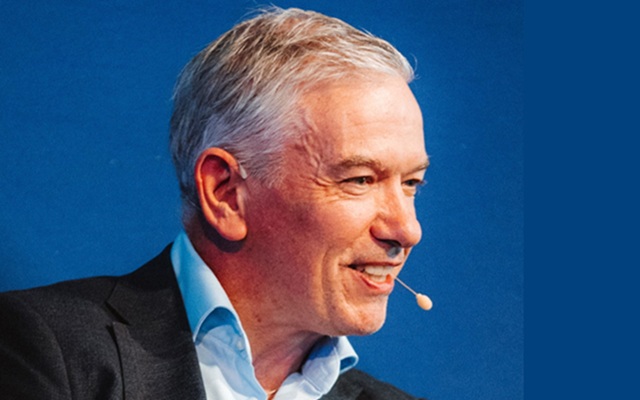
© Scottish government
Scotland’s Chief Medical Officer, Professor Sir Gregor Smith
|
||
|
||
|
This summer, the Scottish government set out plans for how it will shift the NHS from firefighting towards a system rooted in prevention, equity, and value.
At the heart of this transformation is Realistic Medicine – the philosophy first championed by Scotland’s Chief Medical Officer, Professor Sir Gregor Smith, and his predecessors. It asks clinicians, patients, and policymakers to move beyond a ‘one-size-fits-all’ model towards a more personalised, collaborative, kind, and sustainable vision of health.
healthandcare.scot sat down with Sir Gregor to explore what Realistic Medicine means in practice – and how Scotland has become a place the rest of the world is watching.
Scotland’s new population health and health and care service renewal frameworks seek together, over the next 10 years, to tackle the root causes of poor health and move care and support more firmly into the community.
None of this is new – politicians have long promised to shift spending ‘upstream’ into prevention.
But Scotland’s most senior doctor, Professor Sir Gregor Smith, says it’s different this time.
Now, compared to any other time in his 12 years in government, he says things are “falling into place”: stronger collaboration between health boards, evidence-based innovations and new approaches ready to scale nationally mean the time is ripe for the kind of system-level change he is leading.
“What I see now is health boards as organisations cooperating together in a way that perhaps has not been as strong in the past, and there’s no doubt in my mind that there’s an acceptance across the system [of the prevention approach],” Sir Gregor explains.
“Beginning to plan services and approaches to care at population level, rather than a narrower local level, makes a huge difference and has the potential to improve the quality of care in a way that we’ve not been able to tap into in the past.”
Hardly a week goes by without healthandcare.scot reporting on new initiatives across NHS Scotland – from new frailty teams being set up in emergency departments and GPs, the roll out of a diabetes prevention and remission programme, and primary care efforts to target the risk factors of cardiovascular disease.
And that’s not to mention all the work going on in the third sector and by community organisations to help people live well for longer, as they try to turn the burden of disease tide in Scotland, which is on track to rise by 21% by 2043.
Already, Scotland’s overstretched health and care system and the staff working within it are struggling to keep up with demand.
With success being measured on how well that demand is met now, usually by waiting times, striking the right balance between healthcare delivery and efforts to improve population health has never been more important.
“Now there’s a saying that I often use: ‘we manage what we measure’,” Sir Gregor reflects. “And I think that’s really important. So, we need to make sure that, where our ambitions lie and where our metrics are currently facing, there’s a synergy there.
“I would certainly like to see performance frameworks across Scotland that are much more focused not just on the care that we provide within hospitals, but in the care that we provide across the community and primary care settings, and that actually begin to demonstrate our progress against some of these ambitions within prevention.
“I am confident that what we'll see arising from the work that falls out of the population health framework and the service renewal framework system is that we're going to have a much more balanced approach to the way that we approach that in the future.”
Prevention in practice
The cardiovascular disease (CVD) risk factors programme, launched in GP practices this spring, is “part and parcel” of Scotland’s shift away from a sick care model to one of early intervention, according to Sir Gregor.
The key aim is to reduce inequalities, by supporting health professionals in the community to engage early and creatively with those they identify at heightened risk of developing heart disease – perhaps on account of their weight, smoking status, or ethnicity – to educate and support them to live well.
But Sir Gregor believes this programme and others like it will soon go much further – with new delivery models “reconceptualising what we mean by care”, by enabling communities to take greater responsibility for wellbeing and empowering individuals to play a greater role in their health.
“An awful lot of the time when we think about health care, it’s quite a parental model of care: people have care done to them, and they receive care from others,” Sir Gregor explains.
“But actually, if we think about care in a slightly different way, through a Realistic Medicine lens, care is everything we do that maintains and repairs and improves our world so that we can live in it as well as possible.”
For Sir Gregor, care exists on a spectrum: complex hospital intervention at one end and all those things that make life meaningful – like learning new skills and having the chance to spend time outdoors – at the other.
“For me, [care] becomes then something which everybody has a contribution to make, and everybody retains some form of agency within that space as well, in terms of their own ability to be able to influence care.”
Scotland’s place in the world
That vision is beginning to resonate internationally.
In December, Glasgow will host hundreds of delegates around the world in a major global conference on value based health and care.
The event is being organised by Sprink, which hosts an international centre for person-centred and value-based health care.
For Sir Gregor, who will open and close the forum, the event is both a showcase of Scotland’s achievements in Realistic Medicine and a working session on how to keep momentum in the movement alive.
“Scotland, still as a nation, is a place where other people want to come to learn,” Sir Gregor says.
“And I find myself continually contacted by other countries in Europe – indeed, other countries across the world – as my equivalents, or politicians in those countries, want to learn a little bit more about what we’re doing with programmes of work like Realistic Medicine or value based health and care.
“One of the reasons Sprink has chosen Scotland for their annual conference is because of the work that's going on here, and they wanted to partner with us because they thought that this was an area that needed highlighting to other countries around the world.
“What I love to see is, when clinicians across the country who are really proud of the difference that they’re making, are getting the chance to kind of show that up at these big conferences... to see us reach that stage now where we’ve got such work embedded across the country, for me, is just a really proud moment.”
Read more: Chief Medical Officer: ‘Critical connections’ priority; Ten-year low in Scots healthy life expectancy;
Sign up to our bulletin for key health & social care updates straight to your inbox. |