|
Glaswegians urged to use NHS wisely in winter |
Related newsNHS board asks relatives to help “free up” beds Sexual offences victim support bill gets MSP backing No appetite to ditch A&E target in Scottish hospitals Doctors’ leader issues stark winter warning A&E waiting times soar in Lanarkshire NHS Tayside consults on orthopaedic redesign NHS Glasgow told be ‘more transparent’ over infections Plea to public on virus advice as covid wards fill Landmark Glasgow MND trials begins City-wide guard of honour for NHS volunteers Home podiatry visits rise to stop hospital admissions Virtual appointments here to stay 
|
|
|
||
|
||
|
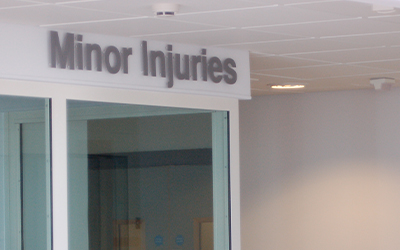
NHS Greater Glasgow & Clyde is urging people to consider attending a minor injuries unit instead of A&E.
Scotland’s largest health board is asking the public to think about whether they need to attend accident and emergency or if visiting the region’s dedicated, nurse-led minor injury units (MIUs) would be more appropriate.
Located at Stobhill and the New Victoria and Vale of Leven hospitals, the region’s MIUs see and treat nearly all patients within four hours, meaning patients are more likely to be seen quicker than if they attended an emergency department.
By visiting an MIU instead of an emergency department, patients with neck sprains and strains can save themselves over and hour and ten minutes, while those with broken wrists can expect to wait around 48 minutes less.
Cuts and grazes, insect bites, minor burns, sprains and strains, limb injuries like a broken ankle, and foreign bodies in ears or up noses can all be treated in MIUs.
Acute medical director for NHS Greater Glasgow & Clyde Scott Davidson says it is particularly important in winter that people use resources wisely:
“This is the beginning of winter and patients should really consider carefully the best place to attend if they are unwell.
“Those with serious or life-threatening illness and injuries will always be given priority. Attending our MIUs for a minor condition allows our emergency departments to treat those patients with more serious conditions.”
Led by emergency nurse practitioners, patients can expect quick access to health information, advice and treatment, including x-rays, plasters or splints and stitching and dressing of wounds where appropriate.
More serious conditions such as poisoning, fever, breathing difficulties stomach pains, vomiting or diarrhoea, rashes or allergic reactions cannot be treated there, the health board advises.
Infants aged less than one year should be taken to the city’s Royal Hospital for Children.
|
