|
Insight: Pharmacists in palliative care |
Related newsCall to rethink rollout of walk-in GP services National Pharmaceutical Agency remains on hold Millions to go to support NHS obesity programmes Pharmacists: don’t time limit help for drug users NHS yes to ‘new hope’ sickle cell treatment Call to address climate impact of medicines Delayed ‘game changing’ cancer scan service launches Interim chair to stay on at health board World-first for Tayside in ‘eliminating’ hepatitis C Community covid response team stands down Virtual appointments here to stay Dundee ‘green zone’ protects surgery patients 
|
|
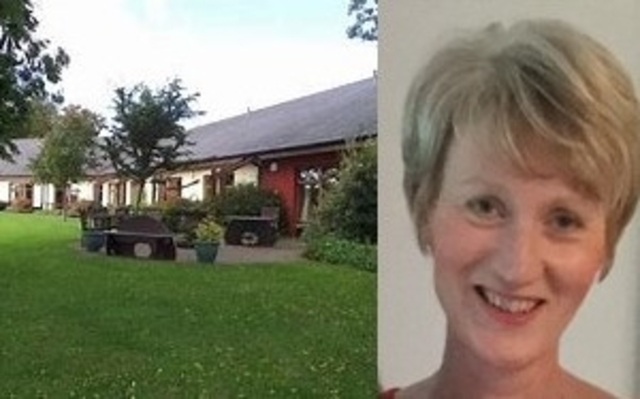
Image courtesy of NHS Tayside
Shirley Kelly and Roxburghe House in Dundee
|
||
|
||
|
As covid-19 hit earlier this year, there were fears that services might struggle to support all those who needed end of life care.
Palliative care, where health and care teams support a person to get the most out of their lives, reducing their pain and discomfort alongside treatments aimed at controlling disease or as the main approach when other treatment options no longer provide benefit or are not wished, involves a mix of many different professions working together.
In recent years, the role of specialist pharmacists in these teams has become increasingly important.
Shirley Kelly is Tayside’s Macmillan Lead Pharmacist for Palliative and End of Life Care, based at Roxburghe House, part of Dundee’s Royal Victoria Hospital.
Next week she will share her experience of her role and how the service kept on going through the pandemic, at the online Pharmacy Management Forum for Scotland conference.
She gave healthandcare.scot a preview of what she will be saying.
“We are a diverse team of medics, nurses and Allied Health Professional colleagues. As pharmacists and prescribers, I think we bring another dimension to the team. Our focus is the medicines side of care, looking at how a person can get the absolute most out of their medicines when they are approaching end of their life.
“While our focus is the medicines, more importantly, as I have learnt over the years in palliative care, it is always to keep the person at the centre of everything that we do. In the end it is always about “more than medicines”, it is about a fellow human being.
“Working with each individual person, the key question is always ‘what is most important to you at the moment?’. If there is a strong desire to maintain a particular level of function, then we would strive to use medicines that would enable that.
“Equally, we always need to be open and honest to make sure that, while we are trying to meet a person’s needs as far as we can, also explaining that there may be trade-offs.
“If we do everything in collaboration with the individual, and we all understand what the pros and cons are of treatment choices, then we will have a much more successful outcome.
“My work directly with patients is mainly here within Roxburghe House, our specialist palliative care centre, supporting patients both within the hospice setting and sometimes as they come to us for day care.
“Our team shares its knowledge and experience to support hospital and GP practice colleagues and I also work with the community teams, which are mainly led by our community Macmillan nurses.
“Over the twenty-plus years I have worked in palliative care, the main change has probably been the way the profession has become fully integrated within the specialist palliative care team.
“When I look back twenty years, most pharmacists were based within their hospital pharmacy departments or community pharmacy. They were very much pharmacists working in their pharmacy departments: that was their base and focus.
“For me, though, from the very beginning, I found a different dynamic as part of the palliative care team and, over the years, I have become fully integrated into the team. At the same time, my colleagues and I have developed our skills as pharmacists and pharmacy staff, so what we offer is much broader than perhaps it might have been if we’d stayed rooted in our pharmacy departments.
“At the outset, when covid hit, we were very aware that there was potentially going to be a dramatic increase in need for the medicines that we use in palliative and end-of-life care because we were expecting more people to be dying. The pandemic has sadly claimed many lives but not on the scale that we had anticipated back in March.
“A lot of our initial response was to plan to make sure that we could maintain the supply of medicines in the face of a significant increase in demand for the critical medicines we use to manage symptoms at the end of life – not least as these medicines are also needed by colleagues in other teams, for instance in ICU.
“National planning and making sure every setting was treated as equally important meant unnecessary crises were prevented and we could continue to care for people and allow them to die with dignity.
“Another issue was workforce. The people who are responsible for prescribing, dispensing and administering medicines are as susceptible to succumbing to coronavirus. Potentially, we could have had significant staff shortages. So, we had to look at modifying our systems to build in resilience to make sure that, as best we could, we were able to meet the needs of the people we needed to look after.
“Covid has taught us the importance of bringing people together early to look at what we needed to do to navigate our way through. Working together, our local and national networks really came to the fore during our initial response.
“That working together was invaluable and the virtual technology was a godsend. Some of the things that we were able to pull together in a few weeks, ordinarily would have taken months, and arguably longer, in the pre-pandemic times.
“It is well-documented that there are people who will undoubtedly be presenting later in their illness journey than they would have if we hadn’t had covid. And these people are coming to the fore now. They are presenting now with more advanced illness, which means we need to start from where they are now and work to improve their situation. This can be harder than when we have early involvement.
“No matter where someone starts from, we aim to support them in moving forwards and finding space in life where there is meaning, enjoyment, connection and quality. Working with medicines is one of the powerful tools we have to achieve this but working “with and for” people always underpins the likely success of all our shared efforts.”
The Pharmacy Management National Forum for Scotland takes place on Tuesday 10 November. Registration for healthcare professionals is free at www.pharman.co.uk/events
Supporters – If you can help support our reporting for Scotland's health and social care community, please head to our donations page.
Bulletin – Sign up for all the latest news and events. Tags: Pharmacy & Prescribing. |
