|
Calls for help soar as addiction services ‘invisible’ |
Related newsGlobal recognition for Tayside hepatitis programme World-first for Tayside in ‘eliminating’ hepatitis C Infection risk petition set to fail Aberdeen A&E first to offer routine HIV tests Rehab centre & St Mirren FC team up for community hub Rural alcohol and drug rehab centre opens 
|
|
© AntonioDiaz
|
||
|
||
|
Contacts to a helpline for Scots concerned about a family member’s alcohol or drug use surged to 80% more than their usual levels this year.
A charity has warned support services that families rely on have been “invisible” just when they are needed most as they closed or moved to online-only support.
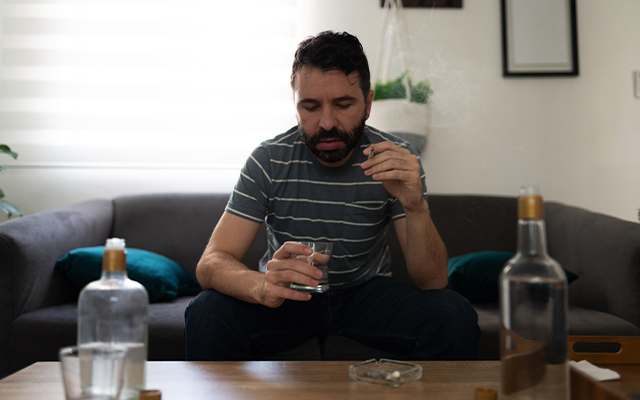
In a new report, Scottish Families Affected by Alcohol & Drugs says the pandemic has seen recreational substance use turn increasingly harmful as it moves into the home and doses increase.
A rise in contacts to the charity’s helpline include a more than 200% spike in numbers concerned about their own drug or alcohol use.
“There is ongoing difficulty accessing alcohol and drug treatment (and mental health) services, leaving families managing challenging and high-risk situations with minimal outside support,” says CEO Justina Murray.
In March, the month when lockdown was announced, calls to the charity’s helpline swelled by 140% compared to the year before.
Over April, the first full month of lockdown measures, numbers nearly doubled.
The biggest increase was among people concerned about their own alcohol or drug use.
Over 2020 there have so far been 609 contacts, compared to 177 in 2019 – a 244% increase.
More than half of people getting in touch with the charity over 2020 did so by text, webchat or email.
In contrast, Scottish Families says many have struggled to access NHS support services which have largely moved from being face-to-face to telephone only.
‘This does not suit those without phone credit (our Helpline is Freephone) or privacy to make a call, or those in urgent need who cannot just leave a voicemail and wait for a call back (which may not come),’ it states.
‘Non-voice options such as webchat and email should be provided as standard, to offer individuals a discreet and accessible route to treatment.’
Scottish Families added: ‘We work in the alcohol and drugs sector, have an exceptionally good understanding of services across Scotland, and yet we have also struggled throughout this period to link people in to the treatment services they need.
‘We have continued to face exactly the same difficulties finding out what services are available and how to reach them as people seeking support for themselves.
‘While we thought this may be a temporary situation, as treatment services closed their face-to-face support and had to shift to phone and virtual support during the spring, there are still many areas of Scotland where this service invisibility and inaccessibility has continued for months.’
Scottish Families saw big rises in contacts relating to concerns about alcohol (122%), benzodiazepines such as street Valium or Diazepam (120%) and cocaine (42%).
Justina Murray, CEO, said: “This has been a difficult year for most people in Scotland, however it has been devastating for families affected by someone else’s alcohol and drug use.
“They have been stuck at home for long periods, having to cope with the impact of increased substance use and relapse.
“For some, this was an existing issue which has become worse, while for others, issues have come to light just because everyone has been at home together, and substance use can no longer be concealed.
“All of this has taken place largely out of sight and with little recognition of the impact on families’ wellbeing.”
Sign up to our bulletin for key health & social care updates straight to your inbox. |
