|
Towards an inclusive New Normal |
Related newsInfection risk petition set to fail Union and charity unite over care pay crisis Scotland at the table with UN healthy air commission Long COVID putting Scots at risk of poverty COVID jags end for staff and chronically ill 
|
|
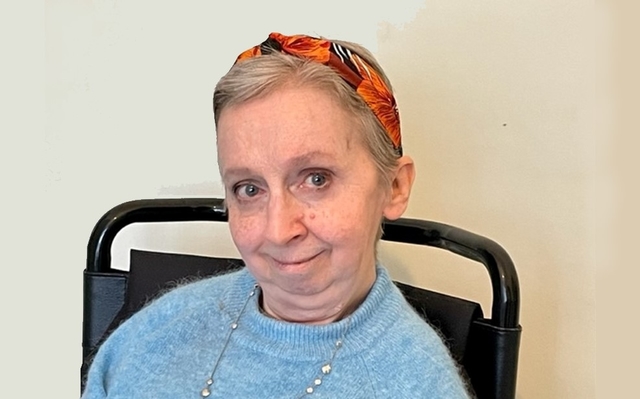
Image: © Feena Mckinnell
Dr Sally Witcher OBE
|
||
|
||
|
The Scottish government will tomorrow (Tuesday) publish an updated strategic framework for managing the COVID-19 pandemic, which the First Minister says will aim to support ‘a return to a normal that is sustained’.
Some, however, question whether the government is doing enough to allow people who remain at high risk from COVID-19 to regain their normal lives too.
Dr Sally Witcher OBE is a freelance consultant who has headed up Inclusion Scotland and Child Poverty Action Group. Writing in a personal capacity as a disabled person at exceptionally high clinical risk, she argues that there are three pillars that offer another way to achieve a ‘new normal’ – that is inclusive.
“Over the last two years life has changed beyond recognition, particularly for people at high clinical risk.
Some of us have been confined to our homes throughout. Many have been living with great anxiety and anger as responses to COVID leave us abandoned and disempowered.
Assertions that it’s over and everyone can now ‘return to normal’ feel like gaslighting, when it could scarcely be more obvious, to anyone removing the blinkers of denial and wishful thinking, that it is not.
It’s important to understand that this does not just apply to a handful of people with specific, serious health conditions. It extends to a sizeable part of the population that includes unpaid carers and wider families, to older people and many more at high risk.
If new variants are spawned due to uncontrolled infection, it could apply to everyone.
So, what do we do when confronted by a new normal in which large numbers are not accommodated and frequent, avoidable death has become normalised? When public debate on vaccination and mask-wearing – the two central planks to policy – seems mired in polarised, toxic stalemate?
We give up or we forge an inclusive alternative.
We reframe the approach, away from binary options whereby removal of restrictions, more freedom and a return to ‘normal’ for some means, for others, the loss of protections, less freedom and that the prospect of a ‘return to normal’ is further away.
This means looking beyond the need for individuals to behave in ways that are safe for them and others (key though that remains). Doing so reveals that much more could be done, and it would require next to no action by the wider public.
It means recognising that it is not extent of clinical risk alone that makes a person ‘vulnerable’ – a much-disliked word by some disabled people with its connotations of intrinsic passivity, helplessness and dependency. Instead, vulnerability is imposed on people at high clinical risk by exposing them to unsafe environments; leaving them without enforceable rights with which to assert and exercise active equal citizenship, the equipment that could make us safe, equitable, reliable access, to the full range of treatment, and the information we need to understand and manage our own risk.
It means this cannot be pigeon-holed as just a matter for clinical or wider medical policy. While much – not all – concerns public health, the policy implications and action required extend far across employment, education, environmental health and safety, transport, access to justice, social care support, hate crime – perhaps even building regulations and criminal law. It requires concerted action from all, and at all levels of government.
Too often government policy does not translate into delivery and impact. It requires everyone’s commitment, creativity, determination and co-production, to generate fresh ideas and practical solutions that work for all.
Clean air
The first of three pillars of a strategic framework for a new inclusive normal concerns making environments safer for everyone is clean air.
We take clean water for granted. Why not clean air? It would have wider benefits, reducing spread of infections and impact of allergens. That in turn would take pressure off the NHS.
We need a timed, costed, clean air strategy encompassing action for widespread roll out of HEPA [high-efficiency particulate air] filtration equipment and similar, improved ventilation and air quality monitoring equipment. We need enforceable standards.
That may mean amending – or properly enforcing – legislation on clean air and environmental standards, employer health and safety responsibilities, and the approach of regulators, including the Care Inspectorate.
It would have real business, as well as social, benefits, making it safer to return to the workplace, shop and travel, helping to revive town centres. Confidence could be further boosted by some kind of Kitemark, or Michelin star equivalent confirming premises COVID-safe standards are met. To save the planet as well as people, investing in developing green-energy powered filtration equipment could prove fruitful, including financially.
Real rights
The second pillar concerns empowering people to fight back against discrimination and exclusion by making equality rights and human rights real.
That means ensuring people know they have rights, duty-holders know what they need to do and, if they don’t, we can force them to act.
It's high time anyone purporting to take seriously equality and human rights put their money where their mouth is.
There’s much that could be said on human rights. A lot often is said – with not always much impact to show for it. Incorporation may, hopefully, change that. Regardless, a COVID recovery strategy that does not proactively protect the lives of everyone seems to run counter to the fundamental right to life (under ECHR Article 2). States must both refrain from the intentional and unlawful taking of life and take appropriate steps to safeguard the lives of those within its jurisdiction.
People at very high clinical risk may fall under the Equality Act definition of disability. There can be unlimited compensation if these rights are breached. There is indirect discrimination where a policy for everyone has detrimental consequences for disabled people. There are rights to reasonable adjustments in employment, education, goods and services.
Could online, remote options – one of the few positives to emerge from the pandemic – offer a reasonable adjustment in some cases?
The Equality Act also contains legal protection against harassment and victimisation, and a duty to promote good relations. People who associate with disabled people, like unpaid carers, also have rights.
That aside, we know that other groups with protected characteristics, like older people, BAME people and pregnant women, have been disproportionately adversely impacted. That is why Equality Impact Assessments should always be carried out on policy changes to COVID.
Clinical risk
Then comes health-related action to empower individuals at high clinical risk.
Latest advice is to follow the same guidance as everyone else. To speak to your GP. There’s mental health support if you’re worried about ‘adapting to live with the virus’.
Then there’s the ‘distance aware’ scheme – a badge or a lanyard enabling people at high clinical risk to broadcast the fact, in the hope people will keep their distance and not target us for abuse.
We need much more for advice to be worth the paper of the letter it’s written on.
Why are we told to do the same as others if our clinical risk is higher? What’s the impact of vaccination on different clinical conditions, and consequent hospitalisation and death rates? We need to know about anti-virals, and if we’re eligible and how to access them.
Make sure GPs have that information too, as well as on clean air and rights.
We know FFP2 masks and similar help keep the wearer safe as well as those around them, but they don’t come cheap. So why not make them free on prescription to people at high clinical risk and unpaid carers? Why not distribute home HEPA filters to us, or offer a discount scheme?
A new direction
We seem to have reached a T-junction. One way could take us towards an Inclusive New Normal; the other away.
Worryingly, the latter is where we seem currently headed.
So please can those in power pause and reconsider. Please can everyone remove the blinkers before we find ourselves on a road heading over a precipice.
A better new normal is possible.”
Dr Sally Witcher OBE is a freelance consultant to third and public sectors and academia. She has worked in diverse senior roles, as CEO of Inclusion Scotland and Child Poverty Action Group, and in Government. She writes in a personal capacity as a disabled person at exceptionally high clinical risk.
Email: Witcher.Work@outlook.com
Twitter: @SalWitcher #InclusiveNewNormal
Read More: NCS must not fail minority communities ; Delayed complex needs register promised by minister; Ministers promise new carers strategy;
Sign up to our bulletin for key health & social care updates straight to your inbox. Tags: Covid-19; Disability; Scottish Government. |
