|
High cancer diagnoses rate via emergency care |
Related news‘Weaknesses’ found in Scotland’s cancer screening AI for lung cancer care to help tackle “hidden killer” We “cannot be complacent” on breast cancer rise Health and charity leaders join forces for NHS reform Longest NHS waits a funding priority, says government High cancer risk for adults with learning disabilities New health & social care governance initiative EU staff qualifications & registrations confirmed Westminster committee launches drug misuse inquiry "Poverty remains a problem" for children in Scotland Postcode lottery persists in dementia support COSLA & Government integration report 
|
|
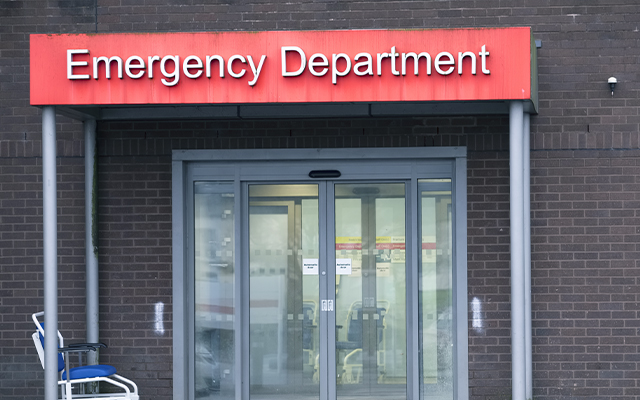
Image Credit: © Richard Johnson
|
||
|
||
|
More than a third of cancer diagnoses in Scotland occur after emergency presentation, newly published research reveals as experts point to funding, community education and workforce as key.
Across all cancer types, 38.5% of Scotland’s diagnoses follow emergency care like A&E visits – increasing to more than 1 in 2 for patients diagnosed with pancreatic cancer. Andy Glyde, CRUK’s senior external affairs manager in Scotland said this is “truly worrying” and reflects real-life impact of staff shortages:
“It confirms that too many people in Scotland are only being diagnosed with cancer once their health has deteriorated to a point when they might need to be rushed into hospital.
“We know one reason so many people end up in A&E is because we don’t have enough staff and kit to test and diagnose cancer through usual routes.”
Elaborating on the response required now, he said:
“Last month, the Scottish government published its Workforce Strategy. What’s now needed urgently is more detail on how new staff will be secured and trained, and how this recruitment drive will be funded.”
Cancer charity Macmillan previously raised concerns over shortages of specialist cancer nurses in Scotland, with many due to retire within ten years.
A recent government strategy to recruit and retain staff across Scotland’s health and social care sectors was criticised for its “worrying gaps” and unclear delivery plan.
Professor Ghulam Nabi, NHS Research Scotland Clinical Lead in Cancer for the East of Scotland, added that raising awareness is key as people can struggle to come forward and see a doctor. Emphasising the importance of community education, he said:
“Working in areas where awareness is low too is important, because there’s a link between people from low socioeconomic areas with other factors like smoking which also contribute to cancer. A strategy focusing on these areas with community education focusing specifically on cancer is the way forward for early detection.”
As part of a larger study supported by Cancer Research UK, today’s analysis from the International Cancer Benchmarking Partnership (ICBP) has flagged problems at a global and local scale.
Both England and Wales have more than 1 in 3 people diagnosed with cancer post emergency service consultation, at 37% and 37.4% respectively.
With the study assessing 857,068 cancer cases, diagnosed in six different countries from 2012 to 2017, the pandemic’s impact on diagnosis is not included.
Dr John Butler, clinical lead for the ICBP, said: “Across the globe, the pandemic has challenged healthcare systems. In the UK, access to primary care and diagnostic tests were reduced and screening paused.”
Cancers with vague symptoms and those experienced by elderly patients are more likely to be diagnosed by emergency routes. Two of the most concerning results are that 59.2% of pancreatic and 42.8% of ovarian cancer diagnoses in Scotland follow emergency presentations.
Dr Butler added that these are often more advanced, limiting treatment options: “Cancer plans across the UK must prioritise early diagnosis. To have a better chance of beating their cancer, people must be treated as soon as possible.”
Mortality rate at one-year for emergency care diagnosed cancers in Scotland was consistently higher than from non-emergency care cancer diagnoses. For every 10% increase in diagnoses via emergency routes, a decrease in one-year survival by as much as 7% was reported.
Cancer diagnoses fell by 40% in Scotland between March and June of 2020 compared to 2019, but longer-term pandemic effects are still to be assessed.
Professor Nabi said ongoing studies are looking at observational data throughout the pandemic, noting delays and fewer staff available from radiology to those trained to complete complex surgeries.
“From what we have observed on the frontline, there has been an increase in delayed presentations and those with complications – where cancer has spread or advanced.
“Before covid-19, these were tightly tracked and advanced cancers were much less frequent. We must assess and re-design our strategies. We’re losing more lives – we need to get together and start working on this,” said Professor Nabi.
Pandemic changes including staff redemployment, pauses to screening programmes and procedures considered high-risk, including some key to cancer diagnostics all contribute to this, say Public Health Scotland. They also advise that incidence and staging data for 2020 will be released next week.
Scotland’s first Early Cancer Diagnostic Centres – piloted to accelerate diagnosis for people with indistinct symptoms – launched last June in Ayrshire & Arran, Dumfries & Galloway and Fife.
An independent evaluation of its services will inform wider rollout across NHS Scotland.
Read more: Plan for cancer service shake-up as cases soar; Workforce “missing” from cancer recovery plans; Praise for new strategy's focus on deadliest cancers
Sign up to our bulletin for key health & social care updates straight to your inbox. |
