|
Music, dance, rugby and dementia |
Related newsUsing VR to understand lived experience of dementia Scotland commits to change the dementia story Dementia home care tech collab invites partners National shift needed for dementia care ‘Rethink’ dementia support, says government Turning policies into social care practice 
|
|
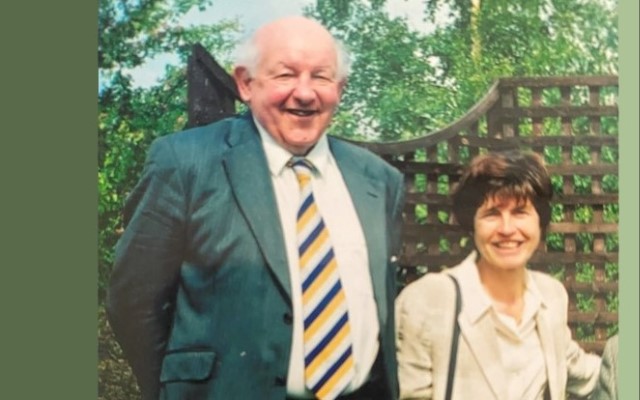
Norman and Lewine Mair
|
||
|
||
|
An internationally recognised sports journalist whose husband lived the last years his life in an Edinburgh care home says too many people get it wrong when they imagine care homes to be miserable places full of unhappy people.
Lewine Mair, in a book based on her experience supporting her late husband through dementia says she wants to celebrate the care home experience she and her husband had. While not looking to underplay the impact of the condition on people and their families, she wants to share the warmth and humour of the home where her husband was cared for – and the extraordinary impact that music was able to have on their lives.
Since she was a teenager, Lewine Mair says she has written everything down. The first woman to be hired as a sports correspondent for a national daily newspaper, when covering Wimbledon or a major golf tournament, even at the end of the day, she would be jotting down story ideas to keep them under her pillow so she could write about them in the morning.
Lewine could also play the piano and, when her husband Norman moved into a care home, she would visit and play to him and the other residents:
“I had of course heard about the impact music has. I don’t know why it affects them, but the people around me would come to life like characters in a musical box. And, when I played the first time, I suddenly noticed around the room everyone’s feet were tapping.
“In the book, I tell the story of the dancing couple. Their hobby had always been dancing. He was a retired farmer, she had dementia. When he came to see her one day, I was playing the piano. He cleared the strip of wood in the middle of the hall, took her hand and got her to dance. It was really very touching because they dance their way back into their past and it was just lovely to watch.”
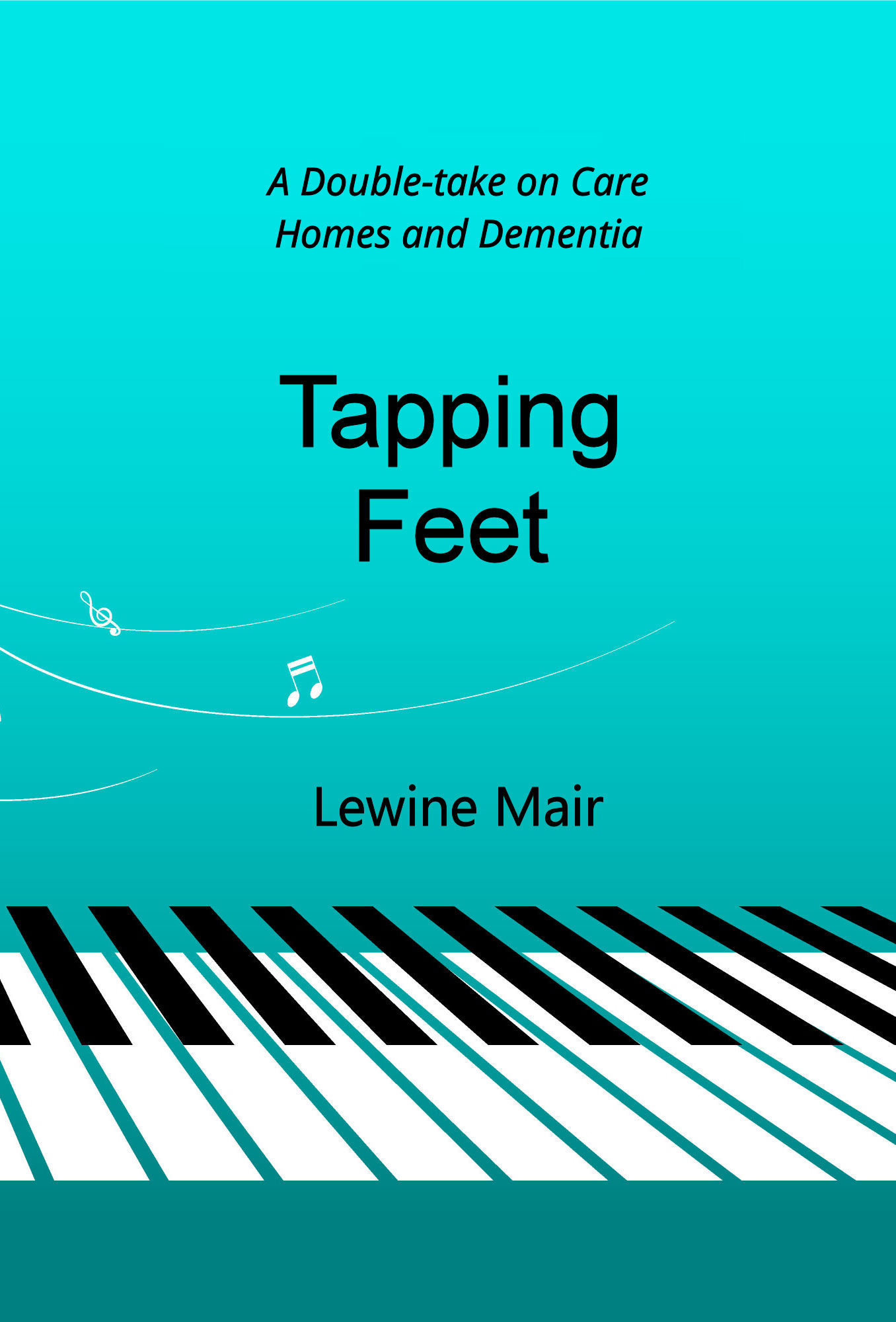
Lewine Mair devotes much of her book, Tapping Feet – A Doubletake on Care Homes and Dementia, to anonymised pen portraits celebrating the different characters she met:
“As I played the piano, I used to play very quietly so I could also listen in to conversations, to the relatives chatting to their loved-ones or the residents getting into discussions and having slight altercations – perhaps not being as tactful as they might have been in the past. And I just thought, ‘Oh, my goodness me, this place is full of stories’.
“Dementia is a terrible affliction. It's awful. But so many people sort of talk about dementia with such doom and gloom. They regard care homes being miserable places. But I didn't find that. The place where Norman lived was a really happy place. Obviously, there were sad times and there were people who were miserable. But so many of the people with Norman were very happy where they were, and Norman certainly was.
“He was a sport obsessive. He just loved everything about sport and never lost that love of sport. He would happily go around telling all these elderly people ‘Don’t worry, you'll soon be back in your first team’. And they enjoyed hearing that.”
In her account, Lewine also talks about the importance of the visits and involvement of her own children and grandchildren and the families of others living in the home.
“As a child, I was trained that when you're visiting elderly people, you keep quiet, tiptoed around them and ‘don't make a filthy noise’. But I found the residents weren't against a bit of noise – and absolutely loved chatting to the children.
“You hear parents saying ‘Oh, I wouldn't bring my children because I want them to remember their grandma as she was’, or something like that. I'm certainly not an expert, but I don't know whether that makes sense. Because you have to look at it from the other side as well. What about from Grandma’s perspective? We all saw what happened during the pandemic, when people were dying without seeing their children or grandchildren – it was a hideous time for them.”
Norman Mair, himself an acclaimed sportswriter, achieved the rare feat of playing both rugby and cricket for Scotland. Lewine says in the eight years since his death, understanding of the links between contact sports and the onset of dementia later in life has increased considerably:
“Just before he went into the home, before the link was made properly between head injuries and dementia, I do remember him having conversations with rugby people. He was beginning to get worried by what he was hearing and changed things for him. He’d see tackles as a good part of rugby. Then, suddenly, he began to see the bad side and it did worry him.”
Lewine Mair chronicles the fear, anxiety and disruption of the last months before Norman moved into care – and the impact the decision has on the partners of people with dementia:
“It is a decision that is hard for anyone to cope with.
“It was New Year’s Eve when Norman suddenly disappeared in the middle of the night and was brought home by someone living half a mile away from us who’d spotted him standing by the side of a main road. We thought he was asleep upstairs. And that was scary.
“Before then he was getting up three or four times in the middle of the night and getting dressed. And then he wouldn't want to get undressed. And it was just a very, very difficult time. I always thought he was going to get the car keys and take off in the car.
“I had to get an electrician up to the house to deal with all electric gadgets, like the oven, things that he would turn on for no apparent reason. The electrician fitted a switch so they would turn off after half an hour and you would have to reset it. Of course, when it came to cooking the turkey at Christmas we forgot, so it never cooked.
“I used to get angry when I heard people on the television, celebrities or whoever, saying proudly ‘I would never put my parents in a care home’. But that’s not something you can say until they have gone through the process of having to look after someone with dementia.”
Lewine Mair’s book Tapping Feet: A Double-take on Care Homes and Dementia is available in Paperback and E-book, with a third of profits from sales going to the Head for Change Charity.
Read more: Care home visits promote wellbeing; Dancing across the gap between health and art; Music’s potential to help with dementia; Insight: How music can help dementia patients.
Sign up to our bulletin for key health & social care updates straight to your inbox and you can follow healthandcare.scot on Google News. |

.jpg)