|
Independent Living Fund to reopen next year |
Related newsNew social care minister appointed Who is Scotland’s new health and care secretary? Adult disability review chair appointed Psychiatrists in ‘disbelief’ over cut funding Holyrood scrutinises self-directed support 10 years on FM candidates asked if they care about care MSPs’ ‘huge concerns’ over Scotland’s medicines system Insight: Care workers should not be commodities Insight: An unequal integration? Care staff still paid per minute despite pandemic Podcast: Councils play key role in health and care Councils justify paying themselves higher care rates 
|
|
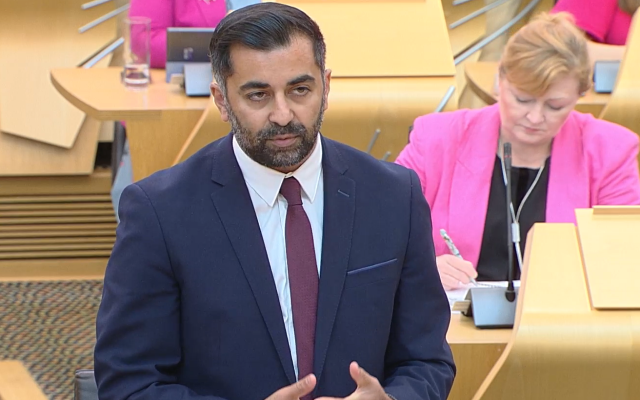
Image Credit: © Scottish parliament
|
||
|
||
|
Reopening the Independent Living Fund (ILF) to new applicants and an increase to social care workers’ minimum pay to £12 per hour in the coming year are among the key commitments made in the programme for government 2023-24.
First Minister Humza Yousaf has committed £9m in next year’s budget to support a phased reopening of the ILF, which will see an additional 1,000 disabled people receive maximised self-directed support payments.
It comes after a sustained campaign from Disabled People’s Organisations (DPOs) for the ‘vital’ Fund to be reinstated since its closure to new applicants in 2010.
In his statement to parliament as he launched his government’s priorities for the coming year, Mr Yousaf said he has heard “moving testimony” from disabled people across Scotland about the challenges they face.
Ahead of today’s announcement, the GDA urged the First Minister to use this new parliamentary session to prioritise disabled people and tackle the ‘human and social catastrophe’ faced by disabled people.
The organisation, along with other DPOs and organisations, has warned of the ‘devastating impact’ of cost-of-living crisis on disabled people.
The GDA says its members welcome the news of its phased reopening but must be fully resourced to help tackle Scotland’s social care crisis.
With an overarching aim of tackling poverty, Humza Yousaf says his first ever programme for government as First Minister will offer “practical help and support, particularly to the most vulnerable” across Scotland:
“It takes the critical next steps in reforming and modernising our public services, helping to tackle the aftermath of the pandemic and supporting the recovery of key public services, including our NHS and education sector.”
Social care workforce
Humza Yousaf also says he is pleased to today fulfil a promise he made to social care since before becoming First Minister increase the minimum wage for social care staff to £12 an hour.
The First Minister stated back in April that the wage rise could not be delivered “absolutely immediately”, and has since faced pressure from the sector to set a date for the increase.
Today’s announcement promises to use money from 2024/25’s Budget to increase the wage of all private and third sector social care worker to a minimum of £12 an hour.
Those on full-time contracts can expect an increase in wages of up to £2,000 a year from next April.
In his statement today, Mr Yousaf said the government recognises the importance of Scotland’s health and care staff and “never questions the motivations” of the workforce in seeking higher pay amid the cost-of-living crisis.
In response to criticism around long NHS waits, Mr Yousaf stressed the importance of both the health and social care workforce and avoiding industrial action.
This follows the call from doctors for the Scottish government to urgently address the crisis facing care homes ahead of winter when patient demand across health and care will increase.
Addressing Scotland’s Cabinet Secretary for Health, Social Care and NHS Recovery, Mr Yousaf asked him to continue ‘essential’ collaborative work with partners in delivering the government’s commitments, including health boards, local government, communities and third sector partners.
Among other priorities for the Cabinet Secretary is to continue a ‘relentless focus’ on reducing waiting times and care backlogs, improve cancer outcomes and implement revised pay bargaining processes for junior doctors.
Mr Yousaf asked that the Cabinet Secretary ensures ‘thorough, evidence-based and financially assessed delivery plans’ are in place for these commitments to ensure progress and impact can be monitored.
The government has also committed to deliver the legislation to set-up a National Care Service and continue to expand Hospital at Home.
Read more: Emails show haste to publish recovery plan; Briefing: Cabinet Secretary plans for health and care; Who are Scotland's new health and care ministers?; Auditor General: Difficult choices for Scotland's NHS
Sign up to our bulletin for key health & social care updates straight to your inbox and you can follow healthandcare.scot on Google News. |
