|
Action needed on women’s brain health |
Related newsDementia campaign success to inform government actions Holyrood ADHD and autism inquiry launched Call for ‘urgent’ review of ADHD and autism services Clinicians: who will deliver extra appointments? Fair funding to see Scotland lead dementia research Scotland’s soccer aid spotlights Alzheimer’s risk Holyrood hears evidence on abortion legislation Edinburgh team seek new insights into MS progression Air pollution exposure linked to early death UN told rights of disabled people in ‘crisis’ Surgeons’ deep concern as 45% planning to quit Transatlantic mental health partnership strengthened 
|
|

Image Credit: © shutterstock
|
||
|
||
|
The Scottish government is being called on to address a series of inequalities for women across the brain heath, dementia and Alzheimer’s Disease, which researchers and campaigners say has been overlooked in key Scottish government policies.
With women making up 65% of the estimated 90,000 people living with dementia in Scotland, attendees at the recent Alzheimer Scotland conference heard that inequalities span from prevalence, diagnosis and treatment to care and clinical trials access.
Dr Maria Teresa Ferretti, neuroscientist and expert in Alzheimer's disease and gender medicine, told the meeting that the burden is falling disproportionately on women:
“These are scary numbers: one in three people at some point in their lifetime will have an issue with the brain. The cost of these [neurological conditions] is higher than for cancer and cardiovascular costs together.
“What I see is a lot of women, it’s a huge burden on women – both as patients and caregivers.”
She highlighted some specific brain health inequalities facing women – with dementia, depression, MS, anxiety and migraines are all more common in women.
Yet, she added, this has been understudied.
A vital chapter
Thea Laurie from the National Dementia Carers Action Network (NDCAN) says national policies must better reflect the radical change in mindset around brain illnesses:
“Brain health an approach which casts off the negativity and gloom of previous decades whereby a diagnosis of dementia was often considered a final, dark episode of someone’s life.
“We live in a country with brilliant, innovative brain health work, but also where health inequality is apparent.
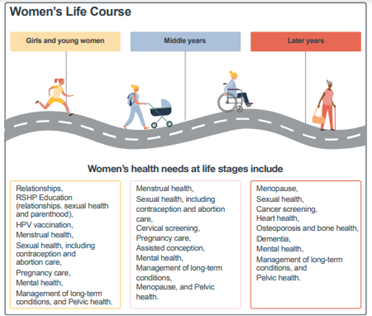
“Especially when the Scottish Women’s Health Plan proclaiming itself as ambitious focuses on heart health, menstrual health, menopause, sexual health, but only mentions the word ‘dementia’ twice in passing. Brain health is not mentioned at all.
“It is as if a vital chapter has been missed out.”
Ms Laurie added that dementia is not included as a leading cause of death for women, urging the Scottish government to make women’s brain health a priority.
While the Minister for Social Care and Mental Wellbeing missed the session on women and brain health, she told the conference she was pleased to see the focus on dementia’s impact on women as “an area close to my heart”, adding:
“Women’s health and wellbeing and tackling gender inequalities is absolutely a priority for me and a priority for government. I was so pleased in my previous role to launch the Women’s Health Plan and that plan did recognise the greater likelihood of women to be diagnosed with dementia.”
She added that it is important to recognise these inequalities to help focus healthcare priorities.
The Women’s Health Plan refers to dementia twice, in its section on ‘later years’, recognising the increased risk as we age.
While brain fog is mentioned in relation to menopause, there is no reference to brain health in the plan – nor its progress report.
Indeed, the progress report only refers once to dementia as part of a broader infographic.
A Scottish government spokesperson told healthandcare.scot:
“The Women’s Health Plan focusses on a specific set of priorities where there is particular evidence of inequalities and where improvements are needed. It does not exist in isolation and there is significant work being taken forward across the Scottish government on women’s health.
“The aims and priorities of any future Women’s Health Plan will be developed in collaboration with our lived experience stakeholder group, clinical experts and relevant stakeholders alongside the most up-to-date evidence base.”
Dr Ferretti explained that brain health differences extend to diagnosis and disease progression, with women often diagnosed later and at a more advanced stage than men.
She added that after a diagnosis of Alzheimer’s disease with mild cognitive impairment, women decline more rapidly than men and said there is a need to do more to understand why and better support women and reduce barriers to accessing clinical trials – with women underrepresented in Alzheimer’s disease clinical trials.
Anna Borthwick, Executive Lead for Brain Health Scotland echoed this, calling for better inclusion across research as she highlighted that many routine medicines have never been tested on women:
“When it comes to health, the inclusion of women is of course a fundamental concern.
“Incredibly, it wasn’t until last year that the Medical Research Council in the UK required that both sexes should be included in research funding as well as other equality issues too.”
Ms Borthwick said that we need women to be included from the very beginning, adding that recent research has already provided some “fundamental pieces of the puzzle” in prevalence and caring:
“Firstly, it’s undeniable that dementia affects women more than men as the leading cause of death for women in Scotland, overtaking ischemic heart disease in 2017.
“Amongst unpaid carers, women take 60% of the burden, with significant personal and societal consequences.”
Scotland’s dementia strategy does recognise the increased prevalence and care burden on women, and the first progress report is expected early 2024.
Ms Borthwick says the higher prevalence is often “explained away” as women living longer, surviving other conditions long enough to develop dementia.
However, she says, this is not the full story – and we must better understand risk factors for dementia.
Dr Ferretti says while Scotland’s brain health community is leading the way in spotlighting the need for action, women are not supported enough as patients or caregivers:
“When we are talking about women’s brain health and not just dementia – we must influence positive change for the future.”
A Scottish government spokesperson told healthandcare.scot:
“Our new dementia strategy sets out that 65% of people living with dementia in Scotland are women. Evidence about why women are more likely to develop dementia is growing and this will be reflected in how we deliver the strategy.
“We are working together with COSLA and our lived experience panel, which includes women with a diagnosis of dementia, to agree priorities for our first delivery plan which will be published in January 2024.”
Read more: Redefining clinical meaningfulness; Glasgow project makes research accessible to all; The app for more ‘dementia friendly' communities; Has progress been made on women's health?
Sign up to our bulletin for key health & social care updates straight to your inbox and you can follow healthandcare.scot on Google News. |