|
Scotland’s soccer aid spotlights Alzheimer’s risk |
Related newsFair funding to see Scotland lead dementia research Delay to newborn screening for SMA “nonsensical” Politicians must take ‘bold’ action on child poverty Rare condition screening for newborns across Scotland Call to expand Huntington’s specialist care ‘Rethink’ dementia support, says government 
|
|
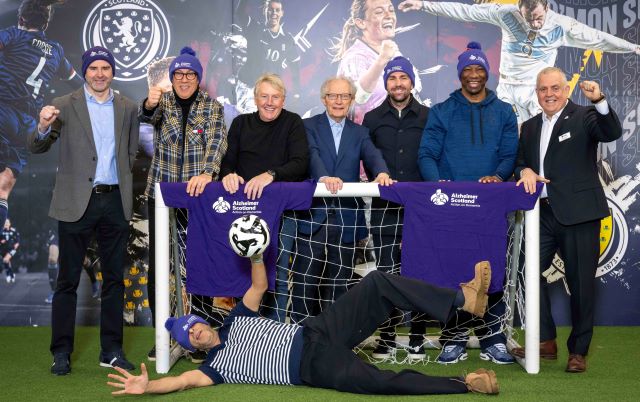
Image Credit: © Neil Hanna Photo
|
||
|
||
|
Famous faces from Scottish entertainment and sport will join Alzheimer Scotland in a charity football match to raise awareness and funds for dementia care and research.
Organisers and some of those set to battle it out on the pitch this March spoke with healthandcare.scot as they kicked off the ‘Shooting Stars’ campaign.
CEO of Alzheimer Scotland, Henry Simmons, explained that a big part of the event will be sending a message to the 90,000 Scots living with dementia that they’re not alone:
“People really care, and these legends are coming to support that message, and really care about getting it right for people living with dementia.
“It’s not going to be a big expensive day, it’ll be £5 a ticket and free for children. And what we will be doing with what we raise is continuing to support our national services, advisors, helplines, research and all the work that we do.”
The match will bring together former Celtic and Rangers players with comedians and TV faces on 2 March at Falkirk Stadium.
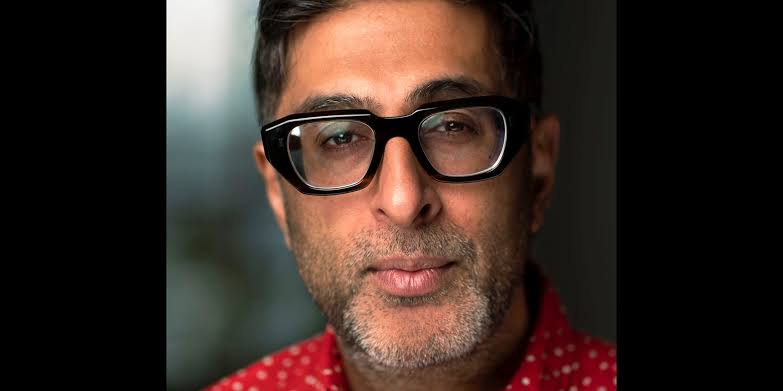
One of the stars set to compete, Still Game’s Sanjeev Kohli, told healthandcare.scot that seeing his late dad live with Alzheimer’s disease has given him a “first hand” insight into the costs associated with the condition and the scale of need:
“I think, in an ideal world, you’d want a good level of fundraising but also for that to switch something on for the government to say: ‘We should match this.’
“God knows there aren’t many coins down the back of the sofa, but I think through events like this if they were made aware of how big the scale of need is, they might give it more attention in terms of funding.
“If Alzheimer's was viewed in the same way as something like cancer there would be more finance support for that care.
“Given the numbers of people that either have Alzheimer's or are affected by Alzheimer's, I don't know how they cope financially – I can imagine there’s some pretty horrible loans being taken out. There’s enough strain already, it ends up being a 24-hour concern and if you can take away some of the financial strain – that would be something.”
He said better funding and awareness could help improve access to care and understanding of the early signs of Alzheimer’s disease and support research into prevention and treatment, and that brain health screenings could also make a difference.
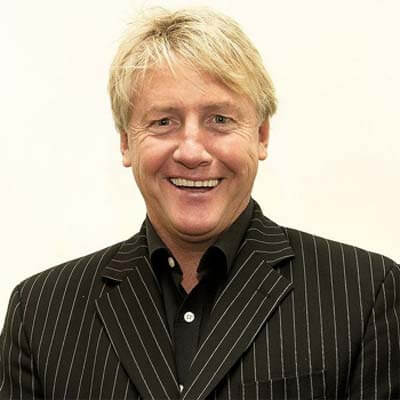
Frank McAvennie, former Celtic and West Ham player and Battle Against Dementia ambassador, will also join the Shooting stars event.
From his experience, Mr McAvennie said he is acutely aware of the need to look after people in need:
“It’s creeping into one of the biggest killers now. So hopefully we can raise some awareness, get government backing and more funding into Alzheimer’s.
“The guys here [at Alzheimer’s Scotland] and in Battle Against Dementia are trying to get some respite for families, but it’s a terrible shame the government hasn’t come forward to put more money behind it. We need action.”
Mr McAvennie said that people have been “shouting from the rooftops” about this for so long now that surely the government will take notice.
The Scottish government recently published its fourth national strategy to improve care and support for people with dementia, with initial delivery focused on tackling stigma and improving post-diagnosis support alongside research and community work.
Patients, caregivers and charities have emphasised that implementation matters most to improving the lives of those with dementia and their families.
Mr McAvennie said he would love to see funding help progress research towards a cure, but also a better understanding of risk factors:
“People doing the work now, charities and researchers – they’re doing a hell of a job. Imagine what they could do with better funding.”
Women are underrepresented in brain health research, despite making up two thirds of those living with dementia in Scotland, and both Mr McAvennie and Mr Kohli emphasised the need for more consideration of them as patients and carers.
The Still Game actor said more funding for respite would be “amazing”, adding that he felt lucky to have daily carers to help his mum as his dad’s primary carer:
“I wanted to make sure my mum could be taken out for 1-2 hours – she didn’t want to, but you need a break. You can’t underestimate that – it’s mentally draining already just knowing a loved one is suffering.
“Part of this event is shining a light onto the whole situation, bringing awareness to the nature of Alzheimer's disease but also the scale of need for the government and the public.”
A crisis of care
Alzheimer Scotland’s CEO Mr Simmons said the charity’s priorities span from prevention to caring and, one day, a cure.
He said progress has been made around increasing awareness of modifiable risk factors like physical inactivity and head injuries.
However, he said Scotland and the UK are in a “crisis when it comes to care”, with people waiting months for diagnoses, a postcode lottery in post-diagnostic support and poor long-term care options.
This comes after the charity called for urgent reform of dementia care services, amidst reports that Scotland’s ‘fragmented’ residential care system is on the brink of collapse.
Mr Simmons told healthandcare.scot that a “perfect storm” of high demand and lack of resources means support tends to only reach people in crisis.
He said this then costs the NHS and social care more down the line, adding:
“Health and care services are doing what they can but sadly, everything’s so stretched.
“We see this event and our job to highlight how important this is and how much help is needed.”
Mr Simmons added that while the UK government has announced £100m for dementia research, it has so far failed to distribute even 10% of that funding to Scottish institutions.
He said Scotland hosts some of the “best scientists in the world”, making great progress in diagnosis and treatments, but more work on improving quality of life is needed:
“That’s the type of research we like to fund, we’ve got students looking at how to live well with dementia, a really important component of improving people’s lives. We can do our bit, but that needs much more focus.”
He added that a lot can be down low-cost, including increasing understanding of the key behaviours that make a difference – from physical exercise to socialising.
While Scotland has a national campaign looking to shift the stigma around dementia and help people stay socially active, Mr Simmons said that a lot more support is needed for care in the later stages:
“As a society, we can provide a good, meaningful quality-of-life at the point of diagnosis but, you need to accept that what that person’s been given is a diagnosis of a progressive condition.
“You can’t wash that away and we’re trying to work closely with the government to assess where the gaps are and then we’d love to engage with communities to find solutions.”
Read more: “Get ready now” for advances in dementia care; Action needed on women's brain health; Dementia care services need urgent reform; Music's potential to help with dementia; Physical inactivity increasing threat to adult health; Voices of experience key to dementia care
|


.jpg)