|
Music’s potential to help with dementia |
Related newsDementia home care tech collab invites partners MS rehab levels up with virtual reality games Using VR to understand lived experience of dementia Partnership seeks early Alzheimer’s blood test Scotland commits to change the dementia story International recognition for Dundee trials team Piecemeal approach to serious NHS errors handling NHS problems ‘still need fixed’ despite pandemic focus NHS whistleblowing champions appointed Briefing: Scotland’s health & care intelligence Multiple Sclerosis register a ‘powerful new resource’ New health & social care governance initiative 
|
|
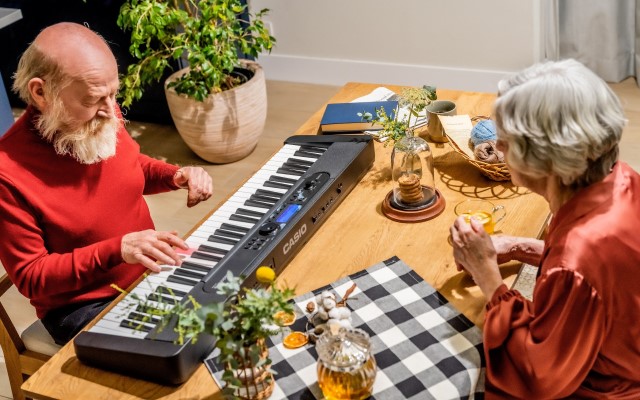
Image Credit: © Casio
|
||
|
||
|
A study led by Casio Music UK, alongside Music for Dementia and charity care provider, MHA, shows that playing music improves both the mental health and memory recall of people with dementia.
As World Alzheimer’s Month begins, the collaborative six-month study details that the positive impact of playing an instrument for people with dementia spans beyond fulfilment, with the Light Up My Life report revealing memory improvement is possible.
Of the music therapists working in study’s care homes, 79% reported an improvement in memory recall among the 111 participants with dementia.
Grace Meadows, Campaign Director at Music for Dementia, says they were thrilled to collaborate with Casio on their work to raise awareness of music as “an integral part of dementia care”, adding:
“It's innovative, creative initiatives such as ‘Light Up My Life’ which demonstrate how easy it can be for carers to make music a part of good dementia care.
“We would like to see this programme rolled out nationwide as a way of supporting carers to provide the best possible personalised care for those living with dementia.”
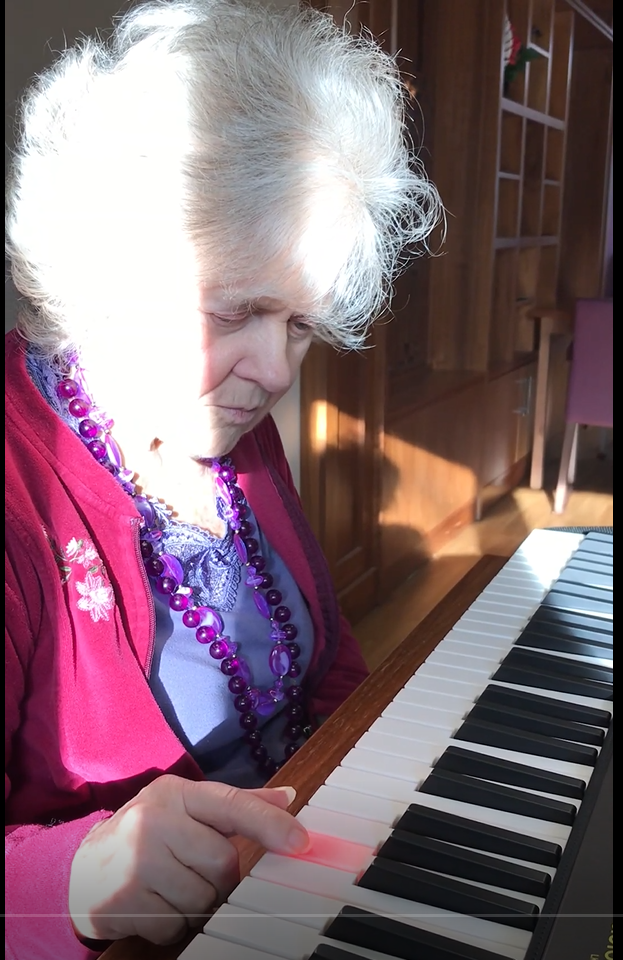
To remove barriers to engagement with the project, Casio provided lighting-key keyboards which enable people to follow along for “heightened stimulation”, with the lit keys corresponding to music. Neil Evans, Head of Casio EMI for UK & Ireland, says that this was particularly crucial to helping engage people with dementia, where there is reduced cognitive function and memory:
“By simply following a light, that’s potentially something they could do and the net result was that by following that light, they would produce something musical and recognizable.
“Giving these light-up keyboards aimed to encourage participation because without the lights, people were a bit reluctant to have a go.”
He says the number of people turning to music during lockdown “skyrocketed” and this, alongside research showing more support is needed in dementia care, prompted the collaborative project.
Confidence and communication
Dr Ming Hung Hsu, senior research fellow at Anglia Ruskin University (ARU) and Music Therapy Lead for the study says that having this “very simple” act also improved residents interactions with staff:
“You follow that light and then you’re playing the keyboard – that generates a sense of achievement and what comes after that is socialization opportunities for people to say to another person “look, it works” which can then also prompt reminiscing on memories.”
Following the six-month period, the team surveyed music therapists, care home managers, residents and their family and friends to investigate improvement across a range of factors.
Care home staff reported a “significant” improvement in calmness and confidence, with 71% of care home staff and 95% of music therapists observing improved social interaction.
In 2019, pianos were placed in hospitals across Forth Valley, with volunteers asked to play for patients, aiming to improve wellbeing and reduce anxiety and stress in healthcare settings.
Now, this new research encouraging dementia residents to play themselves reports that over 70% of music therapists noted a reduction in anxiety and depression among residents.
Dr Kainde Manji, Age Scotland's head of dementia, says:
“We welcome any research that provides alternatives to medical intervention, particularly where there is also an impact on memory recall, social interaction and mood for people with dementia, as this research appears to.
"We know listening to music and singing can be powerful in triggering memories and improving mood for those living with dementia. This research adds to that body of evidence to demonstrate the effect that playing an instrument can have on wellbeing and memory for those living with the condition.”
Improved memory and personalised care
In terms of memory, the principle of familiar music supporting recall is incorporated into the keyboard with a pre-programmed bank of recognisable songs. Previous work by Playlist for Life focused on the importance of listening to familiar and personalised music to improve memory and cognition in patients.
In a healthandcare.scot article explaining the therapeutic role of Playlist for Life for dementia patients, Helen Skinner, Alzheimer’s Scotland Dementia Nurse Consultant for NHS Fife, shared that:
“Identifying soundtracks with a patient can be daunting, with some healthcare staff members understandably apprehensive at first, but as soon as they see their efforts come to life in a patient, the reaction is incredible.”
“The power of music is so significant, we must work together to unleash its potential by using it as a therapeutic intervention to support people with dementia, enhancing the care we provide.”
Enhancing the impact observed in this new study, Mr Evans says creating personalised banks of songs that can be pre-programmed or uploaded is an area they are investigating:
“You can connect to a tablet or phone and import MIDI [musical instrument digital interface] files and you can go online and search for the Beatles or 50s music files, for example.
“Now we are working with care homes to tailor it to individual needs because there’s also different eras and you can download different music for different cultures too. We are looking to work with one of the companies that produce these files to expand our banks of songs available.”
Scotland’s Chief Medical Officer is continuing to promote realistic medicine, adopting a person-centred approach to care, as central to improving healthcare in Scotland.
Mr Evans says that for dementia care, personalising is important because particular songs evoke memories from life events. Dr Ming Hung Hsu says this also aids improved socialisation as it prompted discussions with care workers around these memories.
Dr Manji, Age Scotland's head of dementia, says the findings are in keeping with the experience of colleagues:
“These findings also support our belief, based on the views of our members, that dementia care must be personalised to individual needs and preferences.
“This does not require costly interventions, but often small scale, localised and grass-roots approaches that make all the difference, such as Playlists for Life, Meeting Centres, and the groups supported by Luminate’s Dementia Inclusive Singing Network.
Preventative care
While this is a scoping, study and more evidence is needed, Dr Ming Hung Hsu says learning from this, they could examine how particular cognitive abilities are involved and may be improving:
“Looking at motor skills and how we use our sensory perception and processing functions to perceive and interpret stimuli and how that connection is lost in dementia would be the next stage.
“Music is one thing that impacts the most parts of the brain which is really helpful for dementia. I think definitely playing an instrument and using motor skills activates more areas than listening alone.”
He says qualitative studies are incredibly important and working across disciplines with neuroscientists to learn more from this work could be on the horizon.
A 2021 systematic review of studies linking playing an instrument with cognition and dementia found that musicians were less likely to develop cognitive impairment and called for more research to explore these positive associations.
Casio’s Neil Evans says that since many people are “already on that journey to unfortunately developing dementia,” the potential of this work to extend to preventative care is an area they may look at in future work too. A study by University of Edinburgh researchers has also recently revealed that playing a musical instrument like piano early in life is associated with improved cognitive abilities in older age.
Mr Evans says while this is a first for Casio, “dipping our toe in the water” to investigate the healthcare potential, they will continue to work with researchers in the future:
“It’s a real, lived-experience study. People at the forefront of delivering it every day, and the quality of responses – it’s just been beyond our expectation in terms of acceptance and results.”
“Now we’re talking with someone from the Royal Hospital for Neuro-disability who helps people with brain trauma recovery as a music therapist and we’ve started a small-scale project.”
He says there’s a lot of potential in terms neuroscience and taking the research further to develop a greater understanding of the impact of playing an instrument on brain health.
Funding and access
Mr Evans from Casio says that one of the barriers to wider implementation is “music therapy being recognised as a valued treatment” and hopes that this report will increase awareness. Additionally, funding for equipment is essential:
“In an ideal world, it would be grants from local authorities or the NHS and utilising social prescribers. I think this could also long-term save money if this reduces the need for physical prescriptions and if this intervention can be applied earlier.”
With the recent publication of NHS Scotland’s sustainability strategy highlighting medicines waste and potential overuse, and RPS Scotland’s call for supportive infrastructure for social prescribing, healthandcare.scot has asked the Scottish government if future investment will include music therapy.
Discussing the importance of music for people with dementia following this new study, Dr Ming Hung Hsu says having more music therapists available and funding for research is essential:
“I think policymaking is so important – we do need the government to say yes, we need to focus on training and when reviewing evidence, they need to consider funding. We probably don’t have enough funding to do research and provide the rigor desired.”
For some who are not in care homes this has been trialled in, the pressures of care have been increasingly difficult on families, particularly during the pandemic.
Alzheimer Scotland’s Chief Executive says the government must expand measures and funding, calling for policymakers and politicians in local and national government to support grants for people with dementia and families waiting for care.
Dr Manji, head of dementia for Age Scotland says:
“Embracing music therapy and recruiting more music therapists across Scotland would mean more people living with dementia are able to live well and thrive post-diagnosis, and we would urge consideration of these approaches in the new Dementia Strategy.”
Read more: Insight: Links workers' vital role; GPs ‘unaware' of social prescribing options; Briefing: Scotland's ‘new story' for dementia policy; Redefining clinical meaningfulness; Chief Scientist calls for more research volunteers
Sign up to our bulletin for key health & social care updates straight to your inbox. |