|
Being bad at healthcare innovation ‘is a choice’ |
Related newsCamera endoscopy to be backed with AI New service to bolster Scotland’s health research Scotland to host Alzheimer’s research competition Big data: closing the endometriosis knowledge gap Digital health: This is the moment 
|
|
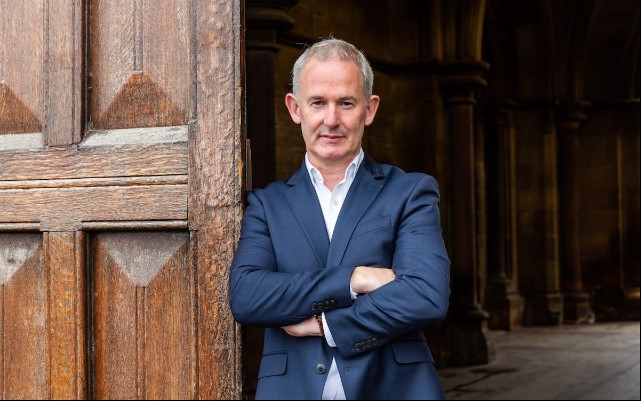
Image: © University of Glasgow
Professor Mark Logan
|
||
|
||
|
The Scottish government's Chief Entrepreneur says Scotland's health and care system needs to face the reality that it is failing to innovate out of choice, by allowing the expertise of individuals to be lost in the "insanity" of a system that chooses to focus on things that are easy to solve while regarding the real problems as too politically difficult.
Professor Mark Logan, a former top executive at one of Europe's most successful technology companies, the online travel firm Skyscanner, was appointed as a senior adviser to ministers in 2022 to fulfil a commitment in Scotland's National Strategy for Economic Transformation.
He was taking part in a panel discussion at the recent Health Research and Innovation Conference marking the 50th anniversary of the creation of the government's Chief Scientist Office when he was invited by the panel chair, National Clinical Director Jason Leitch, to use his experience from other industries to set a challenge to the audience of what needs to be done to make it easier for people in Scotland's health and care system to innovate.
Professor Logan said the starting point had to be acceptance that being bad at something is a choice:
“Everybody is at this conference because we're frustrated at our inability to innovate. Otherwise, you wouldn’t be here. You’d be off enjoying the fruits of high-speed innovation.
“Nietzsche said that insanity is rarely to be found in individuals, it's to be found in teams, groups, organisations, and countries. What I mean by that is: we know that when it comes to the rate of innovation, we're woefully below where we need to be. It reminds me of that Woody Allen film where he gets 800 years in jail but, with good behaviour, he expects to get that cut in half. If we were to double our rate of innovation, it would be woefully too slow.
“We've got to understand the gap between what's needed and what we are doing. This isn't a physics problem. It's not like saying let's try to get to Jupiter: we've got to work out how to survive for five years and that kind of stuff. It's a human, societal, system problem. In other words, it is a choice – we choose to go at this speed.
“If you step outside this industry, and I've got enormous respect for everything we are saying here and I have a fraction of your knowledge in this space. But step outside and look at how other industries have solved process problems. You could do well to look at manufacturing environments. They would tell you, like John [Bell] tells us, that if we add doctors we slow things down. Why is that? Because that's not where the bottleneck is.
“It's very common. This is insanity: to work on things that are easy to solve, because the actual bottleneck in the system is a bit too politically difficult. So we're just going to do displacement stuff. And everybody here is frustrated about that.”
Mark Logan said the issue was highlighted during the pandemic when people were able to adopt innovation much more quickly because, he said, everyone understood and dealt with the enormity of the task facing them rather than concentrating on organisations and systems. After the pandemic, however, everything fell back with people returning to finding ways to put off discussions and seeking permission to do things differently.
He concluded:
“I translate the Nietzsche statement into ‘none of us is as dumb as all of us’. We're all individually super smart. But when we come together, we can conspire to all create processes that are woefully suboptimal. We complain in private groups to each other, and we still operate them.
“So that's the opportunity that's in front of us. And that's what I urge us, in a constructive sense, to take on.”
Read more: More doctors means longer waiting lists; 50 years ‘just the beginning’ says Chief Scientist; Entrepreneurial opportunity for NHS staff
Sign up to our bulletin for key health & social care updates straight to your inbox and you can follow healthandcare.scot on Google News. |
