|
Scotland to host Alzheimer’s research competition |
Related newsConfident conversations on dementia research ‘Major’ update to One Health AMR register New gene study offers arthritis treatment insights ‘Substantial’ drop in cancer deaths Aberdeen team find genetic anxiety ‘switch’ Delivery of dementia vision moves forward Delivery of dementia vision moves forward Music and wellbeing: The power of Bollywood The Scottish theatre group fighting for inclusive arts MSPs’ ‘huge concerns’ over Scotland’s medicines system Insight: Care workers should not be commodities Insight: An unequal integration? 
|
|
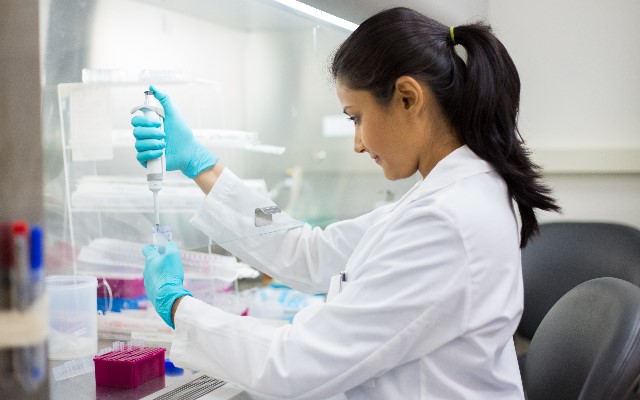
Image Credit: © ashtproductions Adobe stock
|
||
|
||
|
Scotland is to host a first-of-its-kind research competition focused on advancing Alzheimer’s disease research and delivering effective treatment in a move that the Scottish government’s chief scientist for health, Professor Dame Anna Dominiczak, says recognises the nation’s place on the global research map.
Scotland was chosen by the Global Alzheimer's Platform Foundation® (GAP) for its “unique know-how” and an “unprecedented commitment to a broad and accelerated process” of research.
As part of its so-called Bio-Hermes Biomarker Data Challenge, GAP will now give successful applicants access to what has been called the “most comprehensive” set of dementia biomarker data in the world.
The hope is to inspire researchers from any field to produce “bold ideas and breakthroughs in the fight against this devastating disease” and to develop new theories on brain health to test.
The first study results are expected to be presented in January 2025.
GAP’s data cohort consists of 1,001 participants representing groups who they say are less often part of research with the aim of improving diversity. The researchers will get access to data on blood biomarkers, genetics, proteomics, cognitive tests, imaging, clinical and demographic data.
GAP says the highly diverse dataset could be vital in answering some of the highly important questions about Alzheimer's disease.
Significant recognition
Last year, Alzheimer Scotland’s annual conference heard calls for action on women’s brain health, with women more likely to be diagnosed with and experience poorer outcomes Alzheimer’s and dementia – yet underrepresented in clinical trials.
Professor Dominiczak says she is looking forward to the findings that emerge from this competition:
“I am extremely proud of this collaborative achievement for Scotland which serves to underline our place on the world’s map as a key research leader.
“Thanks in part to Chief Scientist Office (CSO) funding which has helped with dementia specialists’ involvement, I believe it represents significant recognition of the country’s wealth of innovative, cutting-edge expertise, but also acknowledgement of its ability to work at pace and with precision.
“Indeed, it was noted that the diverse Scottish research community had acted swiftly in securing access to the GAP data and then launching the challenge which will leverage ground-breaking early blood testing studies.
“The challenge is an exciting proposition with so many possibilities for experts from different fields to get involved and potentially offer up completely new ideas – the very essence of Scottish innovation through the centuries.”
President of the Global Alzheimer's Platform, John Dwyer said:
“Upon hearing of the keen appetite of the Scottish research community for more data to pursue research into Alzheimer's and related dementias, it was the ideal opportunity to offer unique access to our robust data set.”
Supporting bold ideas
The competition is also supporting investigators who find the data management and analysis aspects of research more challenging, by providing support from data scientists, project managers and research leaders.
The research competition is being overseen by teams at the Universities of Glasgow and St Andrews through the Scottish Funding Council’s Brain Health ARC initiative.,
This comes after the latest figures on the life sciences revealed the sector is thriving and the 25th Scottish Life Sciences Awards saw Professor Craig Ritchie, founder of Scottish Brain Sciences receive the Rising Star Award for his efforts to advance Alzheimer’s treatments.
University of St Andrews’ Professor Frank Gunn-Moore, who has co-hosted two international brain health summits in Scotland says this new data project will bring researchers together:
“This data challenge is a great example of how we can bring Universities and organisations together to tackle one of the major issues of our time.
“It has been the catalyst to bring in all interested researchers no matter where they work and so truly democratising research for all.”
The Global Alzheimer’s Platform will make the datasets available through the AD Workbench – a global safe data sharing and analytics environment that enables researchers to share, access and analyse data across multiple platforms.
GAP believes the challenge is already “uniting the Scottish dementia research community” by offering this platform to support new ideas and “creating a legacy of collaboration” and early-career research development.
Professor Terry Quinn, Chair and Honorary Consultant Physician in Geriatric and Stroke Medicine at the University of Glasgow, and lead on the new platform, says:
“Dementia research needs new ideas, and we are hoping that the data challenge produces something leftfield.
“We are really keen to support someone with a good question about dementia that comes from a non-dementia related disciplines like maths, engineering, physics etc, – their fresh ideas could lead to a breakthrough”.
“There is a lot of talk about open science and data being available to anyone, but some open data are more open than others, requiring access fees, complex approvals, or sophisticated software. What we have is a platform of dementia biomarker data that is truly open to anyone with a good question. In theory, any member of the public could submit a question.
“Through a bit of hard work and determination, we have delivered a data access platform that is truly the envy of the world – and we did it in a few months. This is democratising the world of dementia data.”
Read more: Scots women at the forefront of medical sciences; Action needed on women's brain health; Voices of experience key to dementia care; Using VR to understand lived experience of dementia; ‘Substantial' impact of domestic abuse on brain; Edinburgh team seek new insights into MS progression; The app for more ‘dementia friendly' communities
Sign up to our bulletin for key health & social care updates straight to your inbox and you can follow healthandcare.scot on Google News. |
