|
‘Bleak picture’: health leaders react to NHS review |
Related newsCall for ‘urgent’ review of ADHD and autism services Psychiatrists in ‘disbelief’ over cut funding Doctors say GP funding boost “just the start” Less than full-time – behind the NHS trend Probe into future of NHS Scotland’s doctors underway Change course on GPs, says College Scientists to help cut NHS medical device waste Edinburgh IJB faces judicial review over cuts Scotland’s new Chief Nurse appointed Urgent plea to safeguard advocacy amid local cuts New gene study offers arthritis treatment insights New Edinburgh hub set to transform global healthcare 
|
|
Image Credit: © DC Studio
|
||
|
||
|
Organisations representing Scotland’s doctors and nurses have responded to the ‘worrying picture’ painted by Audit Scotland latest report on the NHS, calling for urgent action from government to work with those in the NHS and those who use it to address the crisis.
The British Medical Association (BMA) Scotland, and the Royal Colleges of General Practice, Nursing, and Physicians say staff will not be surprised at the report’s ‘staggeringly bleak’ outlook.
Audit Scotland’s assessment of the NHS in Scotland for 2023 shares a landscape of growing demand outpacing progress, against a backdrop of increasing financial pressures.
The report calls for work to address ‘fundamental capacity and demand pressures’, including workforce shortages, with the Auditor General urging the government to deliver effective reform.
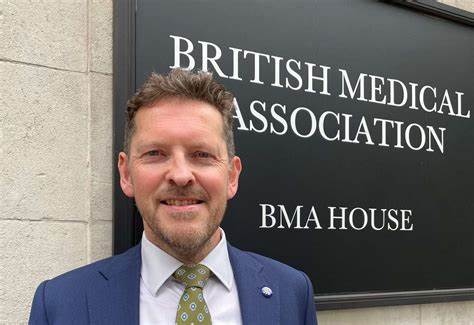
Dr Iain Kennedy, Chair of BMA Scotland, says workforce planning has been “woefully inadequate”, adding:
“Over recent years Audit Scotland’s annual reports have consistently raised concerns about the sustainability of NHS Scotland, but this year’s forensic and detailed assessment of our health service is staggeringly bleak and paints a picture of a health service in crisis, without a plan to address it.
“The service is not financially sustainable and NHS boards face a blackhole in excess of £0.5bn by 2025/26. Staffing – and workforce planning – is woefully inadequate, with increasing vacancies and spending on agency workers – leaving healthcare professionals feeling exhausted and unable to provide safe or effective care – which our members have confirmed in surveys for some time.
“And the problems go on. Healthcare staff are still not working in a culture where they feel confident to raise concerns. Waiting lists are growing, which will only further embed the two-tier system we have seen developing, where ability to access timely care is based solely on whether you can afford it.”
Dr Kennedy says the BMA warned that the government’s hastily delivered recovery plan was inadequate and this report mark an “urgent call to action” that should go beyond political debate. Otherwise, he explains that the same mistakes will be repeated – putting the future of the NHS and free at the point of need healthcare “at massive risk.”
Workforce pressures
While urging the government to implement ‘proper workforce planning’ Colin Poolman, RCN Scotland Director says the “situation is desperate” and the government must deliver meaningful change:
“The report paints a worrying picture about the sustainability of the NHS in Scotland but will come as no surprise to nursing staff working across health and care services.
“We agree with Audit Scotland’s call for an overall vision that coordinates action across health and social care. The report also acknowledges that workforce capacity challenges are having a direct impact on patient safety, with poor skill mix and high use of agency nurses highlighted as specific concerns.
“The updated National Workforce Strategy must be more rigorous than the previous version, with proper workforce planning, based on current and future demand, to ensure Scotland’s health and care services have the right numbers of staff with the right skills.”
Mr Poolman adds that RCN members have shared that “unacceptable and unsafe” working conditions are being normalised – with burnout taking a serious toll on staff.
A national conversation for NHS reform
For his part, the Royal College of GPs (RCGP) Scotland Chair Dr Chris Provan says his organisation welcomes the report and its “emphasis on a long term and whole system vision” for the NHS – and the role of general practice as the ‘bedrock’ and ‘front door’ of the NHS:
“GPs have a really crucial role to play in the sustainability and efficiency of the broader health system.
“A properly resourced and supported general practice must be part of a national strategy for health and care if we are to deliver the realistic medicine and preventative health measures that this report extols.”
Within days of taking over as Cabinet Secretary for NHS Recovery, Health and Social Care, Neil Gray shared his commitment to delivering on health and social care for Scotland.
While not using the same language of a ‘national conversation’ on the NHS as the Deputy First Minister did when unveiling the government’s latest budget, Mr Gray revealed NHS reform planning is underway.
However, the Auditor General does call for a national conversation in the Audit Scotland report.
RCGP’s Dr Provan says that the government must deliver on that commitment for a national conversation on “what the NHS can realistically be expected to deliver” within current constraints.
Meanwhile, the BMA’s Dr Kennedy says it has consistently called for an “honest, open national conversation” on the future of the NHS in Scotland to build consensus on the route to tackle its long-term challenges:
“We agree with Audit Scotland that the Scottish government should now work with NHS boards, their healthcare workers, partners, and the public to develop a long-term strategy for health and social care and support the movement from recovery to reform.
“The urgency and importance of this work must not be underestimated, and to protect Scotland’s NHS for generations to come it must start now.”
Not reform alone
President of the Royal College of Physicians of Edinburgh (RCPEd), Professor Andrew Elder says “reform alone” will not save the NHS, calling for increased funding and improved public engagement:
“We recognise the challenges highlighted in Audit Scotland’s report, and their call for reform of the NHS. But reform alone, in the absence of increased funding, will not save our NHS.
“At the same time, it is legitimate to ask whether we can afford to provide every treatment available, free of charge and at the point of access. If we cannot – which is plausible given the huge increases in medical treatments available – how should we decide what we can provide?
“In order to address these questions, the College believes that a national conversation is required in Scotland, during which the public should have its say on deciding the NHS’ priorities and whether they think more public funds should be diverted to the NHS.
“While politicians will have their views, and doctors can and will wish to advise, the NHS belongs to the public and they must have the main say in its future direction”.
Read more: Vision for NHS reform in coming weeks; Watchdog: ‘No overall vision' for NHS; Psychiatrists in ‘disbelief' over cut funding; Auditor General: Difficult choices for Scotland's NHS; Urgent workforce reforms needed for Scotland's NHS
Sign up to our bulletin for key health & social care updates straight to your inbox and you can follow healthandcare.scot on Google News. |