|
Exercise key to good health in type 2 diabetes |
Related newsBlue spaces: Part of our health infrastructure The Scots behind evidence-based medicine Scotland at the table with UN healthy air commission Pharmacy’s road to stigma-free drug dependency care Politicians must take ‘bold’ action on child poverty NHS Scotland net zero efforts expanded NHS board savings push could see AI replace staff Aberdeen honours UK’s first occupational therapist Rollout of at-home kidney treatment Board chief warns extra funds won’t balance budget Cancer workforce “not on right trajectory” Four centuries of bringing life to Aberdeen 
|
|

Image Credit: © Skyline
|
||
|
||
|
An active lifestyle can change the way the body burns fat and manages sugar levels, according to Aberdeen researchers – findings that could have major implications for the management of type 2 diabetes.
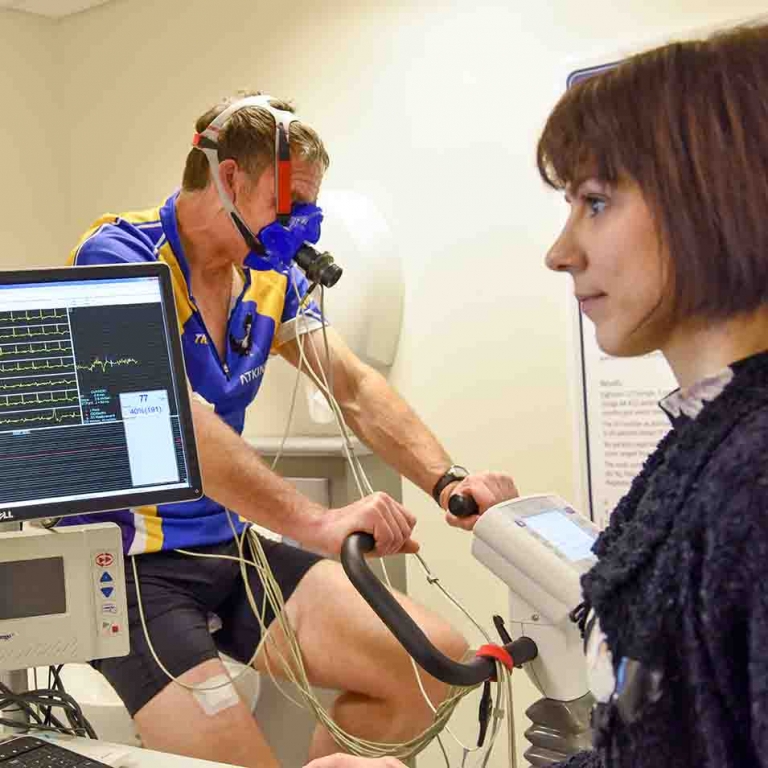
The British Heart Foundation backed-research found that sedentary men with type 2 diabetes lost weight, improved their insulin sensitive and lowered their cholesterol when they swapped exercise regimes with athletes for eight weeks.
The new study from the University of Aberdeen showed that the saturated fat is predominantly stored in the sedentary group, while it is ‘used intensely’ for physical activity among the athletes.
An eight-week lifestyle swap led to changes in this difference.
Professor Bryan Williams, Chief Scientific and Medical Officer at the British Heart Foundation, said the study reinforces the importance of staying active:
“This small study reinforces the benefits of keeping active on our heart health. While the study compared two very specific groups – male athletes and men with type 2 diabetes – the findings offer reassurance that being physically active can improve how the body uses different types of fat.
“Importantly, the study did not assess the impact of consuming fat, and the existing advice remains to try and replace saturated fat in the diet with unsaturated fat.
“Daily physical activity can reduce the risk of cardiovascular disease by lowering cholesterol, triglycerides and fasting blood sugar levels, as well as helping to maintain a healthy weight.”
Professor Dana Dawson, Chair in Cardiovascular Medicine at the University of Aberdeen, who led the study added:
“Overall, the most striking and completely new perspective we have taken from this study is that one size ‘doesn't fit all’ and that one's cardiometabolic health dictates how efficiently you're able to use different fats as fuel.
“These results are completely novel and highlight how keeping fit and active improves metabolism of saturated fat as a direct benefit of exercise.”
While recent research has shown that diet can hold type 2 diabetes at bay for years, the Aberdeen team say they did not investigate food choices because it is ‘notoriously difficult’ to control alongside exercise.
Instead, before and after the lifestyle swap, the volunteers received small amounts of different fats via an intravenous injection and had MRI scans to see how the fat behaved inside their muscle cells.
The athletes underwent deconditioning – where they went from exercising vigorously for at least 9.5 hours per week to none.
In contrast, the people with type 2 diabetes underwent endurance training where they exercised for 5 hours a week.
One participant, Ian Frizell who has type 2 diabetes, said he enjoyed the health benefits he saw:
“Following the swap, I experienced weight loss, increased fitness level, lowered blood sugar level and an improvement in cholesterol readings.
“The routine of measured exercise every day was the key to the success of the programme.”
Meanwhile, 56-year-old Fergus McKiddie, an NHS worker from Aberdeenshire took part in the trial in the athlete category.
He said understanding how physical activity uses these saturated fats has enabled him to ease his outlook on diet and health:
“My mother-in-law had type 2 diabetes for many years before developing vascular dementia.
“So I felt like I should try to help in any way I could to try to advance the understanding and treatment of the disease.
“It was a bit of a shock to the system to go from exercising every day to doing nothing and it took a bit of getting used to. But I am glad that I contributed towards this exciting result.
“It has changed my outlook on how I eat now – I'm now less concerned about eating natural fats as I understand better how my body is handling them and making good use of them.”
Fergus said the study has highlighted how exercise can make a difference for everyone – and “especially those with type 2 diabetes”, adding:
“It was a very interesting experience and produced an exciting result that potentially opens up new ways to assist with the ever-increasing numbers of patients being diagnosed with type 2 diabetes. An illness that has touched me and my family deeply.”
Professor Williams, Chief Scientific and Medical Officer at the British Heart Foundation, added:
“When it comes to being active, it’s important to get into a routine that you enjoy and that you can stick to. Try to build up to 150 minutes of moderate intensity activity a week, such as a brisk walk, swimming or cycling.”
Read more: Medics warn pollution is risking children's health; Regulation key to reducing obesity; A question of action; Analysis: Why people are left behind; Can Scotland make health fairer?
Sign up to our bulletin for key health & social care updates straight to your inbox and you can follow healthandcare.scot on Google News. |