|
Holyrood hears calls for more inclusive communication |
Related newsScotland’s chance to lead on disability benefit system All public bodies must focus on health, urges charity Call for ‘urgent’ review of ADHD and autism services Insight: The health benefits of being able to work Scots kidney disease patients urge politicians to act Insight: Scotland’s ‘invisible’ patients and carers 
|
|
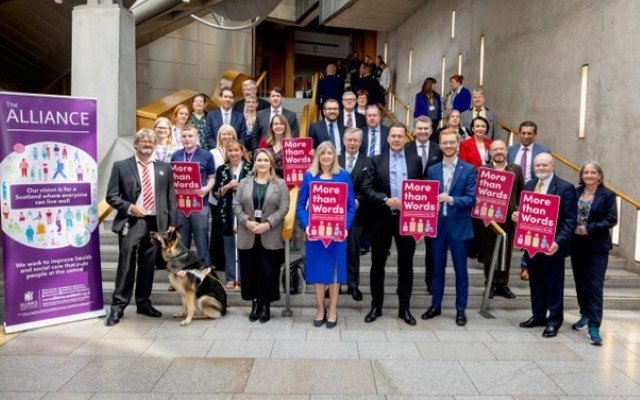
Image Credit: © Alan Rennie Photography.
|
||
|
||
|
The delivery of inclusive communication across Scotland’s NHS, care and public sector systems cannot wait, say campaigners led by third sector intermediary the Health and Social Care ALLIANCE who took to Scottish parliament.
The ALLIANCE says MSPs from across the political spectrum support moves to redress the failure to support people with extra communication needs who have struggled to access health and social care, attend education or work, and participate in society.
More than 200 organisations and individuals have joined the ALLIANCE’s More than Words campaign calling for legal change to enshrine the right to inclusive communication in Scots law in order to meet people’s needs.
Over three months since the campaign launched, the people directly affected, disabled campaigners, charities and health and care leaders say they have taken it to the ‘heart of government’, speaking to politicians in parliament.
At Holyrood, campaign signatories told MSPs that ‘inclusive communication isn't a luxury’, but a gateway to human rights.
Partially sighted poet and activist Nuala Watt says inclusive communication matters because it gives her independence:
“I think accessible communication is important because it creates equality – we can all access what we need when we need it.
“Help is lovely, but it’s nice to be able to do things independently.”
The campaign is asking the Scottish government and Scottish parliament to put together all the different pieces and ensure public recognition that equal communication is a right, legislation to protect those rights, better training and data collection, and monitoring.
More than words
The report used to launch the campaign found ‘significant inequalities’ remain in the communication support available to people accessing health, care, education and work, with most Scottish public bodies not tracking if or how they provide communication support.
Dr Hannah Tweed, who led the research and campaign for the ALLIANCE, said:
“Most of us will need communication support at some point in our lifetimes. However, because there is a lack of good support, people often encounter problems.
“We’ve heard countless stories of people unable to access health and social care when they need it, attend education or work, and participate in society.
“Communication for all means sharing information in a way that everybody can understand.
“That’s why we need equal rights to communication enshrined in law, and that right become second nature to public bodies, whether it’s staff training or support services front and centre. Without strong legal protection for people’s right to inclusive communication, Scotland is unlikely to see systemic change.”
Last month, an adult disability benefit review heard that staff had failed to respond to access or communication needs and recommended Social Security Scotland create more personalised, inclusive communication and ensure documents are available in accessible formats.
Although current legislation offers some protections, the campaign points out that people in Scotland do not have a clear legal right to inclusive communication whether its British Sign Language (BSL)-English interpreters, supportive speech tools, or easy read versions of documents.
The ALLIANCE says it hopes this campaign will help inform the government and public bodies on how to meet people’s communication needs, end current injustices and acts as a springboard for much needed system change to stop excluding people with particular communications needs.
Read more: Insight: Scotland's ‘invisible' patients and carers; Using VR to understand lived experience of dementia; ‘Systemic change' needed for inclusive communication; “Critical” strain on care nursing workforce; ALLIANCE: Action needed from Scotland’s leaders; ‘Big leaps’ needed to secure change for disabled people; Chief Medic: ‘Critical connections’ priority;
Sign up to our bulletin for key health & social care updates straight to your inbox. |