|
The in-between: what’s happened to care reform? |
Related news‘Too many missing out’ on palliative care Action for social care workers “can’t wait” Holyrood passes Care Reform Bill Care worker visa changes ‘inhumane’ and risks services “Relentless focus” on health inequalities Social work leaders welcome new care reform plans 
|
|

Image Credit: © Anke Thomass
|
||
|
||
|
Following years of development, debate and scrutiny from Scottish parliament, this June saw the Scottish government’s scaled-back care reforms passed unanimously by MSPs. But, with so much removed from the original, many were left asking: ‘What now?’
An event this month sought to answer that question, hearing from people working across Scotland’s social care landscape who urged policymakers to work alongside them and provide the necessary resources to bring forward reforms.
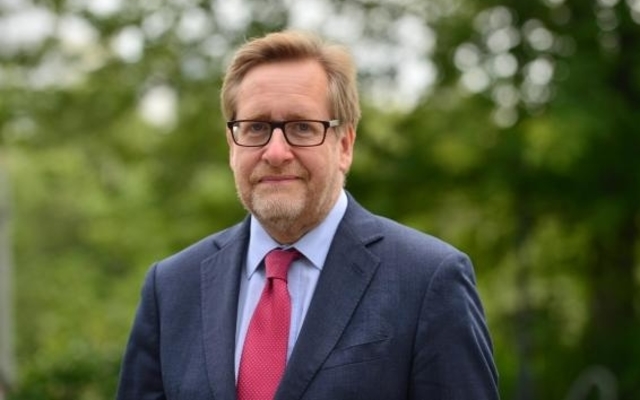
Three months since the Care Reform Bill passed through parliament, Scottish Care CEO Dr Donald Mackaskill told a Scotland Policy Conference that the nation is at an inflection point.
He said the next steps for reform must carry forward the people at the heart of this: those in need of social care support to live their life well, with choice and dignity.
Reflecting on the lack of urgency – and action – from the Scottish government to drive forward care reforms, he said:
“Providers tell me they are not going to survive, families are breaking under pressure, frontline staff are weary and all of us are exhausted with talking about this and seeing so little action.
“Realism means that we have to recognise that social care provision in Scotland is at breaking point.
“Despite that, I still believe it’s not too late – there is hope, there is possibility.”
Implementation of policy to expand best practice, he added, is “not glamourous” but requires the Scottish government to shift from relying on communities “going the extra mile” and deliver resources and accountability across the sector.
Dr Mackaskill said that while the system is “near collapse”, it is not inevitable, and the next steps for reform must involve investment to support the sector to implement changes “with urgency and humanity”.
Such changes, he said, must extend from the commissioning of social care services in Scotland to better coordination across services and the money going into frontline workers’ pockets and their pensions:
“Every commissioning decision must be tested against human rights. The right to be supported to live independently.
“Pay, pensions, life-long conditions and benefits, and building progression and career pathways in social care. These workforce matters are vital – without staff, we don’t have a system.”
He said real co-production must come from “a sharing of power” involving people with lived experience and those delivering care across Scotland, adding that he hopes the care advisory board is the “beginning of that unity”.
Missing voices
Throughout the meeting concerns were raised by delegates that two people key to shaping the future of social care were not there: the government’s advisory board chair Susan Douglass-Scott and COSLA spokesperson Paul Kelly.
Councillor Paul Kelly was due to address attendees while Susan Douglas-Scott had been expected to have shared a pre-recorded message – both were absent on the day.
While event organisers promised to share messages with government and council leaders, attendees asked: “Are we all just shouting into an echo chamber?”
Dr Mackaskill said that despite repeated calls for action and delivery to better support social care service providers and frontline staff, many are still waiting for substantive shifts to be seen.
This is the case when it comes promises of funding to shift the balance of care into the community, he said:
“Moving money from crisis health treatment in the NHS into social care, into primary care, into community support is not stealing from the NHS. A billion pounds shifting from the NHS budget is not theft – it’s investment in sustainability, prevention, providing care where people want to be supported.
“In the last decade we’ve been discussing rebalancing care, I have failed to see a substantial shift in NHS acute and secondary spend into general practice, primary care and social care.”
Political choice to invest
The conference heard the difference in basic pay between care workers and their equivalents in NHS Scotland is now 19%, with band 3 NHS workers receiving as much as £4,000 more than their social care counterparts – despite both rates being set in negotiations between the Scottish government, and respective union and sector leaders.
Coalition of Care and Support Providers in Scotland CEO, Rachel Cackett told the meeting that despite the “burden of risk” for improving care and delivering reforms being held by those on the frontline, social care staff are continually undervalued:
“We’re not naïve but it becomes a little wearing to be constantly told ‘there is no more money’ to deal with what is a crisis in many people's lives – especially when we can see money appearing for other things.
“I’m in no way saying those are things that shouldn’t be funded, but there’s no doubt that we need additional funding too.
“If we can find money for Grangemouth, for ports, for bailing out universities – it’s no longer enough to tell us there’s no more money.
“Those are political decisions about what to invest in and it’s very clear the money required for our sector to flourish – to stay on its feet – is not being made available.”
While she said there may not be “direct lines” to reform in the new Bill, the government’s commitment to produce a fair work strategy, monitor and report on fair work in social care, all “open doors” to reform.
“The Care Act perhaps will help us with areas of investment,” she added, “but then I come to another question: Is it still the locus of reform? It passed but then very quickly the government produced three new reform documents within a week.”
Ms Cackett said she sees “a very low profile” of care reform in the public sector reform strategy, health and social care service renewal framework and the population health framework.
She urged leaders in this in-between stage where reforms are still to be implemented, to hold onto the value of social care across society:
“We need a radical shift in the culture of decision-making to make the very best of what we already do against the odds.
“Providers, people in receipt of support and people who care for those who need our support – we already have the solution so value us as strategic partners.”
Read more: Care worker visa changes ‘inhumane’ and risks services; “Critical” strain on care nursing workforce; Care services at risk from delayed payments; Home adaptations – council spend will prevent NHS cost; COVID jags end for staff and chronically ill; ‘Too many missing out’ on palliative care; “Mayday”: voices from NHS emergency departments; Carers rights not yet a reality; Dementia home care tech collab invites partners; Care management ‘on its knees’
Sign up to our bulletin for key health & social care updates straight to your inbox. |