|
Why live music belongs in everyday healthcare |
Related newsScotland’s frailty services to help address NHS waits Scots honoured across health and care Insight: Tackling loneliness in Scotland IJB costs driving councils’ unsustainable funding gap Cold bureaucratic response to care records requests 
|
|
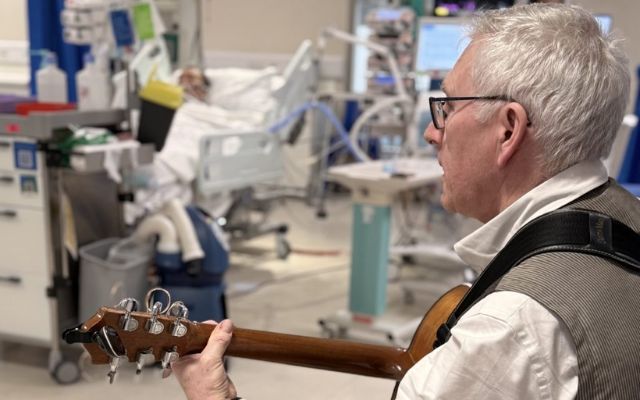
Image: Music in Hospitals & Care
|
||
|
||
|
In the last year, Music in Hospitals & Care, a UK charity that improves the health and wellbeing of children and adults ‘through the healing power of live music’, has delivered 495 hours of live music across Scotland, reaching people in hospitals, care homes, hospices and veterans' centres, as well as those living with dementia, experiencing mental health difficulties or receiving critical care.
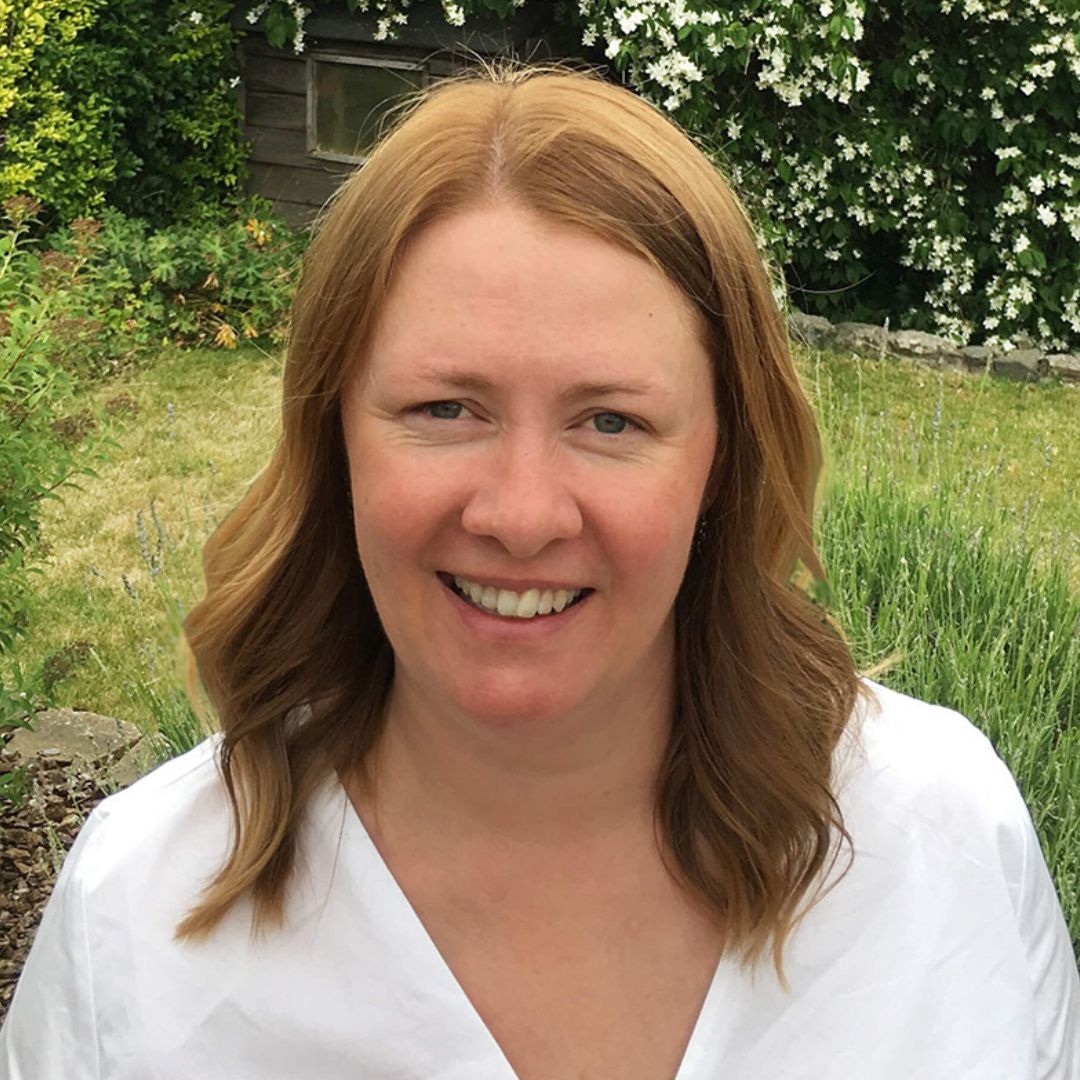
As the charity launches its annual report, its Chief Executive, Edinburgh-based Barbara Osborne (pictured), argues that live music in healthcare settings is much more than entertainment – it can be transformative.
This year marks eight years since I became Chief Executive of Music in Hospitals & Care. It is a landmark that has given me the opportunity to reflect on what I have seen and learned during that time, and on the role that live music can play in creating more compassionate care.
Over the past eight years, I have seen first hand how live music can shape people’s experiences. Across the UK, our musicians visit wards, waiting rooms, care homes and community settings, reaching people at moments of uncertainty, recovery and reflection. What they offer is not simply entertainment, but connection, and often, relief.
One patient described it simply: “Live music just lifts you, it has such a calming effect.”
That response speaks to something fundamental. Music reaches parts of us that clinical interventions alone cannot. It can calm anxiety in a waiting room, ease the intensity of a busy ward environment, and bring a sense of humanity to environments that can, out of necessity, feel clinical.
As we launch Music in Hospitals & Care’s latest annual report, we can see the scale of this work and the difference it makes. In 2025/26, we reached over 37,000 people, creating 1,584 hours of laughter, singing, dancing and connection. The outcomes are striking. In hospitals, 28% of people experienced less physical pain, and in care homes, 52% of people expressed themselves more as a result of our live music.
These figures reflect what research has long suggested: that music has a healing quality and can improve patient wellbeing. Research shows that music can improve sleep quality, reduce anxiety, lower blood pressure and regulate breathing and heart rates. In post operative intensive care, it has even been shown to reduce the need for powerful painkillers and sedatives. However, beyond the data, there is a cultural and human dimension that is harder to quantify, but impossible to ignore.
Over eight years, I have witnessed countless moments that have stayed with me. I remember joining our musicians in an adult acute mental health ward at Gartnavel Royal Hospital in Glasgow. The transformation was immediate. Patients who had been withdrawn became more present. The atmosphere softened. Staff, too, seemed to breathe differently. In that moment, music reshaped the space, making it feel less like a place of containment and more like one of care.
This is also apparent when working with people living with dementia. Music has a unique ability to unlock memories, even in advanced stages of the condition. A familiar melody can spark conversation or simply bring comfort. It can reconnect someone to their sense of self and to those around them, even when other forms of communication have become difficult.
Keep live music alive
And yet, despite this evidence, access to live music in healthcare remains fragile. We are operating in an increasingly difficult landscape, with pressure on NHS services, stretched staff and growing demand for care. At the same time, funding across the charity and arts sectors remains challenging, with investment in arts and culture too often among the first areas to be scaled back. In this environment, arts interventions can still be framed as non essential, as something desirable but not necessary.
This makes the work we do, and the support behind it, more important than ever. Eight years into my time at Music in Hospitals & Care, I am proud of how the organisation has continued to adapt, grow and demonstrate the value of live music across health and care.
Our latest annual report is not simply a record of what we have delivered. It is a reflection of the musicians, staff, partners, funders, supporters and healthcare settings that make this work possible, and of the thousands of people who experience live music through our work each year.
If we accept that healthcare should be holistic, addressing emotional and psychological wellbeing alongside physical health, then live music is not an optional extra. It is part of the fabric of care. It supports patients, enhances the working environment for staff and strengthens the sense of community within healthcare settings.
Eight years on, I remain convinced that music has a vital place in our health and care system. The arts have always held a mirror up to our shared humanity. In healthcare settings, they do something more immediate. They remind us, in the midst of illness and uncertainty, of who we are.
The question, then, is not whether we can afford to include live music in healthcare, but whether we can afford not to."
Barbara Osborne is Chief Executive of Music in Hospitals & Care. She has been a trustee of Health in Mind Scotland and, before being appointed CEO of Music in Hospitals & Care, had worked for Myeloma UK, British Heart Foundation and Children’s Hospice Association Scotland (CHAS)
Read more: Celebrating volunteers’ part in ‘NHS family’; Dementia campaign success to inform government actions; NHS Fife embracing music therapy
What Music in Hospitals & Care says about its activities Scotland:
Music Jams
Our ‘music jams’ have been running successfully for over ten years at The Hive, a communal space for patients receiving mental health care at the Royal Edinburgh Hospital. The approach has since expanded to hospitals across Glasgow. In addition to The Hive, we now reach Stobhill Hospital, Leverndale Hospital and Gartnavel Royal Hospital, where sessions encourage participation and help lift people’s mood.
What makes our ‘music jams’ unique is their interactive nature. Unlike traditional live performances, patients are encouraged to get involved by singing, playing instruments, performing and making music together. Delivered on inpatient mental health wards, where some patients have longer stays, the sessions offer opportunities for regular creative engagement and social connection, helping to support patient wellbeing.
Veterans’ support
We share live music with veterans across Scotland. Sessions are designed to reduce social isolation and improve mental health and wellbeing among veterans. With the support of the Veterans’ Foundation, we bring live music to sites including Community Veterans Support in Glasgow, Lothians Veterans Centre in Dalkeith, the Linburn Centre for war-blinded veterans in Wilkieston, Veterans’ Café in Dalkeith, and the Hawkhead Centre in Paisley.
Hospitals
We bring live music to several hospitals across Scotland, including Woodend Hospital in Grampian, where sessions take place in communal areas and on stroke and rehabilitation wards. At community hospitals such as Adamson Hospital in Fife, Bo'Ness and Forth Valley Royal Hospital and Stracathro Hospital's Susan Carnegie Centre. At the Royal Infirmary of Edinburgh, we bring live music to people in critical care with our ICU Hear programme.
Dementia
Our live music is also shared at Murrayfield Memory Lane Café in Edinburgh, where a local dementia group meets regularly. Music transforms this dementia-friendly social space into a vibrant hub and helps to reduce anxiety and confusion among people affected by memory loss.
We have a long-running partnership with Moyness Care Home in Dundee where we worked together to develop our Room for Music approach. This ensures that residents who cannot or prefer not to join communal activities can still enjoy the benefits of live music in their own rooms, helping to make our live music more inclusive.
Through our research partnership with the Edinburgh Centre for Research on the Experience of Dementia (ECRED) on the IMAGINED project, we have been contributing to a new evaluation tool and online training course for healthcare practitioners. The resources will be made available nationally and internationally to help improve confidence and skills in delivering and evaluating arts and dementia programmes.
Community spaces
Since 2023, we’ve been bringing live music to The Yoker Project, a group offering over-65s in north west Glasgow a space to connect and socialise. We also bring regular live music to The Friendship Cabin, a community group based in Glenrothes. It’s a regular activity for group members to look forward to, and it helps our musicians build lasting connections with staff and residents.
Feedback
Hospital settings in Scotland reported that 92% of patents felt more connected to other people and 64% were more able to express themselves after experiencing our live music. Care home settings in Scotland reported that 87% of residents were reminded of their past and 89% felt more connected to other people after our music. |

 "In conversations about healthcare, we often return to the same themes: waiting times, bed capacity, staffing pressures. These are, of course, critical. But they don’t tell the full story of what it means to care for a person. Beyond clinical outcomes lies something harder to measure, yet no less vital: how people feel while they are being cared for.