|
Virus study to recruit every UK patient on ventilator |
Related newsScotland must prioritise new bladder cancer test Navigating ‘next frontier’ of AI in medical devices Scotland’s Clinical Entrepreneur initiative returns Study explores life with an enlarged prostate Tayside team achieves global kidney study milestone Blue spaces: Part of our health infrastructure Edinburgh IJB faces judicial review over cuts New Edinburgh hub set to transform global healthcare Edinburgh welcomes outdoor brain health centre Shocking levels of violence towards NHS staff NHS Lothian escalated over CAMHS performance Youth mental health pilot looks to the future 
|
|
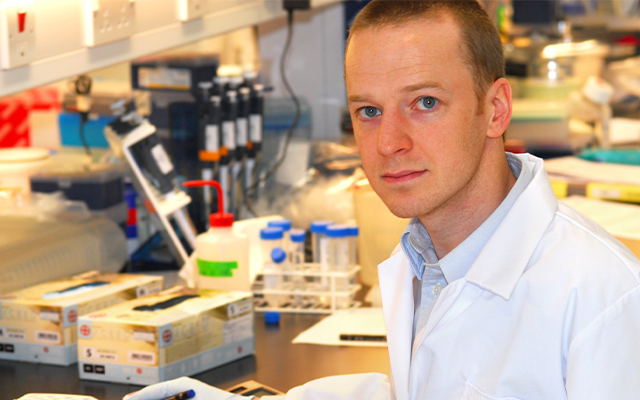
Dr Kenneth Baillie
|
||
|
||
|
A new national research project hope to explain one of the biggest mysteries about covid-19 – why some people get no symptoms at all, while others become critically ill or die.
The team aim to recruit every covid-19 patient on a ventilator in the UK and a new partnership means whole genome sequencing can take place across the NHS involving up to 20,000 people currently or previously in an intensive care unit with coronavirus, and 15,000 individuals who have mild symptoms.
The £28m UK-wide initiative is being led by the University of Edinburgh’s Dr Kenneth Baillie and includes researchers from Genomics England, the NHS and the GenOMICC (Genetics of Susceptibility and Mortality in Critical Care) consortium – a global collaboration studying genetics in critical illness.
GenOMICC – which was launched by Dr Baillie in 2016 - is already active in more 170 intensive care units across the UK and has signed up more than 1,000 patients for the study.
By mapping the genetic blueprints of severely ill covid-19 patients, researchers hope to discover why some people are predisposed to developing life-threatening symptoms, and be able to identify treatments for clinical trials and potentially highlight people at extreme risk.
The study’s results could also contribute to global planning for possible later waves of covid-19 and for future pandemics .
Dr Kenneth Baillie, the project’s chief investigator and Academic Consultant in Critical Care Medicine and Senior Research Fellow at University of Edinburgh’s Roslin Institute, said:
"Our genes play a role in determining who becomes desperately sick with infections like covid-19.
“Understanding these genes will help us to choose treatments for clinical trials. The GenOMICC study was launched before this outbreak and it is recruiting in 145 ICUs across the country with tremendous support from the critical care community. We are excited to work with Genomics England to tackle this new and complex disease."
Sir Mark Caulfield, Chief Scientist at Genomics England, said: “For the first time in a generation we face a global viral pandemic that is life threatening for some people, yet others have a mild infection. By reading the whole genome we may able to identify variation that affects response to Covid-19 and discover new therapies that could reduce harm, save lives and even prevent future outbreaks.”
GenOMICC – an open, global consortium of intensive care clinicians to understand genetic factors that influence outcomes in intensive care from diseases such as SARS, influenza and sepsis – is designed to enable rapid research in the event of outbreaks like the current pandemic.
It is funded by the charity Sepsis Research (FEAT), the Intensive Care Society, Wellcome, UKRI and Scotland’s Chief Scientist Office.
Sign up to our bulletin sent twice a week so you don’t miss out on the latest health and social care news.
Tags: Research & Innovation. |
