|
Shocking levels of violence towards NHS staff |
Related newsGovernment to act on A&E failures ‘Bold action’ needed for children’s health We “cannot be complacent” on breast cancer rise Charting Scotland’s future health and hospital demand Gray: Funding will come to shift balance of care Piecemeal approach to serious NHS errors handling NHS problems ‘still need fixed’ despite pandemic focus Scots warned not to assume virus immunity Scotland reaches testing target & expands eligibility NHS whistleblowing champions appointed Nine NHS boards predicting deficits 
|
|

Image Credit: © Rawpixel
|
||
|
||
|
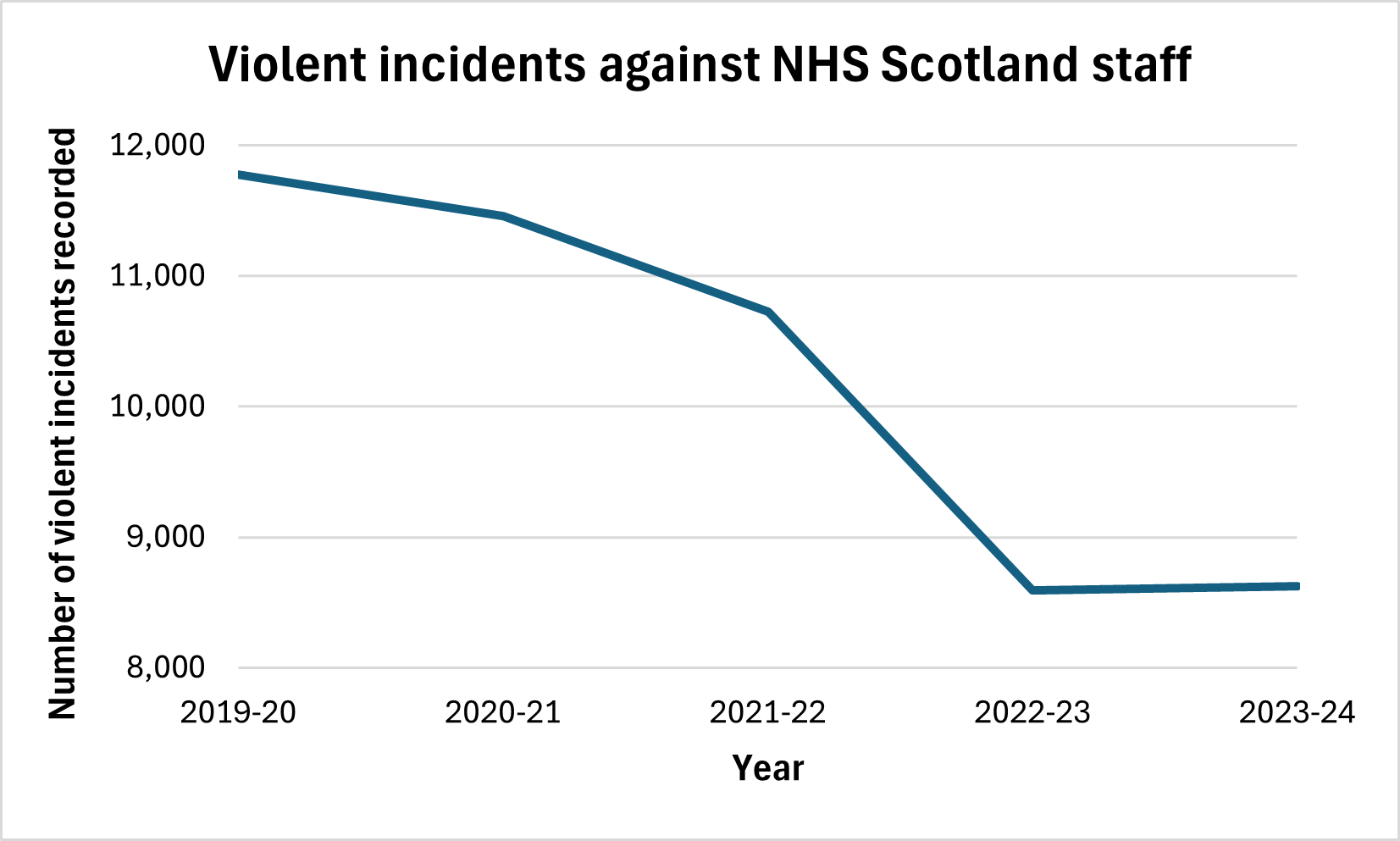
The Scottish government is being told it must act to eradicate violence against NHS Scotland staff, as newly-released figures show there have been over 51,000 violent incidents since 2019 – disproportionately against nurses.
Despite a trend of incidents reducing over the past five years, many health boards are reporting a recent rise in violence against staff between 2022 and 2024, and nursing leaders say the government must “look behind” the numbers.
The figures released following a Freedom of Information (FOI) request reveal around half of the reported incidents of violence were directed towards nursing staff.
While not all health boards provided a workforce breakdown of the incidents, from those which did 25,142 incidents were directed at nursing staff.
Around 344 incidents between 2019 and 2024 involved doctors and 63 were of violence against midwives.
There had been a steady decline of almost a third in the violence reported between 2019 and 2022.
However, the year 2023-2024 saw an uptick in the number of incidents in several NHS boards.
Royal College of Nursing Scotland Executive Director, Colin Poolman says Scotland must not only set a zero-tolerance standard towards violence in the workplace for health and care staff, but also recognise the underpinning issues causing patient frustration:
“It is disturbing and shocking to see these levels of violence aimed at NHS staff as they care for patients.
“Violence is unacceptable in our health care system, and employers and Scottish government must take a strong stance on eradicating this.
“When a predominantly female nursing workforce experiences such shocking levels of attacks, it's vital that along with zero tolerance to those who perpetrate this, we must look at what sits behind it.
“The Scottish government must act and deliver an urgent investment in services and staff to cut waiting times and end the frustrations that cause some people to lash out at those trying to deliver care in the most challenging of circumstances.”
The FOI questions were asked by the Scottish Liberal Democrats.
Party leader Alex Cole-Hamilton says the “stubbornly high” figures on violent incidents reflect a need for the government to work closely with medical bodies and trade unions to get a fuller picture of what staff need to be safe at work.
Violence across health boards
Of Scotland’s 14 regional health boards, eight saw an increase from 2022-23 to 2023-24, while the remaining six reported a continued decrease in violence.
Across the five years, NHS Fife reported the highest number of incidents per patient population, with a total of 8,622 violent incidents.
In 2023-24 alone, NHS Fife staff suffered 1,450 violent incidents –the largest jump from the year before, rising by 199.
NHS Dumfries and Galloway, Forth Valley, Grampian, Highland, Lanarkshire, Lothian and Western Isles all reported increased incidents of violence over the past two years.
NHS Tayside has reported the highest total number of violent incidents directed to staff at 10,689 over the five years but has seen a steady decline since 2019, following the health board’s launch of a ‘Respect Us’ public campaign.
Yet, NHS Tayside still reported 1,484 incidents of violence from public and patients against its staff last year.
Meanwhile, the greatest drop in incidents of violence was seen in NHS Borders which reported 520 violent incidents in 2022-23 dropping to 125 incidents in 2023-24.
The only health board reporting no incidents of violence last year was NHS Shetland.
Scottish Liberal Democrats leader Mr Cole-Hamilton MSP says the NHS must be a safe place to work:
“Like any other employee, NHS staff deserve to go to work without fear of violence or harassment.
“Staff are there to provide care, treatment and support. Often, they are under significant pressure in trying to do so; the last thing they need is to be met with violence and abuse.
“Incidents are still stubbornly high year after year, so I want to see the Scottish government working closely with health boards, medical bodies and trade unions to understand what staff need to be safe at work.”
Colin Poolman from RCN Scotland says that both the government and individual health boards must meet their duty to protect staff, or face losing people to other sectors:
“All health boards have a duty of care to protect their staff from attack. They are expected to have policies in place to deal with these distressing situations and must always listen to their staff.
“They should also make clear to patients and their families that harassment or violence will not be tolerated, that incidents will be reported and a conviction sought if appropriate.
“A failure to take care of staff will only add to pressures and risk an exodus from the workforce, putting patient care at ever-increased risk.”
Read more: Organisational change needed for women in healthcare; “Watershed moment” for healthcare sexual misconduct; Nursing report spotlights burnout and discrimination; Racism in NHS Scotland still rampant, doctors reveal; First Minister unveils NHS renewal plans; Scottish doctors happier but still at risk of burnout
Sign up to our bulletin for key health & social care updates straight to your inbox. |