|
Fuel crisis support needed for hospices |
Related newsCarers rights not yet a reality Action for social care workers “can’t wait” FM candidates asked if they care about care Kerley: Don’t talk about a postcode lottery Holyrood passes Care Reform Bill National Care Service plans scrapped Expanding hospital at home services Radiotherapy optional for older breast cancer patients Social deprivation linked to frailty Insight: Carers in need as fuel poverty hits Piecemeal approach to serious NHS errors handling NHS problems ‘still need fixed’ despite pandemic focus 
|
|

Image Credit: © structuresxx
|
||
|
||
|
Urgent support is needed for hospices across Scotland struggling with inflation – particularly rising energy costs – with politicians and hospice families calling for more financial assistance from the UK and Scottish governments.
An MSP member of Holyrood’s Cross-Party Groups on Carers and Palliative Care, and a mother whose daughter receives support from hospice teams have come together to campaign for better funding and wider recognition of their work.
The issue of rising bills was highlighted at Westminster when SNP MP Patricia Gibson called for the UK government to step up the support it provides to hospices as a matter of urgency, saying:
“Most of us have, at some point or another, had cause to be grateful to hospice services for the invaluable care they provide to our terminally ill loved ones.
“However, the cost-of-living crisis is having a significant impact on the sector’s fundraising at a time when the costs of running a hospice are spiralling.”
With the UK government’s Energy Bill Relief Scheme – designed to support businesses, schools, care homes, hospitals as well as hospices and other charities – coming to an end in March, more and more people say they are worried about the hospice sector surviving.
Ms Gibson explained the replacement for this scheme is “considerably less generous” despite rising fuel bills and says the hospice sector across the UK and in Scotland could be in jeopardy.
The service user
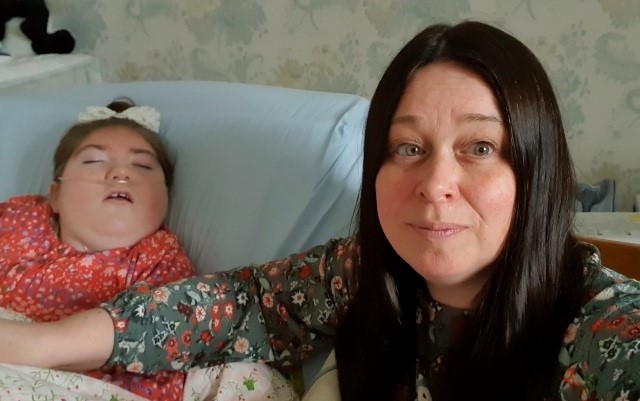
Carolynne Hunter, a carer for her daughter Freya who has complex medical needs, said has had huge worries about the costs of keeping her own home warm. Now she was concerned about the costs for charities running hospices.
Carolynne explained to healthandcare.scot the importance of hospices beyond just end-of-life care and the essential role they play for carers across Scotland:
“The nurses were incredibly helpful – I had been through a load of trauma with Freya being so poorly and they counselled me. So they obviously had a lot of parents like me and that was there expertise – and that’s so valuable, it is so valuable.
“You can’t just conjure up that wealth of experience and how important hospices and the staff are to supporting people like me that need that service.”
Ms Hunter added that the hospice carehelped her other children for days out, respite and outward-bound projects, taking a whole-family approach to support – which is hard to come by, she says.
Carolynne has previously shared her experience struggling with fuel poverty in Scotland with healthandcare.scot, as essential medical equipment meant her bills were already high before the fuel crisis hit.
She said, until needing to use hospice services, she didn’t realise how much support was offered beyond end-of-life care.
The loss of access throughout the pandemic was difficult, and now with hospices struggling through the energy crisis, Ms Hunter says it is important that people understand the essential role hospices play in health and care as a “crucial” service for families:
“The only place that I can take Freya ‘on holiday’ is the hospice – and I know that sounds weird, but for Freya to get a break away from home and to be safe, is to go to the hospice because she needs two medically trained staff at all times.
“So it’s just really a lifeline for us and I love the place – everyone looks after you and it’s not as clinical as a hospital, you can come and go as you please and the staff are just completely there for you.”
The MSP perspective
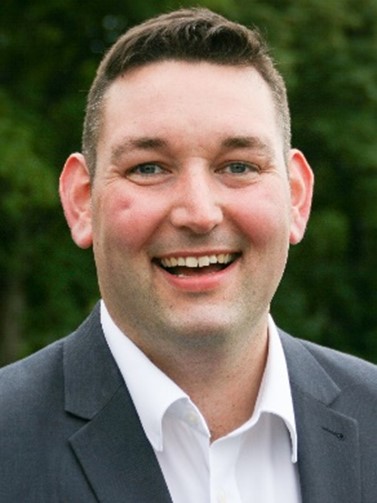
This wrap-around care is something that Conservative MSP Miles Briggs – who sits on parliamentary cross groups on Carers, and Palliative Care – says needs to be better valued.
Having experienced support in his own family from hospice care, Mr Briggs says that extending help beyond medical intervention and care to a person’s family and loved ones too cannot be underestimated. Speaking with healthandcare.scot, he added:
“I would say governments have taken the hospice sector for granted now that is partly because the hospice sector is very charitable, so you don’t necessarily want it to be part of a government department.
“You do want government to be absolutely understanding that if it wasn’t for the hospice sector, the NHS would collapse.”
Delivering financial support
Carolynne believes hospices are not being valued or supported enough throughout the cost-of-living crisis despite providing “vital” services and equipment.
Patricia Gibson MP put out a news release saying that hospices cannot simple use less energy:
“The hospice sector, which receives most of its funding through donations from the public, plays a critical role within the UK’s health and care system, relieving pressure on our NHS. By their very nature, simply cutting energy consumption is not an option when medical machines need to be kept running and inpatient units need to be warm for those in their care.”
Mr Briggs believes that “by and large we are well-served” across Scotland but agrees that government needs to ensure funding continues, particularly for adult hospices.
According to hospicesinfo.org, hospice care in Scotland receives 40% of its overall income from the government, with the remaining funds coming through charity work etc. This stands a little higher than other UK nations but still leaves a large gap to be filled by charitable donations.
A recent study investigating the pandemic’s impact on the UK’s hospice sector found that vulnerability of funding was highlighted as a key concern for charitably funded hospices, with interviewees noting the “fragility of income” linked to fundraising events stopping.
Mr Briggs says that while there are a lot of good strategies through government to help the sector and particularly ensure staff are well-supported have not been fully implemented.
He added that on top of energy costs, investing more in staff is essential – particularly as he thought hospices were included in the NHS Agenda for Change pay offer requiring additional funds, which they are not:
“Hospices go the extra mile to deliver what’s needed when it’s needed… but financially they’re in such a difficult place. And given current pressures on increasing NHS pay, there’s a real concern that people will move just because of the different deals which are now available to work in the NHS.
“So I think the Scottish government also need to look at how we support the hospice sector to be either part of Agenda for Change or what other deal can be available bespoke to the hospice sector.”
Solutions
Having heard from people in the sector that the fuel crisis hiking up energy and running costs alongside increasing staffing needs and costs has led to a “perfect storm”, Mr Briggs is keen to work on practical steps to avert the crisis.
He will be holding a ‘Hospice UK and Scottish Hospices’ roundtable in Scottish parliament this week to hear from hospices and the families they support and discuss how to address the current challenges.
One potential solution he shared would be to bring energy suppliers to the table and hold them to their corporate responsibilities:
“The windfall tax was one way and I think the UK government was slow putting that in and we’ve already seen companies using loopholes. The world of when you do propose these things, not then delivering what you thought it would – isn’t really acceptable.
“I think, and this is where I hope a conversation starts with this roundtable, is that we drag them to the solution. There’s a need to get them [energy companies] to the table, put this problem in front of them and hold them to their corporate social responsibility that they all talk about being part of.”
Cost of caring
Mr Briggs says both governments need to sit down together and look towards the real pressures currently and coming next winter for the whole caring sector – from individual carers to hospitals and hospices.
Having taken concerns that hospices are “at threat due to soaring energy costs” to Westminster and urged current Prime Minister Rishi Sunak to increase financial assistance, Patricia Gibson said:
“I was hugely disappointed by the UK government's response when I raised this issue in Parliament. While the Scottish Government is doing everything within its power to tackle this crisis, including providing at least £7 million in annual funding, it is the UK government that retains powers to mitigate the energy costs crisis, and it must use them.”
Miles Briggs and Carolynne Hunter both told healthandcare.scot that more clarity is needed on how many people rely on hospices to ensure the scope of the sector is capture when reviewing funding.
Mr Briggs has put down a question to the Scottish government and expects an answer in the coming weeks, and hopes to meet UK government ministers then too.
Currently, he says no energy companies are set to join this week’s roundtable with hospices at Holyrood.
Read more: Social deprivation linked to frailty; Can Scotland make health fairer?; Unpaid carers “spiralling” in cost-of-living crisis; Auditor General: Difficult choices for Scotland's NHS; Insight: Carers in need as fuel poverty hits
Sign up to our bulletin for key health & social care updates straight to your inbox and you can follow healthandcare.scot on Google News. |