|
Feeley: NCS still an opportunity for transformation |
Related newsCarers charities urge greater transparency in reforms Sceptical response to government’s care proposals Bid to block IJB voting rights extension Holyrood passes Care Reform Bill First Minster pledges people will see GP sooner “Relentless focus” on health inequalities Scientists to help cut NHS medical device waste Edinburgh IJB faces judicial review over cuts Scotland’s new Chief Nurse appointed Urgent plea to safeguard advocacy amid local cuts New gene study offers arthritis treatment insights New Edinburgh hub set to transform global healthcare 
|
|

Image Credit: © Monkey Business_
|
||
|
||
|
The chair of the social care review that recommended the establishment of a National Care Service in Scotland has appealed to decision makers to speed up the process, and to not lose sight of the original vision for why Scotland needs change.
Speaking at an ALLIANCE event ahead of the organisation’s annual conference, Professor Derek Feeley – chair of the 2021 independent review of adult social care – told attendees that Scotland’s health and social care crisis marks an opportunity for a revolution to better meet the needs of people across Scotland.
He explained that the huge amount of time and energy spent trying to establish a National Care Service since the review published its findings has led to him now having conflicted feelings over his key recommendation to set up a National Care Service:
“There are some days where frankly, I regret ever putting a National Care Service in the report because it's where all of the energy has gone.
“And if I would have gone again tomorrow, I'd still recommend a National Care Service. I hope that those two things are not too contradictory for you.”
Amidst missed deadlines, delays, and questions over “fundamentally changed” NCS plans, the Holyrood committee leading scrutiny of the Bill has recently decided to consult the public again on the proposals.
Implementing social care change – who is responsible?
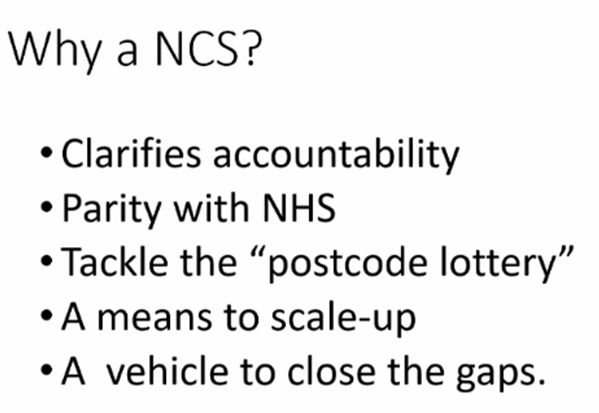
Despite the challenges, Professor Feeley said the potential of the NCS to hold leaders to account and to scale up good practice makes the endeavour worth it.
“I think one of the things that COVID showed us was that in that crisis, people called Scottish ministers to account for what happens with social care. You just have to think about outbreaks of COVID in care homes and who's in front of the TV cameras. That was Scottish ministers and I think rightly so, but they are not, technically, accountable.
“I used to be the Director General for Health and Social Care and I was accountable in the parliament for every penny we spent on healthcare, and I felt accountable – again, rightly so for every penny we spent on healthcare.
“But no one ever held me to account for social care budgets, ever. So clarifying and strengthening accountability are reasons why we still need a National Care Service.”
Professor Feeley added that he believes the NCS could also improve and accelerate progress and change needed in health and care beyond accountability, by tackling ‘the postcode lottery’ in care.
He told attendees that the way Scotland’s social care sector is currently organised scaling services is very difficult:
“I remember vividly a conversation I had with a third sector organisation, who described a really innovative and results-generating intervention for people with early-stage dementia that kept them out of a facility and kept them in their home.
“They had implemented it and it worked in two or three local authority areas and I asked them about how we are going to get that nationally, and they say: ‘I have to go and sell it to 29 other local authorities.’ That's never going to work.
“So, we need somebody who is responsible for identifying good practice and bringing it to everybody, not just to a few. A National Care Service should be able to tackle these things.”
Professor Feeley added that ministers must work quicker to deliver the NCS:
“I think part of the problem has been an unwillingness among some to just live with the uncertainty.
“So my appeal to those who are responsible for the Bill would be: can we move a bit quicker? This is people’s lives we’re talking about.
“Second, to appeal to everybody to live with the uncertain – good ideas come from discomfort, not from a comfort zone – so just embrace the discomfort.
“And then third, let’s not lose sight of why we’re doing this, there’s way too much focus on the what and not enough of the why – we need to back to why is this important and we might get to a different place.”
Moral imperatives
Professor Feeley also emphasised the importance of enshrining rights for people across Scotland – and recognising the current pressures on the workforce.
He shared three key moral imperatives that must underpin health and social care change across Scotland: equity, human rights, and civility.
He added:
“I'd like us to get like us to get back to that kind of fundamental, foundational route and start to think about care, not healthcare or social care – just care.
“There’s something about taking the opportunity we have now, to do true integration, not structural necessarily but from the perspective of the person receiving support.”
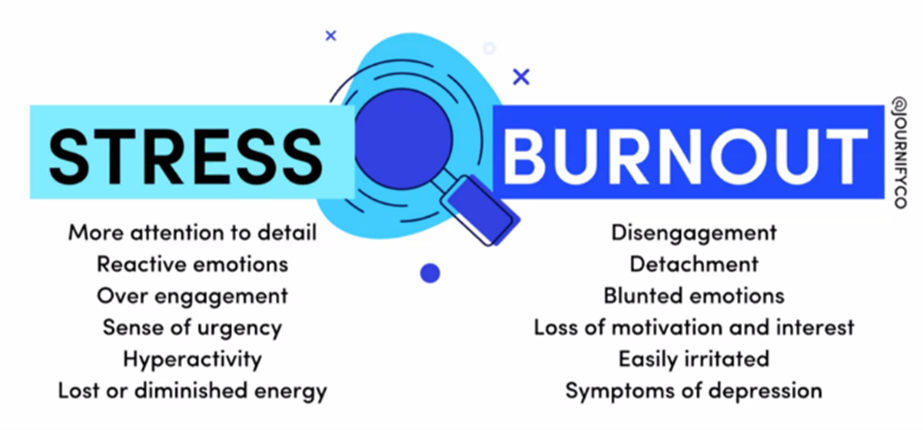
Professor Feeley explained that investing in staff will improve outcomes for all, saying that the burnout facing Scotland’s health and care workforce cannot be ignored:
“Burnout is much more damaging than stress, it leads to people being disengaged when we need them to be engaged. It leads to them feeling isolated when we need them to be partners. And it tends to lead to their emotions being blunted when we when we need them to feel something and to care.
“So it's a greatly important thing for us to tackle. Practitioners who are burned out make mistakes.
“If I was still responsible for patient safety in Scotland, what I would do is investment in the clinical and care workforce to try and reduce burnout. It's the best investment we can make to improve outcomes for patients and their families.”
While he said progress has been made on some of these issues, more is still needed – noting that creating ‘joy in work’ for staff could make a huge difference.
A cultural shift
Professor Feeley said that a cultural shift is needed, which should start from listening to those with lived experience:
“This is probably a minority view: cultural change isn’t too difficult to work out. We change everyday – the problem is most people don’t realise they’re doing it.
“And in my view, the best way to change culture and to create a different culture is to meet opportunities differently. Even simple things like giving carer representatives on integration joint boards, the same voice as everybody else on the board. That creates a different culture.
“If we had the same number of people with lived experience as we had so-called professional people on the National Care Board, that would create a different culture.
“You have to be intentional about it, starting from a place of equity, rights and civility before we think about anything else – then we would design a different system. It will not happen by accident, it will only happen by design.”
The Scottish government plans to give voting rights to all public partner members on reformed local integration authority boards.
He said to enable transformations, Scotland needs leaders who gather and listen to people’s perspectives with curiosity, and who “don’t believe they have all the right answers”, and instead work towards the right solutions:
“The future will come out of leaders who are both vulnerable and see vulnerability as a strength rather than a weakness.
“There’s a fallacy that somehow strategy is all about the future – it’s not, strategy is about the here and now.”
Read more: Government will not withdraw NCS Bill; National Care Service expert group assembled; Editorial: 2024 offers a fresh start for the NCS; Carers facing full force of health and care crisis; Outstanding questions stall NCS scrutiny; Independent Living Fund to reopen
Sign up to our bulletin for key health & social care updates straight to your inbox and you can follow healthandcare.scot on Google News. |