|
Rural hospitals and the child nurse predicament |
Related newsGlasgow pilots at-home newborn jaundice treatment Corridor care ‘the norm’ in struggling hospitals New initiative helps parents hop through labour steps Breastfeeding in Glasgow: A collective responsibility ‘Bleak picture’: health leaders react to NHS review ‘Fundamental shift’ needed for perinatal care 
|
|
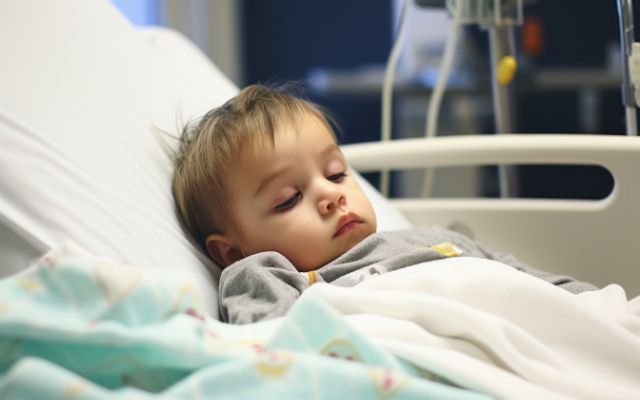
Image: © Rawpixel.com / Adobe Stockl photos
|
||
|
||
|
An Oban-based consultant paediatrician says he is concerned that too many children are being sent from smaller hospitals to Glasgow and Inverness because adult-trained nurses in smaller emergency departments are not confident to treat children.
Dr Jamie Houston says the decision in the 1990s to train nurses so they qualified as specialists in adult, child, mental health or learning disabilities nursing is having an impact on children and their families.
His comments come after watchdogs raised concerns that too few children’s nurses were available at a hospital in the Western Isles.
Healthcare Improvement Scotland (HIS) in its inspection report on Western Isles Hospital in Stornoway raised ‘concerns related to the availability of children’s nurses, staff trained in paediatric immediate life support and systems and processes for the safe care of acutely unwell, deteriorating patients’.
During its inspection, HIS says staff and senior managers explained that, with four substantive trained children’s nurses working at the Western Isles Hospital – one in the emergency department and three within the wards – it was a challenge to have a children’s nurse on shift all the time, and they were told of ‘multiple incidents’ relating to the care of child patients.
Dr Houston says where there are few or no child-specialist nurses, the care of paediatric patients in Scotland’s rural areas often falls to adult-trained colleagues:
“All our nurses across the UK have been pure paediatric nurses or pure adult nurses since before the year 2000. And that national policy impacts on the ability to deliver rural care.
“A lot of our adult trained nurses are not very confident in managing children.
“The dual track from the start, particularly in nursing, I think was a mistake because our nurses in the hospital, they are only really confident managing children if they have their own children or close relatives that they care for, giving them confidence that can recognise a well child from a sick child.
“Oban used to admit quite a lot of children. Now it doesn't, which I think is the right thing.
“But if you transfer lots of well children, that's equally not a good thing. And transfers, while you try and make them as safe as they can be, do have their risks.”
The Royal College of Paediatrics and Child Health states, in a document cited by HIS, that every emergency department treating children must have their qualified staff trained in infant and child basic life support, with one member of staff on duty at all times who has paediatric advanced life support or equivalent training.
The regulator
The Nursing and Midwifery Council (NMC) regulates nurses and midwives across the UK and sets standards for all training courses.
Assistant Director of Education and Standards at the NMC, Anne Trotter, herself a registered nurse for more than 40 years, says all nurses have core skills across all age groups before they develop expertise in one area, but, equally, they also need to know their limitations:
“As registered nurses, we are educated and trained to provide person-centred care for people of all ages. While nurses qualify in a chosen field of practice, our standards take a holistic approach that applies across all four fields of nursing. This ensures that all registered nurses achieve proficiencies that prepare them to deliver safe and effective care across a range of diverse settings and sectors —whether at home, in the community, or in hospitals.
“Regardless of their field of practice or the setting they work in, registered nurses must practise within the limits of their knowledge, skills, and competence. When needed, they should seek additional expertise or support from leaders and colleagues.”
She said employers play a key role in supporting nurses and must ensure continuing professional development and education opportunities while providing the resources and supervision needed, adding:
“This is equally important in rural and remote areas. The holistic approach embedded in our education standards helps equip nurses with the adaptability to navigate these challenges and deliver high-quality care for people.”
One solution could be expansion of training to allow more people to gain dual qualification in both adult and child nursing.
Robert Gordon University runs a well-established Dual Registration in Adult and Children and Young People Nursing course, the only one of its kind in Scotland.
Trying to get more people to be nurses
Recruitment across healthcare is challenging in remote and rural Scotland.
In medicine, the four year post-graduate ScotGEM programme helps develop doctors interested in a career as a generalist practitioner within NHS Scotland, with a focus on serving the needs of rural communities. Meanwhile the HCP-Med course offers a route for healthcare professionals in other disciplines to train to become doctors.
However, the NMC says, while there are post-graduate programmes to help nurses and midwives develop knowledge and skills to work in remote and rural communities, there is no plan to introduce a new field of nursing in rural and remote health.
The Royal College of Nursing says a programme to try to recruit more people into nursing is underway.
But, Director of RCN Scotland, Colin Poolman says, ultimately, it is down to NHS boards to provide the conditions to attract and keep nurses with the right set of skills:
“NHS Boards across Scotland have a duty to ensure they recruit and retain the right number of nursing staff with the right education, skills and experience to meet the needs of their local population.
“Children and young people have differing needs to adults and suitably qualified paediatric nursing staff should be available within emergency departments across the country.
“We know that nursing in remote and rural communities can bring particular challenges, with greater distances to specialist services contributing to feelings of professional isolation, increased clinical responsibility and a broader work profile. The Scottish government’s Nursing and Midwifery Taskforce has been exploring how to attract more people into the profession and has considered the challenges facing services in remote and rural areas.
“We are looking for the Taskforce to recommend the expansion of the routes into nursing and steps to diversify the delivery of nursing degree education to benefit remote and rural areas by enabling people to complete their degree while continuing to work in their local area.”
NHS Western Isles
NHS Western Isles welcomed the HIS report and says an improvement plan has been brought in to address the HIS inspection findings and provide the best care possible.
Chief Executive Gordon Jamieson added:
“As well as the positive findings, it is the purpose of an inspection to identify areas where improvements could be made.
“There were a number of areas identified for improvement and it is a priority for us to address these as quickly and comprehensively as possible. Since the inspection, we have developed a detailed Improvement Action Plan to address the areas that Inspectors have identified.
“Ensuring all relevant staff are up to date with their annual paediatric immediate and advanced life support training is a priority for us, and ensuring that staff continue to be supported in terms of their wellbeing is key, in particular during these challenging times when hospital occupancy is so high and as recruitment remains one of the board’s main challenges.”
Read more: Challenging medicine in beautiful places; Scotland’s first postgrad medical degree "on track"; Medical students start Highland placements; Tourist lets make rural NHS recruitment harder
Sign up to our bulletin for key health & social care updates straight to your inbox. |
