|
Glasgow pilots at-home newborn jaundice treatment |
Related newsRural hospitals and the child nurse predicament Corridor care ‘the norm’ in struggling hospitals New initiative helps parents hop through labour steps Breastfeeding in Glasgow: A collective responsibility ‘Bleak picture’: health leaders react to NHS review ‘Fundamental shift’ needed for perinatal care Glasgow district nurses ready to strike "Landmark" newborn test rollout begins in Glasgow Scots to benefit from new NHS heart treatment Glasgow LEZ success sparks call for expansion Government to act on A&E failures Watchdog criticises homelessness health service cuts 
|
|
Image Credit: © pololia Adobe Stock
|
||
|
||
|
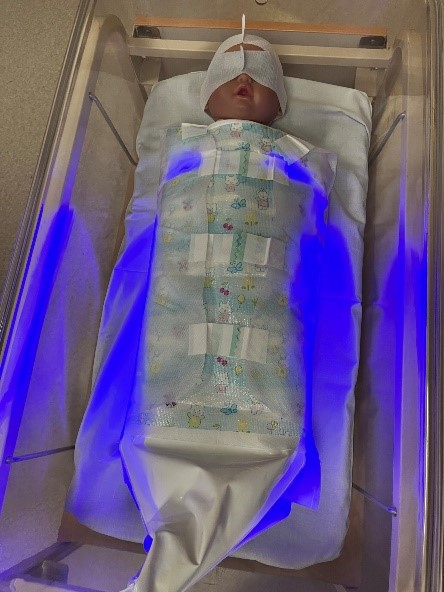
NHS Greater Glasgow and Clyde has launched a new pilot service to allow newborn babies with jaundice to be treated at home with a wearable phototherapy suit.
Led by a team of neonatal nurses and medical staff at the neonatal unit in Glasgow’s Royal Hospital for Children, the pilot service seeks to treat newborn babies with jaundice ‘in the comfort of their family home’.
Neonatal jaundice affects around six in ten newborn babies and an estimated eight in ten premature babies, which usually requires a longer stay in hospital to receive a special light treatment.
Staff say the pilot will support new parents to settle at home sooner and free up spaces in hospital by offering this treatment through a wearable garment that parents and carers can take home.
NHS Greater Glasgow and Clyde Staff Nurse and member of the team implementing this treatment, Lynsey Hill said:
“We are focused on delivering person-centred care and this is a pilot that we’ve been hoping to implement for a while.
“It is very satisfying to see it live, and to hear the positive feedback from parents. Our hope is for more women, who give birth at the Queen Elizabeth University Hospital, to be aware of the service and understand that their baby could be eligible.”
Neonatal jaundice is caused by an accumulation of bilirubin in the blood which can cause yellowing to the whites of the eyes and to skin, accompanied by dark yellow urine, drowsiness and difficulties feeding.
If a baby has very high levels of bilirubin and is not treated, there is a risk of developing brain damage.
Currently in Glasgow, when a baby’s jaundice test shows high levels of bilirubin, they require a stay of up to five days in hospital with their mum to receive phototherapy treatment.
Phototherapy involves shining blue-green light on the skin to support the baby’s liver in breaking down bilirubin so it can be cleared from the body.
While this is usually provided in hospital, the new pilot enables babies who are otherwise ready to go home, to receive phototherapy at home while being with their family.
Lynsey Hill explained:
“Babies can develop jaundice symptoms 72 hours after birth. If we have already discharged a mum and her baby following labour, they would traditionally need to return for a hospital stay to receive phototherapy.
“This can be really upsetting for mums who have been settling into life with their baby at home.”
The team running the pilot says the at home care is easy for parents to implement and minimises impact on their day-to-day life with a newborn.
Parents simply slip their baby into a small sleeping-bag-like suit which delivers the phototherapy.
It is also safe for the baby to be breastfed while in the wearable phototherapy device – aligning with Glasgow health leaders’ aims to support and promote breastfeeding where possible.
It is estimated that when fully rolled-out, the service will free up at least 30 maternal bed days per month at the Queen Elizabeth University Hospital maternity unit where these new mothers do not otherwise need to be in a hospital bed.
One Glasgow family told healthandcare.scot about their worry over having to stay in hospital any longer after six nights since giving birth, with another child waiting at home.
Once discharged, they were then waiting to see if they had to return to hospital for phototherapy with their son who was slightly jaundiced:
“It was then a worry for about two weeks after getting home that we may need to go back into hospital with him to receive treatment because his levels were still high.
“Thankfully this was not the case in the end, but I do definitely think it would be worse for parents to get home from hospital with their baby and then have to be readmitted to receive more phototherapy – especially for families with more than one child.”
Midwives routinely monitor for jaundice in their home visits and will support families who use this care at home phototherapy.
A family that was involved in the pilot for their daughter who had seen her bilirubin levels drop after receiving phototherapy in hospital explained the difference treatment at home made:
“The nurses advised that a midwife would visit the house, would check this again for us and that there was a chance we would need to return. When the midwife arrived at the house next day, the blood test showed that she needed phototherapy once again. The midwife then offered to bring the suit to us.
“I worried that it would be a lot of equipment at first, but it wasn’t, and it was so easy.
“We’re a 30-minute drive from the hospital and have our five-year-old son at home so it meant we could all stay together, and Danielle [mum] could be comfortable.”
Read more: Medics warn pollution is risking children's health; ‘Fundamental shift' needed for perinatal care; Breastfeeding in Glasgow: A collective responsibility; Perinatal and infant mental health funding extended
|