|
"Landmark" newborn test rollout begins in Glasgow |
Related newsRare condition screening for newborns across Scotland Delay to newborn screening for SMA “nonsensical” Every Moment Matters in SMA Screening Scotland must prioritise new bladder cancer test Navigating ‘next frontier’ of AI in medical devices Island paramedics get new point of care diagnostics Scots to benefit from new NHS heart treatment Queen Elizabeth and the Golden Jubilee NHS Scotland forms landmark partnership Scotland reaches heart valve treatment milestone Piecemeal approach to serious NHS errors handling NHS problems ‘still need fixed’ despite pandemic focus 
|
|
© NHS Greater Glasgow and Clyde
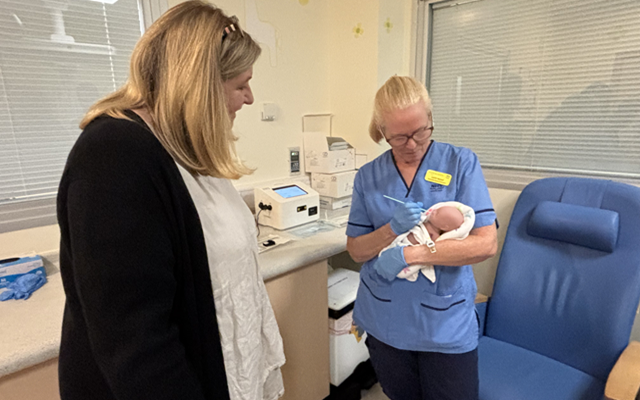
Public Health Minister Jenni Minto MSP visits the Royal Hospital for Children Glasgow’s neonatal unit
|
||
|
||
|
A genetic test that reduces the risk of hearing loss in newborn babies will be introduced at NHS Greater Glasgow and Clyde next month, as part of a Scottish government-funded national rollout.
The test will enable clinicians to identify babies with a genetic variant that can cause permanent hearing loss if they’re treated with a common antibiotic, allowing them to be offered an alternative to avoid this risk.
The first tests are scheduled at the Glasgow’s Royal Hospital for Children in September, with rollout to neonatal units at the Royal Alexandra and Princess Royal Maternity Hospital expected soon after.
It will then be expanded across all Scotland’s neonatal units over the next 18 months.
National rollout is being supported by £800,000 from the government, as part of its commitment earlier this year to fund the national adoption of three health innovations through an accelerated pathway.
More than 3,000 newborns are expected to be tested during the first year.
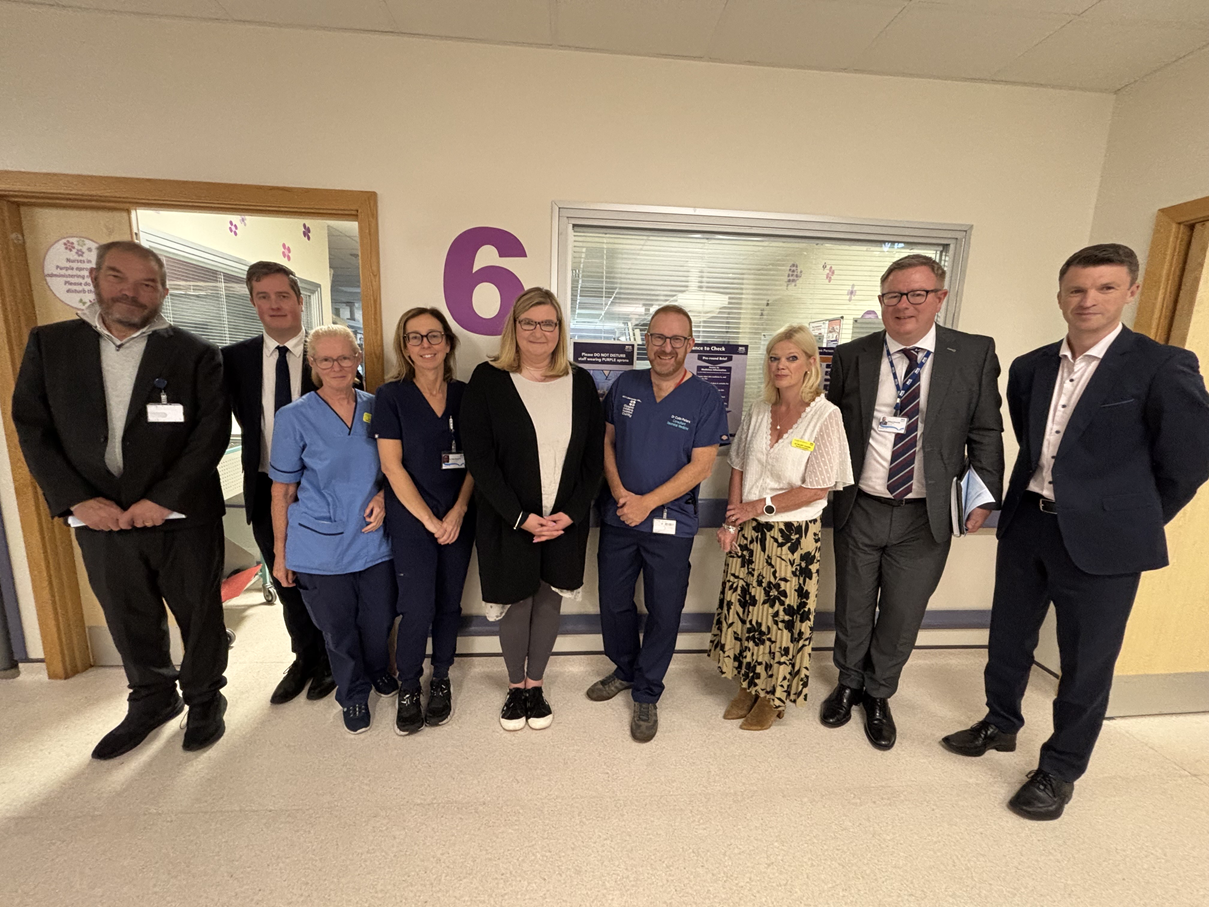
Public Health Minister Jenni Minto MSP this week met with clinicians and representatives from the West of Scotland Innovation Hub who have played a leading role in bringing the test to Scotland.
Ms Minto welcomed the rollout of the new technology:
“I want to thank the hardworking staff at the Neonatal Intensive Care Unit in Glasgow who I met and who showed me a demonstration of the genetic test for newborn babies.
“NHS reform in Scotland will be accelerated by scientific and technological innovation, and this government is committed to supporting Scotland's excellent research base and adopting novel, evidence-proven approaches to drive further improvements for patients."
Neonatal staff at the Royal Hospital for Children in Glasgow are now undergoing training to deliver the new test.
They will be equipped to manage the testing process, adjust antibiotic treatment when necessary and support families if a positive result is found.
Real-world data from the health board will also be used to refine national guidance and support adoption of the test into standard clinical practice across Scotland.
Consultant Neonatologist with NHS Greatre Glasgow and Clyde and clinical lead for the ongoing Pharmacogenetic to Avoid Loss of Hearing (PALOH) UK study, Dr Helen McDevitt, said this is a “landmark moment” for neonatal care in Scotland:
“By introducing this test, we are taking a vital step in preventing avoidable hearing loss in newborns and ensuring safer, more personalised treatment.”
The Genedrive test was developed in collaboration with researchers from Manchester and is currently being used in 14 neonatal units across the UK.
Around one in 500 newborns are estimated to have the genetic variation that puts them at risk of hearing loss after receiving the common antibiotic, gentamicin.
An assessment conducted by the Scottish Health Technologies Group estimates the test could prevent hearing loss in around three newborn babies in the first three years of national rollout.
Its roll out across Scotland was recommended following this assessment, as part of efforts from the Accelerated National Innovation Adoption (ANIA) pathway led by the Centre for Sustainable Delivery.
National Associate Director of the Centre, Katie Cuthbertson, said the team are delighted to support the rapid adoption of this pioneering technology:
“We are excited to continue to collaborate with boards and clinicians across NHS Scotland, to ensure we remain at the forefront of innovative, precision medicine and sustainable healthcare transformation.”
The roll out of a national digital intensive weight management service and a genetic test for stroke patients is also currently being supported through the ANIA pathway.
Read more: Government boosts health innovation funding;
Sign up to our bulletin for key health & social care updates straight to your inbox. Tags: Child Health; Diagnostics; Research & Innovation. |