|
National shift needed for dementia care |
Related newsDementia campaign success to inform government actions Care worker visa changes ‘inhumane’ and risks services Fair funding to see Scotland lead dementia research Additional funds for care and hospices What can care homes do to get inspection-ready? The in-between: what’s happened to care reform? 
|
|
Image Credit: © Anke Thomass
|
||
|
||
|
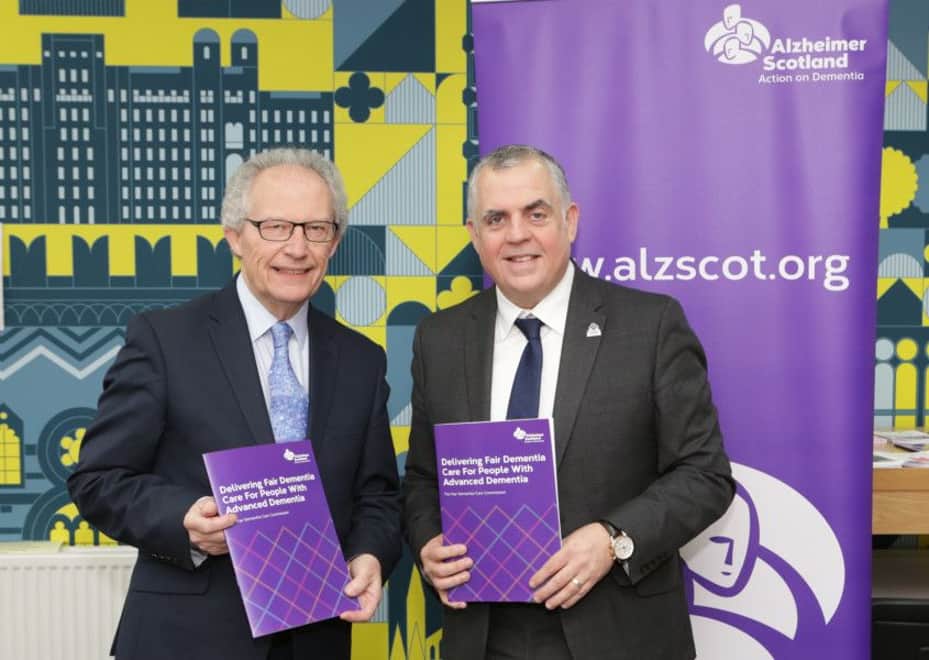
Prioritising social care reform and investment alongside work to raise awareness of dementia is vital to improve outcomes, according to former First Minister Henry McLeish and Alzheimer Scotland Chief Executive Henry Simmons.
They spoke to healthandcare.scot about the need for the Scottish government to treat dementia as both a health and social care issue to meet the needs of those living with the condition and their unpaid carers.
Henry McLeish, former First Minister of Scotland and advocate for Alzheimer Scotland, said the national conversation around dementia must shift to see it as both a health and social care issue.
Mr McLeish said the key to improve dementia care is to treat it “with the same respect and importance as health”:
“We’ve got to take dementia more seriously as a nation.”
“We want to try and get over to the people as well that this is a very important health as well as care issue. I don’t think we’re giving it enough importance, partly because of the mythology that it’s about old folk.
“A lot of people fear the word dementia because it’s the act of somebody disappearing in front of you.”
He added that while economic growth is a valid priority for the UK government, it must within that prioritise efforts to improve awareness and investment for dementia – including building brain health and dementia education into the school curriculum:
“I find with social care and the health service, too many doors are closed but not for any good reason. Yes, we do need money, but we also need education and awareness across society – including our young people.”
The former First Minister said that for advanced dementia – where the condition becomes primarily a health issue – care should be free at the point of need.
Having chaired Alzheimer Scotland’s long-term dementia care commission, he added that investing in community and home care is essential – to ensure people only leave their homes as a “last resort”.
It comes as MSPs will debate the Scottish government’s proposed 2025-26 budget, which will see record spending on health and social care.
Mr McLeish added that families and unpaid carers are already carrying far too much of the costs, and the Scottish and UK governments must work together with communities on solutions:
“Government’s not easy, I know – your decisions affect people, and you don’t have enough money to spend on everything. But on the other hand, I come back to the question of: What kind of country do you want?”
He said while government has a financial narrative it lacks a “people’s narrative” explaining the values it is prioritising and how these priorities will play out for each person’s life.
Mr McLeish emphasised the need for financial support from Westminster to Scotland because “if Scotland goes alone”, it will lead to a competition of priorities where funding will be pulled from other portfolios.
He said at every level of government and local communities, health and social care must work together – particularly for dementia:
“More progress would be made on social care if there was a bigger input from the health service, particularly for dementia.
“There’s often a reluctance to equate aspects of social care with health in terms of priority. We've got to change that, because there are so many practical ways that investing in care can help in terms of health.”
This has been echoed by health and care professionals alike, with the Royal Colleges of Physicians Edinburgh and Emergency Medicine calling for increased investment in care homes and social care ahead of increased demand this winter.
Reform – prevention and beyond
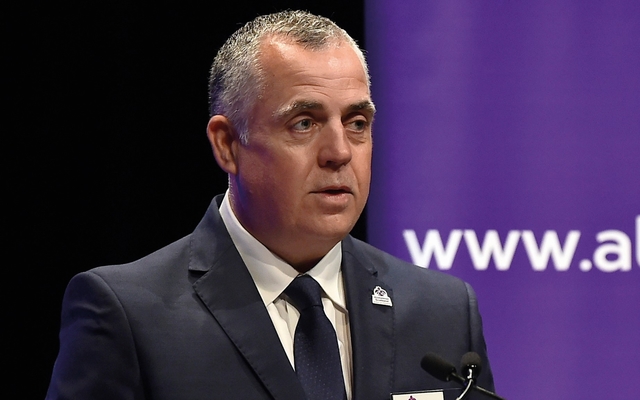
Alzheimer Scotland CEO Henry Simmons told healthandcare.scot that it is “always a mistake to just look at the NHS”, and this must extend to systemic reforms to deliver better dementia care:
“We’ve got NHS reform going on now but unless you look health and social care together, you’re not going to go anywhere with reform. There are points in the dementia journey where you move between health and social care.
“I think you want a joined health and social care approach to person-centred care for people in their communities – you start there and build the structures behind that.”
Mr Simmons said brain health assessments offered in primary care could help reduce early risks of dementia at a low time-cost to staff.
He said a lot can be done in prevention with “little money” but the government cannot ignore the needs of people living with dementia.
With the limited resources in social care, he said people with dementia right now are being let down by a lack of long-term care funding.
This, alongside the workforce crisis in health and care, Mr Simmons said has led to a “perfect storm”, meaning people access support at a more severe stage and are faced with a “black hole:
“You only have care homes, we need alternatives. Alzheimer Scotland are looking to work with government and communities to change this.
“The debt that we owe to unpaid carers looking after people in the moderate to severe stages of dementia and advanced dementia is huge.”
Mr Simmons said action to support unpaid carers and the social care workforce is long overdue:
“We need a drive towards parity between social care and healthcare workers – there shouldn’t be this separation.”
Former First Minister Mr McLeish added that the current “immoral, unethical” financial structure when it comes to social care for dementia and beyond leaves families without a choice.
He said the “massive” inequalities in social care leave some giving up work to care for family and the government must step in to change this:
“Most people do not have the resources for dementia care and therefore are forced to get often the lowest priced social care which becomes an unfair lottery.
“We’re getting to the point where local government doesn’t have enough resources to pay for community care and keep people in their homes.
“My appeal to the government would be to rethink the social care dimension.”
Read more: Action needed on women’s brain health;Scotland’s soccer aid spotlights dementia; “Get ready now” for advances in dementia care; Music’s potential to help with dementia
|