|
Aberdeen ‘lifeline’ for young people with IBD |
Related newsChildhood adversity health impacts felt at 50 revealed Campaign to recognise Aberdeen insulin pioneer ‘We’re told we are lucky to be alive’ Trauma and the miracle heart baby Study explores life with an enlarged prostate 
|
|
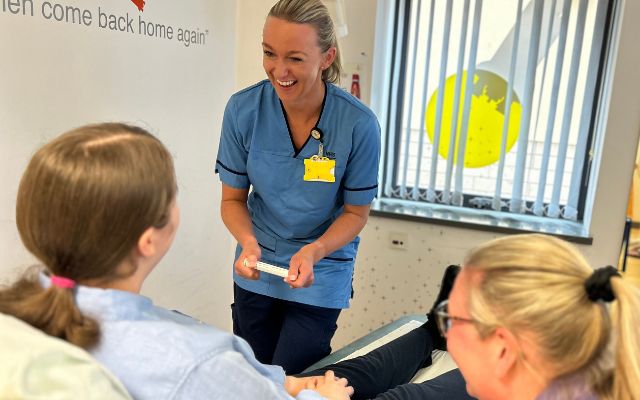
Image © NHS Grampian
Rachel during an appointment with nurse specialist Chantelle Stewart, with support from play specialist Wendy Joss.
|
||
|
||
|
A new approach being adopted at Royal Aberdeen Children’s Hospital (RACH) is transforming the lives of teenagers with inflammatory bowel disease (IBD), offering them greater independence, reduced hospital visits, and improved quality of life.
Under an initiative spearheaded by clinical nurse specialist Chantelle Stewart with the backing of consultant paediatric gastroenterologist Dr Iain Chalmers, teenage patients who once had to attend hospital every six to eight weeks for intravenous infusions of the medicine infliximab are now being taught to administer it themselves as an injection.
Seventeen-year-old Rachel (not her real name) has been receiving care at RACH since being diagnosed with severe Crohn’s disease in early 2022.
After an initial hospitalisation and months of treatment, Rachel began attending the hospital as an outpatient for several hours every six weeks for intravenous infliximab therapy to manage her condition.
Repeated difficulties with cannulation made the monthly hospital visits traumatic and unsustainable for Rachel who is autistic.
“Rachel was incredibly difficult to cannulate,” her mum explained.
“We had months of multiple attempts, long days at the hospital, and then around a year ago we were offered the chance to move to a different kind of treatment at home which has made a massive difference to our lives in lots of ways.”
The nurse-led initiative is allowing people aged 15 or older the option, previously only on offer to adults, of using a pen-like device fortnightly to inject the medication under the skin, a process that takes seconds.
Nurse Chantelle Stewart arranges for patients to receive their first injection in the hospital , where she provides initial training. She then works with community nursing teams to continue training in the home environment until patients achieve confidence in self-administration.
Patient reviews by the hospital specialist clinic team continue.
“Previously, patients had to attend hospital every six to eight weeks for intravenous infusions, which could take several hours,” said Ms Stewart. “Now, with training and support, they can manage their treatment at home, giving them more control and reducing the emotional and physical toll of hospital visits. It’s working really well.”
Rachel’s mum says the change has had a profound impact. “It’s not just about convenience,” she added. “It’s about dignity, confidence, and knowing she will get the treatment she needs. For Rachel, it really has been absolutely paramount in keeping her in remission.”
Play service support
Rachel’s mother says the hospital’s play service team has also played a vital role in Rachel’s journey:
“They’ve been a lifeline. From waiting outside theatres to ensuring continuity for Rachel’s autism needs, [play specialist and play worker] Wendy and Alison have been with us every step of the way. They feel almost like family, and we are absolutely blown away by their practical and moral support at every single procedure she’s ever had. We genuinely couldn’t have managed without them.”
The hospital plans to expand the programme to eligible teens as they reach the appropriate age and clinical criteria.
Nurse Ms Stewart added:
“Everything we can do to improve the quality of life for young patients is so important, especially when they are teenagers navigating exams and secondary school life.
“We support patients from as far away as Shetland so it’s a huge benefit in terms of time and stress saving for the whole family. We are really pleased this is working well for Rachel.”
Read more: Crohn’s and Colitis ‘vastly underestimated’; ‘Long awaited’ report aims to transform stoma care; Scotland’s capital global hotspot for IBD; Rare condition screening for newborns across Scotland
Sign up to our bulletin for key health & social care updates straight to your inbox. |