|
Fair funding to see Scotland lead dementia research |
Related newsWatchdog: ‘No overall vision’ for NHS Pharmacy’s road to stigma-free drug dependency care Dementia campaign success to inform government actions Doctors say GP funding boost “just the start” New taskforce to drive ADHD and autism improvements Call for ‘urgent’ review of ADHD and autism services 
|
|
|
||
|
||
|
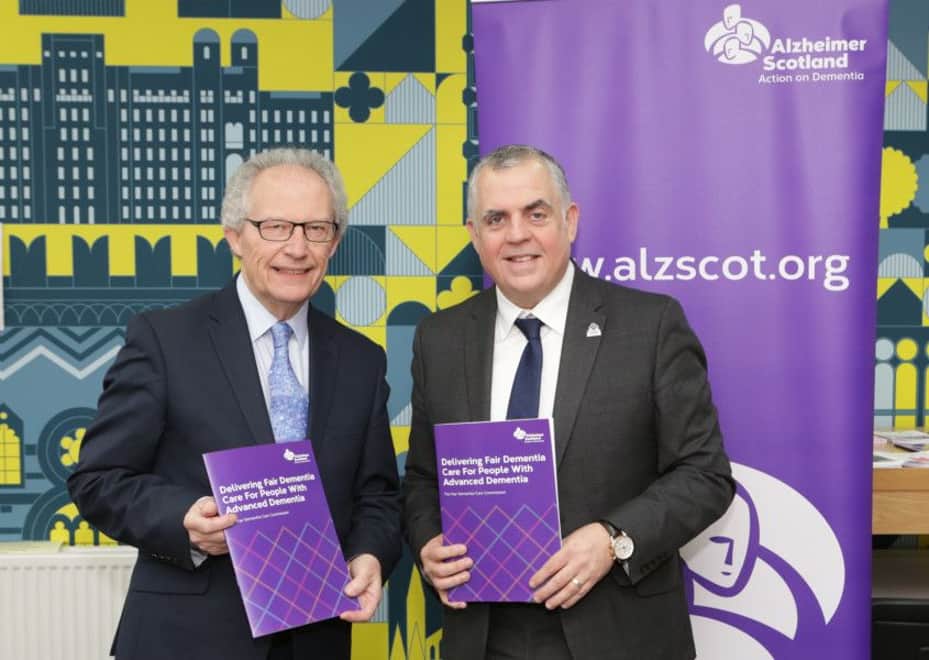
Scotland’s dementia researchers deserve a “seat at the table” and a fair share of UK government funding to advance work across prevention, diagnosis, and treatment, according to Alzheimer Scotland and a former First Minister.
Alzheimer Scotland has written to the Secretary of State for Scotland, Ian Murray MP, to allocate 10% of new dementia research funding to Scotland, CEO Henry Simmons explained.
In his letter, he argued Scottish researchers are not given a “fair or equal opportunity” to compete for UK dementia research funding due to restrictions on the funding they can bid for.
He said that while Scotland hosts world-leading scientists, he thinks “the whole dementia research field is underfunded” and Scottish institutions are particularly disadvantaged:
“Dementia research funding has come from the health-based budget in Scotland – that’s a really stretched budget.
“The UK government is investing £100m in dementia and Scotland receive 10% of that funding to advance some of the great research we’re doing – to a balanced portfolio of diagnosis, treatment but also lived experience-led research.
“Some of the scientists we’ve got in Scotland are phenomenal, we’ve got some of the best scientists in the world in this area. They should have as much support as possible to do their job.”
Mr Simmons added that the charity has been trying for 10 years to get Scottish research “a proper seat at the table” with the UK government and will continue to do so.
“Remarkable” opportunity
Mr Simmons urged the Secretary of State to improve dementia research funding to Scotland as the nation has been “leading the way” in many areas of research and practice.
While pressing for the UK to better understand Scotland’s impact, he told healthandcare.scot that Scotland’s brain health summit in St Andrews creates a “global focus on what Scotland can do”.
Mr Simmons added that if additional funding is allocated to Scotland, the shift in research advances would be “quite remarkable”.
The Secretary of State for Scotland has committed to engaging with Alzheimer Scotland to understand how it and similar organisations could play a part in the UK government’s dementia mission and to ‘build an NHS fit for the future’.
Former First Minister Henry McLeish said as Scotland is “leading the world” in many aspects of brain health, its funding for services and research must reflect this:
“If we were funding and investing more, we could take our place in the world rankings as ‘the place to be’ in terms of dementia.
“In so many areas, we are nearly there but we need Westminster and Scotland’s government to accept that – in terms of brain health, Scotland could, rightfully take its place in the top tiers of the world.
“It requires government acceptance but also financing. I feel strongly that it’s a collective issue, but there’s no better place to start than in government.”
Small changes for prevention
Alzheimer Scotland’s CEO said that women’s brain health must be a priority, as dementia and Alzheimer’s disease remain a leading cause of death for this group:
“I think prevention and understanding some of the very unique issues in terms of menopause and the experiences in relation to that when it comes to brain health and dementia risk, needs a really strong focus.
“When it comes to treatments and clinical trials, people won’t walk through the door unless you help structure and fund it, encourage people and make it safe for them.”
Mr Simmons said that while improving access to clinical trials across Scotland is needed to bring about advanced treatments that slow dementia’s progress, getting involved with research is not limited to clinical trials.
On a smaller scale, he hopes to see some of the research into preventing dementia and promoting good brain health folded into primary care.
Mr Simmons added that simple brain health assessments or a conversation around exercise, sleep and avoiding isolation could be brought to the frontline:
“Imagine you’re getting your blood pressure checked and it’s quite high – if the practitioner doing that assessment could also say: “Here’s our brain health assessment” and you could look at any risks that are there, it could reach people early.
“From that point as you modify some behaviours for your blood pressure, you could also modify behaviours for your brain health.
“I feel passionately that if you can give people positive, practical things to do it’s an opportunity for meaningful change and doesn’t cost a lot of money.”
Scotland’s Former First Minister Mr McLeish said funding for drug development is vital but research investment must include preventative advice:
“The big challenge is to promote that dementia is the biggest killer in the world.
“Linked to that is the fact that progress is being made on the drug front, and advancing the idea of healthy living to prevent or delay the development of Alzheimer’s disease.”
From research to regulation
Mr McLeish said the growing evidence that links diets high in red meat, fats and sugar to increased risk of dementia points to a need for better regulation.
He said that governments should be “in the business of making good health”, adding:
“A lot might have to come from regulation – we’ve seen some small steps towards this – but it’s only the tip of the iceberg.
“We have a national sickness service, you’ve got to be sick in some form to use the NHS. What a great idea to create healthy people – that’s the key unlocking the way forward.
“Governments can do a great deal by passing legislation at Westminster in particular, but they’ve also got to say: “These are tough decisions, and yes, it might hit the profitability of certain companies – okay, that’s fine by me.”
“The Scottish government doesn’t really have big economic levers to do that but it’s role as a progressive nation is to say to Westminster to do so.”
Cross-government working, Mr McLeish added, will make a huge difference but requires politicians to look beyond election cycles.
He explained that if the Scottish government works with the UK government and recognises “we’re all on the same side if we’re talking about dementia”, real change can happen:
“In Scotland, we’ve got so much to offer and if, instead of attacking, we seek to have dialogue, that could make a difference.
“If you had a coalition of thought, policy and ideas, then you could move forward. I hear people say, “That’s not the way it works.” Well, why not? That’s the way it should work.
“We need a new deal that includes brain health, community provision, cutting down the risk factors, making sure the drugs to slow progression are developed to reach people.”
Read more: Scotland's soccer aid spotlights Alzheimer’s risk; “Get ready now” for advances in dementia care; New Alzheimer’s drug rejected for NHS Scotland; National shift needed for dementia care; Action needed on women’s brain health; Music’s potential to help with dementia
|